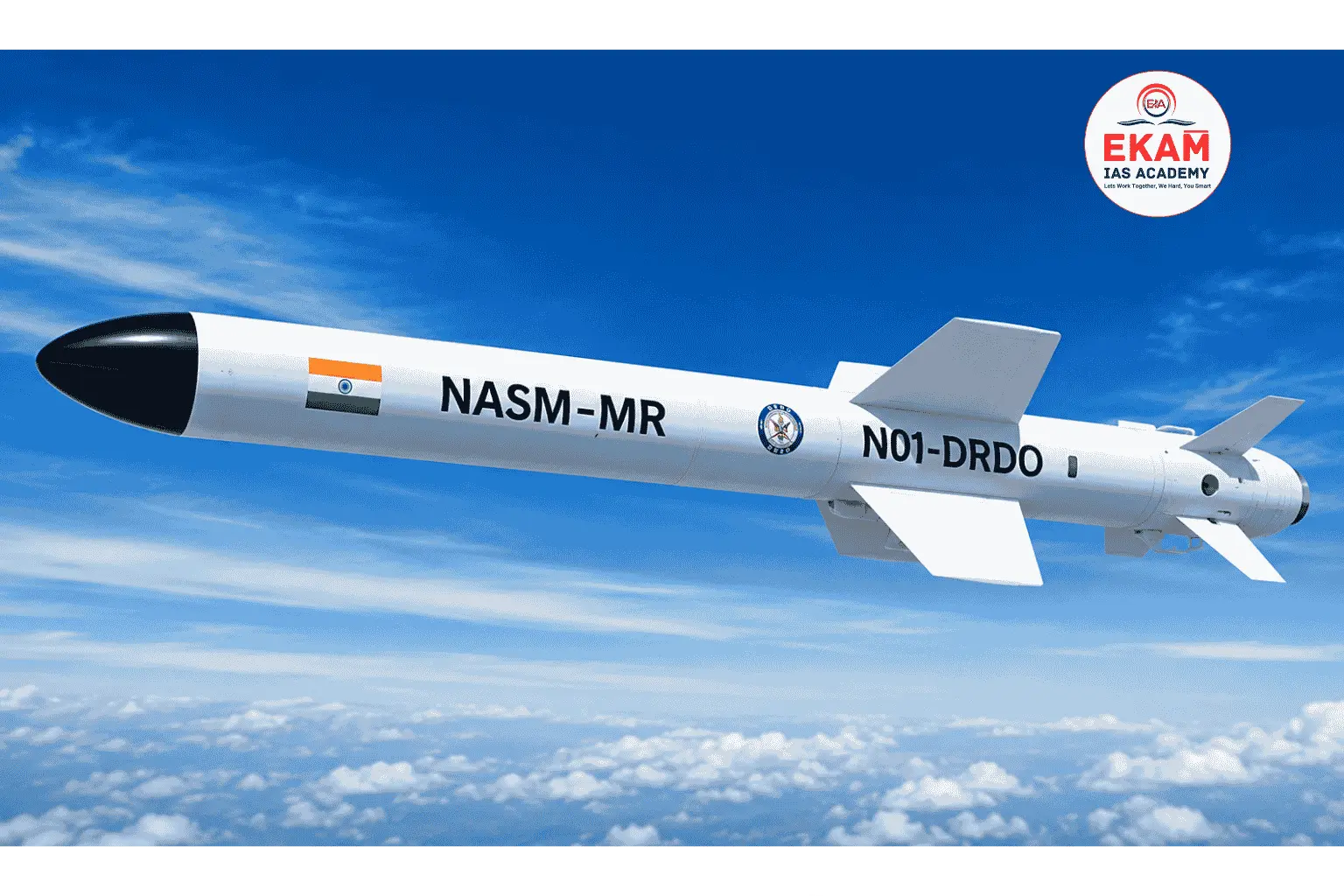

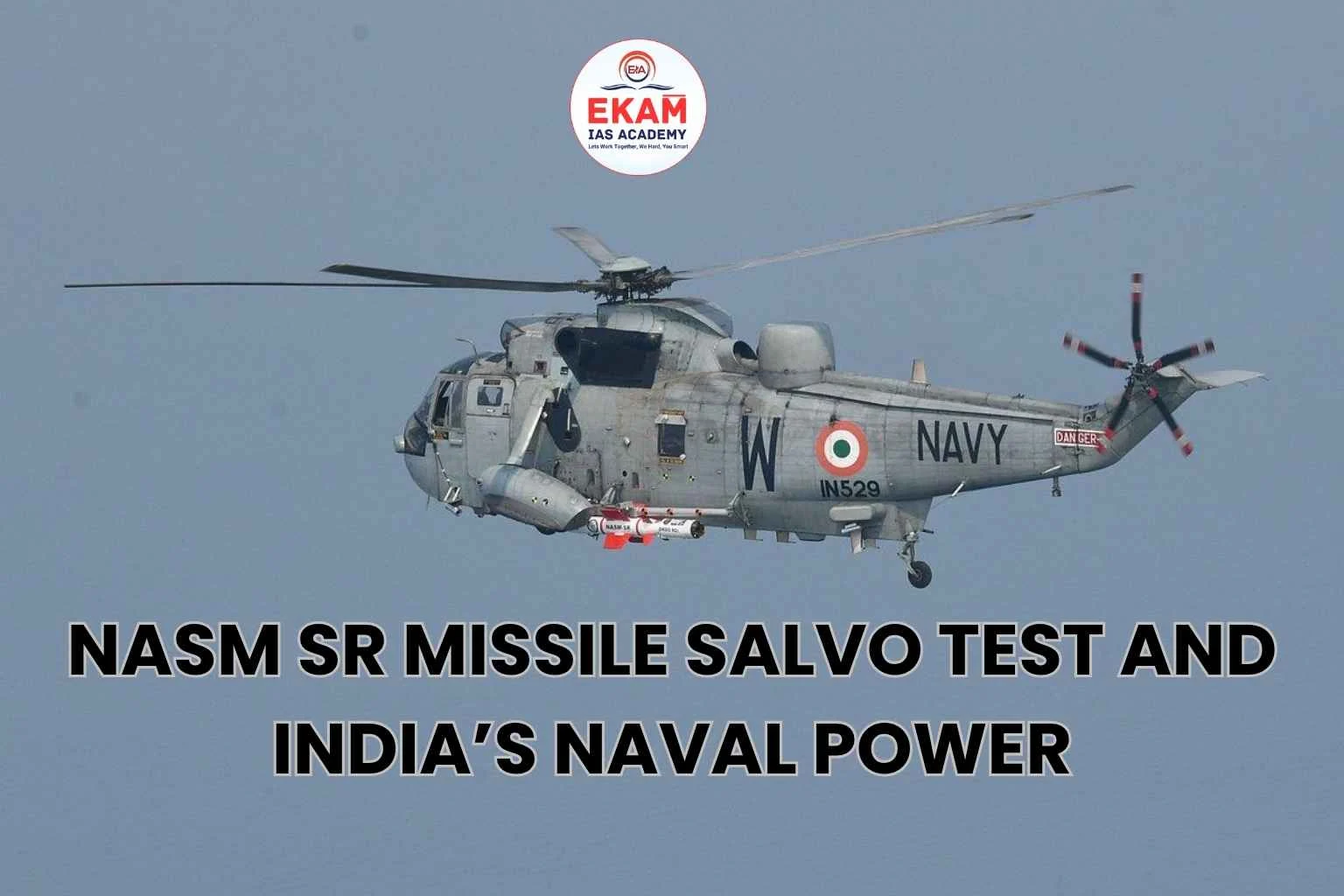
India successfully conducted a salvo test of the Naval Anti Ship Missile – Short Range (NASM SR) from a helicopter off the Odisha coast. Two missiles were fired in quick succession, marking the first successful salvo launch from a chopper, strengthening India’s naval strike capability. This defence and security topic is important for aspirants preparing through IAS coaching in Hyderabad, UPSC coaching in Hyderabad, and UPSC online coaching.
Need for NASM SR
• Indian Navy earlier used Sea Eagle missiles (1980s) on Sea King helicopters.
• Limitations: Heavy weight (~580 kg), outdated technology, limited flexibility.
• DRDO initiated NASM SR project in 2010s to develop a lighter, indigenous, advanced missile.
• Involves multiple DRDO labs (RCI Hyderabad, DRDL, HEMRL Pune, TBRL Chandigarh) + private sector/MSMEs.
Design and Features of NASM SR
• Weight: ~380 kg (lighter than Sea Eagle).
• Range: ~55 km (shorter than older systems but more flexible).
• Propulsion: Two stage (solid booster + sustainer engine).
• Guidance: Seeker for target detection, radio altimeter, two way data link.
• Fuse: Radio proximity fuse ensures detonation near target.
• Deployment: Designed for ship borne helicopters.
Advanced Capabilities
• Man in Loop Guidance:
• Operator can redirect missile mid flight using two way data link.
• Greater precision in crowded maritime zones.
• More flexible than older “fire and forget” systems.
• Waterline Hit Capability:
• Targets vulnerable area near ship’s waterline.
• Causes severe flooding and structural damage.
• Enhances lethality compared to older missiles.
Salvo Test Significance
• Two missiles launched in quick succession from same helicopter.
• Demonstrates ability to overwhelm enemy defences.
• Improves chances of successful neutralisation of targets.
• Validates missile’s operational readiness in real combat scenarios.
Role of Helicopter Launched Missiles
• Allow strikes from safe distance, keeping ships out of direct threat.
• Crucial for anti surface warfare and sea control in contested zones.
• Provide flexibility and precision in modern naval operations.
Strategic Importance
• Strengthens India’s maritime strike capability.
• Enhances indigenous defence ecosystem.
• Provides Navy with modern, flexible, and lighter missile system.
• Boosts India’s preparedness in regional maritime security.
Conclusion
The NASM SR salvo test marks a major leap in India’s naval power, combining precision, survivability, and adaptability. It replaces outdated systems with an indigenous, advanced missile, reinforcing India’s maritime dominance and self reliance in defence technology.
For aspirants preparing through IAS coaching and civils coaching in Hyderabad, this topic is highly relevant for GS3 Internal Security, Defence Technology, and Maritime Security.
This topic is available in detail on our main website.