
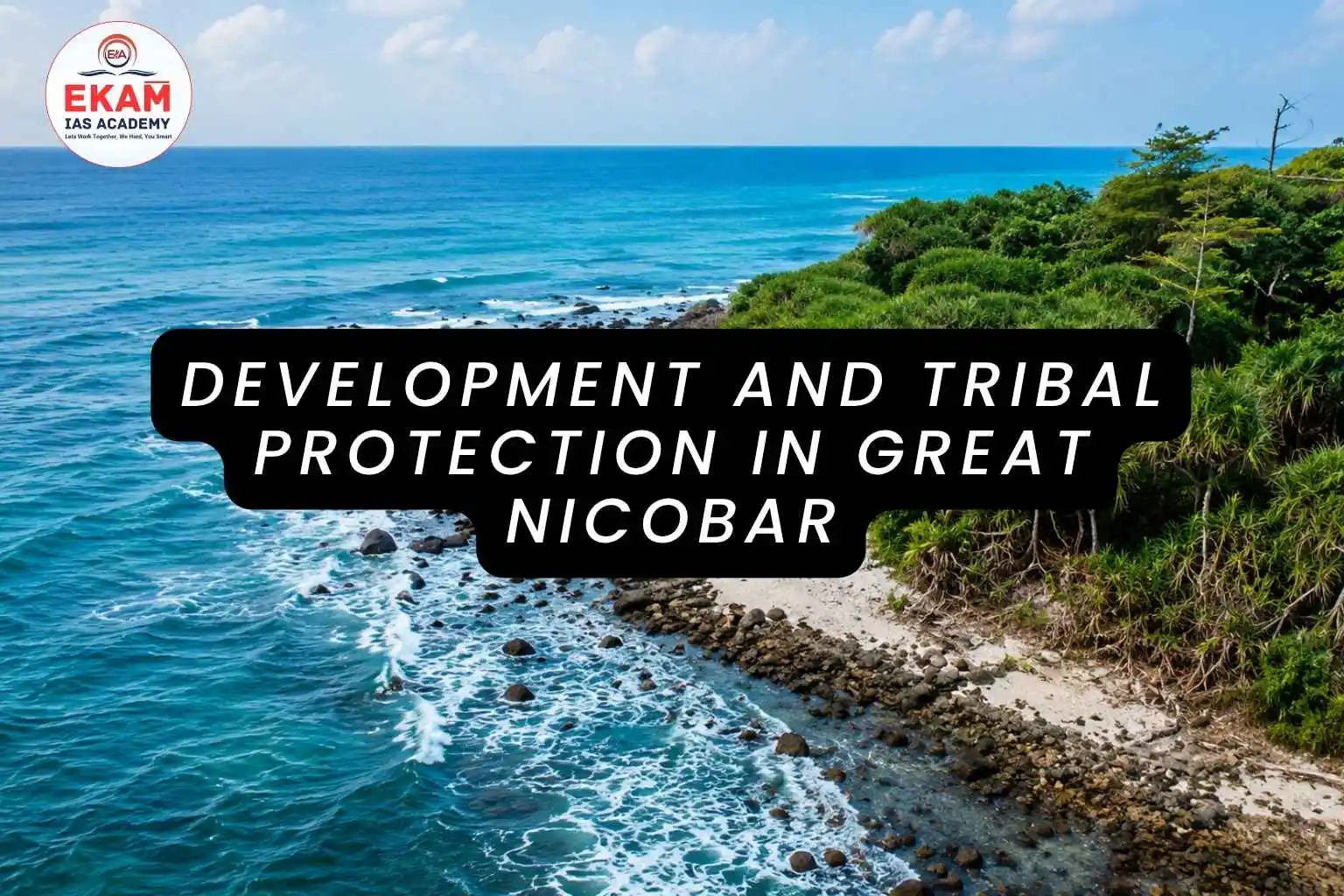
Recently, the Union Minister stated that development projects in Great Nicobar Island can coexist with tribal protection, responding to concerns regarding the impact on the Shompen community and forest rights. This topic is important for aspirants preparing through IAS coaching in Hyderabad, UPSC online coaching, and UPSC coaching in Hyderabad.
Great Nicobar Island
Strategic Location
• Located near the Strait of Malacca, one of the busiest maritime trade routes in the world.
• Provides India a major geostrategic advantage in the Indo Pacific region.
Proposed Infrastructure Projects
• Plans include a transshipment port, international airport, power plants, and township development.
• Aims to boost trade, logistics, connectivity, and economic growth.
Economic & Strategic Benefits
• Strengthens India’s maritime trade and supply chain networks.
• Enhances strategic presence in the Indian Ocean Region.
• Supports national security and Indo Pacific engagement.
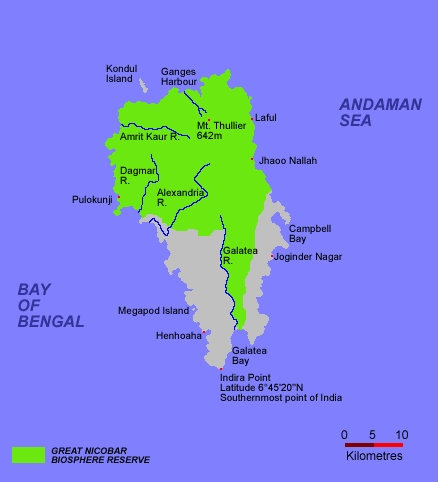
Issues Facing the Shompen Tribe
Loss of Habitat
• Large scale infrastructure requires diversion of forest land.
• Threatens traditional livelihoods based on hunting, gathering, and shifting cultivation.
Cultural Disruption
• The Shompen community lives in relative isolation with minimal outside interaction.
• Increased external contact may disrupt traditional social and cultural systems.
Health Vulnerability
• PVTGs often lack immunity to common diseases.
• Exposure to outsiders may increase risks of epidemics and health crises.
Legal & Rights Concerns
• The Forest Rights Act (FRA), 2006 protects tribal rights over land, habitat, and forest resources.
• Questions raised regarding genuine tribal consent and implementation of FRA provisions.
Balancing Development and Ecological Sustainability
Renewable and Sustainable Infrastructure
• Promote green energy and eco sensitive infrastructure models.
• Ensure low impact development in ecologically fragile island ecosystems.
Strengthening Environmental Governance
• Conduct rigorous Environmental Impact Assessments (EIA).
• Ensure transparent public consultations and scientific review processes.
Inclusive Community Participation
• Empower Gram Sabhas and local tribal institutions in decision making.
• Ensure free, prior, and informed consent of indigenous communities.
Conservation and Biodiversity Protection
• Protect forests, mangroves, coral ecosystems, and wildlife habitats.
• Adopt sustainable tourism and coastal management practices.
Forest Rights Act (2006)
Forest rights act legally recognize the rights of forest‑dwelling Scheduled Tribes and other traditional forest dwellers who have lived in forests for generations.
- Livelihood & Food Security
- Ensures access to forest resources for daily needs like fuel, fodder, minor forest produce, and cultivation.
- Strengthens economic security of tribal and forest communities.
- Sustainable Forest Management
- Promotes conservation of biodiversity and ecological balance.
- Empowers communities to protect forests while using them sustainably.
Important Provisions of FRA
Individual Rights
- Right to hold and live on forest land for habitation or self‑cultivation (up to 4 hectares per family).
Community Rights
- Rights over minor forest produce, grazing, fishing, and access to traditional forest resources.
- Recognition of Community Forest Resource (CFR) rights, allowing villages to manage forests collectively.
Habitat Rights
- Special rights for Particularly Vulnerable Tribal Groups (PVTGs) to protect their traditional habitats.
Protection from Eviction
- Forest dwellers cannot be evicted until their claims are settled under FRA.
Institutional Mechanism
- Gram Sabha is the key authority to initiate claims and manage community rights.
State and district‑level committees oversee recognition and implementation.
Significance for India
• Highlights the challenge of balancing development with environmental sustainability.
• Tests India’s commitment to tribal rights and constitutional protections.
• Important for maritime security, Indo Pacific strategy, and regional connectivity.
• Raises questions about sustainable island development and ecological governance.
Students preparing through Hyderabad IAS coaching, IAS coaching, and civils coaching in Hyderabad should focus on topics related to tribal rights, environmental governance, island ecology, and strategic infrastructure for UPSC preparation.
Conclusion
The Great Nicobar project reflects India’s attempt to combine strategic development with ecological conservation and tribal protection. Its long term success will depend on ensuring sustainable development, genuine tribal participation, and strict adherence to constitutional and environmental safeguards.
This topic is available in detail on our main website.