
The Union Minister for Science & Technology recently dedicated the UMMID Programme, India’s first national initiative to systematically address rare inherited genetic disorders. This topic is important for aspirants preparing through IAS coaching in Hyderabad, UPSC online coaching, and UPSC coaching in Hyderabad.
Genetic Disorders in India
• Though individually rare, genetic disorders collectively affect millions of families in India.
• Common examples include Thalassemia, Sickle Cell Anemia, Hemophilia, Down Syndrome, and Duchenne Muscular Dystrophy.
• Causes: Mutations in DNA, chromosomal abnormalities, or inherited defective genes.
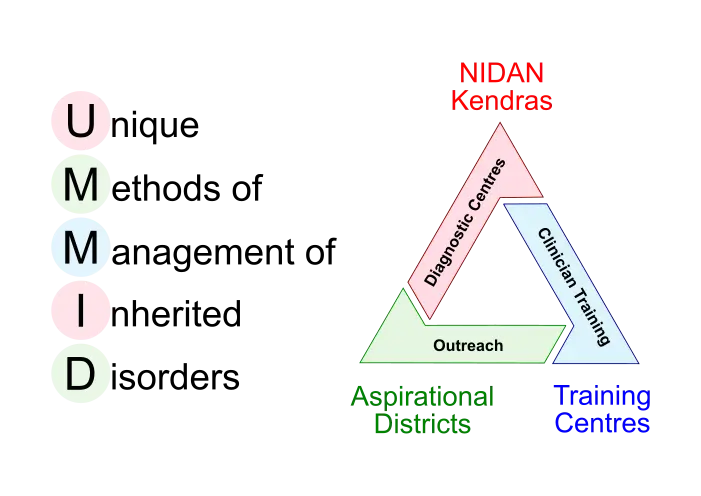
UMMID Programme
• Launch: Initiated by the Department of Biotechnology under the Ministry of Science & Technology.
• Objective: Early detection, prevention, and management of rare genetic diseases.
• Integrated Approach: Combines diagnosis, counselling, training, and public awareness.
• Support to NPRD 2021: Aligns with the National Policy for Rare Diseases, creating structured care pathways.
Key Pillars of the Programme
NIDAN Kendras
• Centres for diagnostics and genetic counselling.
Outreach in Aspirational Districts
• Extends services to underserved and remote regions.
Specialised Training Centres
• Builds capacity among healthcare professionals in genomic medicine and counselling.
Static Context
• Rare Diseases in India: Estimated 70 million people affected.
• National Policy for Rare Diseases (2021): Focuses on early intervention, affordability, and research support.
• Global Context: World Health Organization stresses the importance of genomic medicine in public health.
Significance of the Programme
• Promotes early diagnosis and timely intervention.
• Strengthens India’s genomic medicine ecosystem.
• Supports affordable and accessible healthcare for rare disease patients.
• Enhances awareness and counselling services for affected families.
• Builds research and healthcare capacity in genetics.
Students preparing through Hyderabad IAS coaching, IAS coaching, and civils coaching in Hyderabad should focus on topics related to biotechnology, public health policy, and rare disease governance.
CAUSES OF GENETIC DISORDERS
Genetic disorders are health conditions caused by abnormalities in an individual’s DNA. These abnormalities may involve a single gene, multiple genes, chromosomes, or mitochondrial DNA, and they can be inherited or occur due to new mutations.
- Single‑Gene Mutations
- These occur when a single gene is altered, leading to defective proteins.
- Example: Sickle Cell Disease and Cystic Fibrosis result from mutations in one gene.
- Chromosomal Abnormalities
- Caused by changes in chromosome number or structure.
- Example: Down Syndrome arises due to an extra copy of chromosome 21 (Trisomy 21).
- Multifactorial Inheritance
- Results from a combination of genetic predisposition and environmental factors.
- Example: Diabetes and heart disease develop through gene–environment interaction.
- Mitochondrial Inheritance
- Inherited through mutations in maternal mitochondrial DNA.
Example: Disorders affecting muscle function and energy metabolism are linked to mitochondrial defects.
Conclusion
The UMMID Programme marks India’s first structured national response to rare genetic disorders. By integrating diagnosis, counselling, research, and capacity building, it strengthens healthcare delivery and promotes a more inclusive and resilient health system.
This topic is available in detail on our main website.