
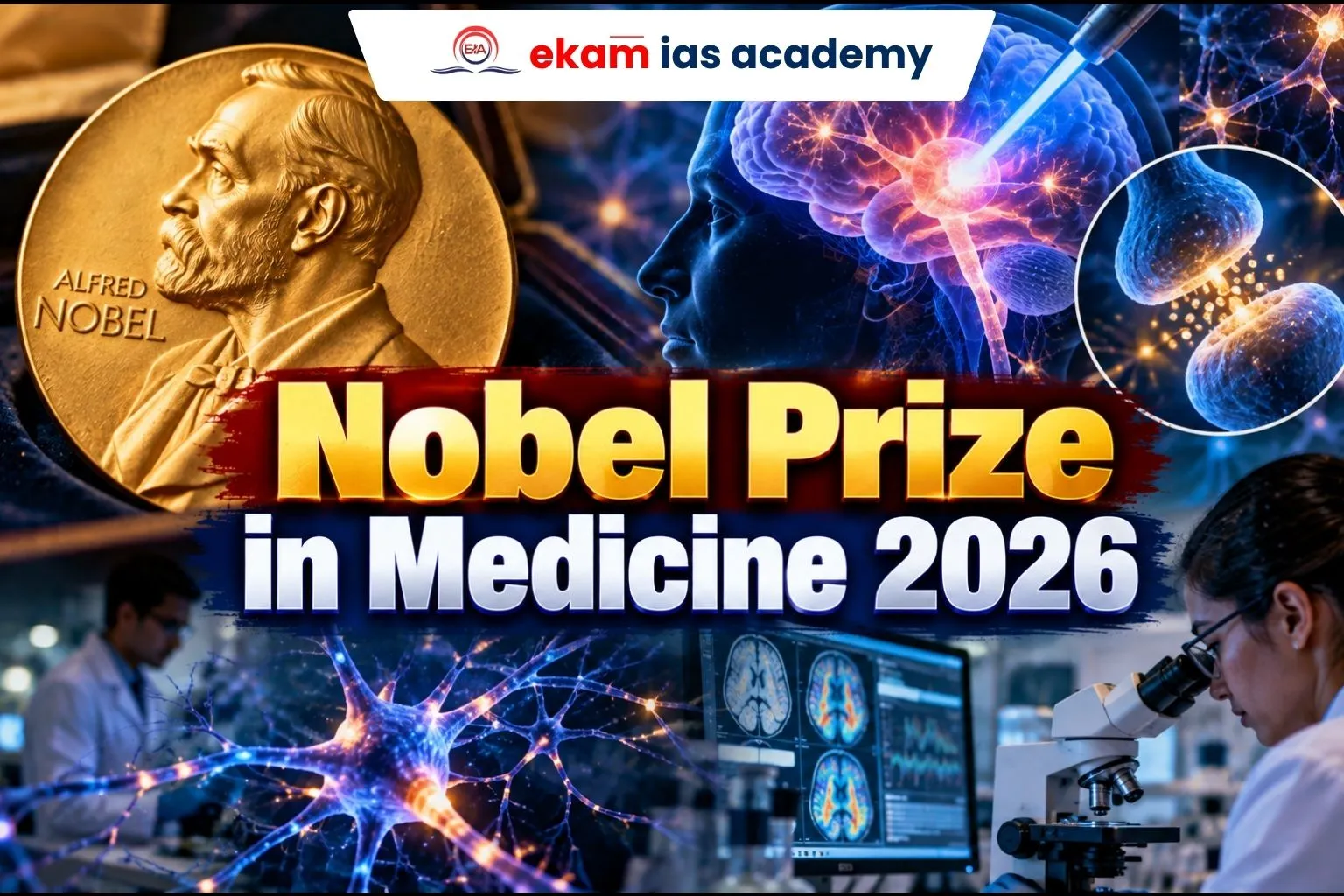
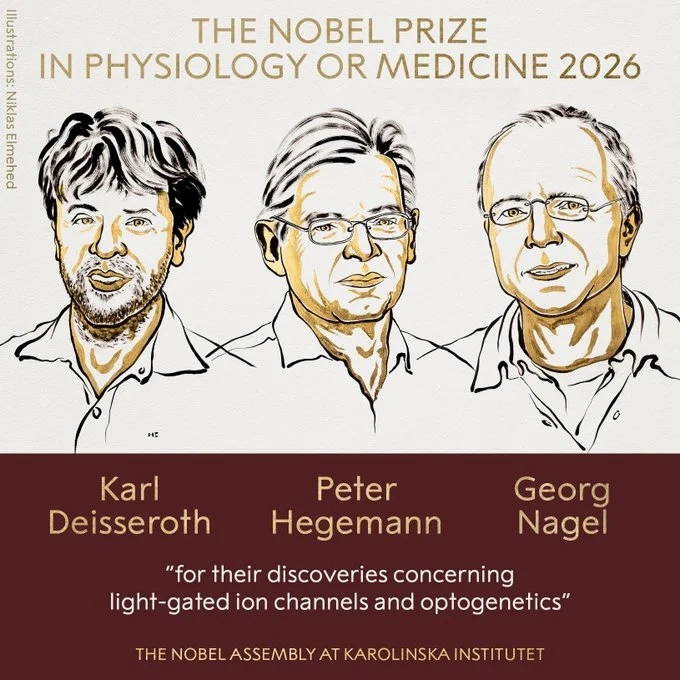
The Nobel Prize 2026 Optogenetics recognition in Physiology or Medicine honoured Karl Deisseroth, Peter Hegemann and Georg Nagel for discoveries related to light-gated ion channels and optogenetics. The Nobel Prize in Medicine 2026 highlights the importance of this Neuroscience Breakthrough 2026.
- Their work enables scientists to control selected nerve cells using light, transforming research on brain circuits, behaviour and neurological disorders. This breakthrough has strengthened the field of Optogenetics and Brain Science.
What is Optogenetics?
- Optogenetics Explained: Optogenetics combines genetics and light-based stimulation to study the activity of specific cells, especially neurons.
- Its foundations emerged from research on light-sensitive proteins called channelrhodopsins, found in microorganisms such as green algae. These discoveries underpin Channelrhodopsin Optogenetics.
- These proteins act as light-controlled ion channels, allowing electrically charged ions to cross cell membranes.
- Scientists can introduce genes encoding these proteins into selected neurons and use precisely timed light pulses to activate or inhibit neural activity. This forms the basis of Optogenetics and Neuroscience research.
How Does It Work?
- A gene for a light-sensitive protein is introduced into targeted nerve cells.
- The neurons then produce these proteins in their cell membranes.
- Light of a particular wavelength opens or influences the channels.
- Movement of ions changes the neuron’s electrical activity.
- Researchers can consequently examine how particular neural circuits influence memory, movement, emotion and behaviour using Light Controlled Neurons.
Scientific and Medical Significance
- Brain mapping: Helps establish links between specific neural circuits and bodily functions, advancing Brain Research and Optogenetics.
- Neurological disorders: Improves understanding of Parkinson’s disease, epilepsy and Alzheimer’s disease.
- Mental health: Neural pathways associated with depression, anxiety and addiction can be investigated.
- Vision restoration: Light-sensitive proteins are being explored as possible tools for restoring aspects of visual function.
- Precision research: Unlike broad electrical stimulation, optogenetics can target particular cell populations with high spatial and temporal precision.
Challenges
- Delivering genes safely to precisely targeted human brain cells remains technically difficult.
- Long-term effects of genetic modification and repeated stimulation require careful assessment.
- Human applications raise biosafety, ethical, regulatory and informed-consent concerns.
- Sophisticated equipment and high research costs could widen inequalities in access to advanced therapies.
Relevance for India
- The National Brain Research Centre (NBRC), an autonomous institution under the Department of Biotechnology, undertakes multidisciplinary research on brain function and disorders.
- DBT has supported development of neuro-tools, diagnostic techniques and affordable therapeutic technologies, demonstrating India’s growing focus on translational neuroscience.
- India should strengthen neuroscience infrastructure, interdisciplinary training, biotechnology research and academia-industry collaboration.
- Public investment must also ensure that breakthrough therapies become affordable and accessible, rather than remaining limited to specialised centres.
Conclusion
Optogenetics shows how curiosity-driven basic science can illuminate the brain while creating pathways towards precise, accessible and transformative medical treatments. The Optogenetics Nobel Prize 2026, including the contributions of Karl Deisseroth Nobel Prize, Peter Hegemann Nobel Prize and Georg Nagel Nobel Prize, marks an important milestone in modern neuroscience and is highly relevant for Optogenetics UPSC preparation.