
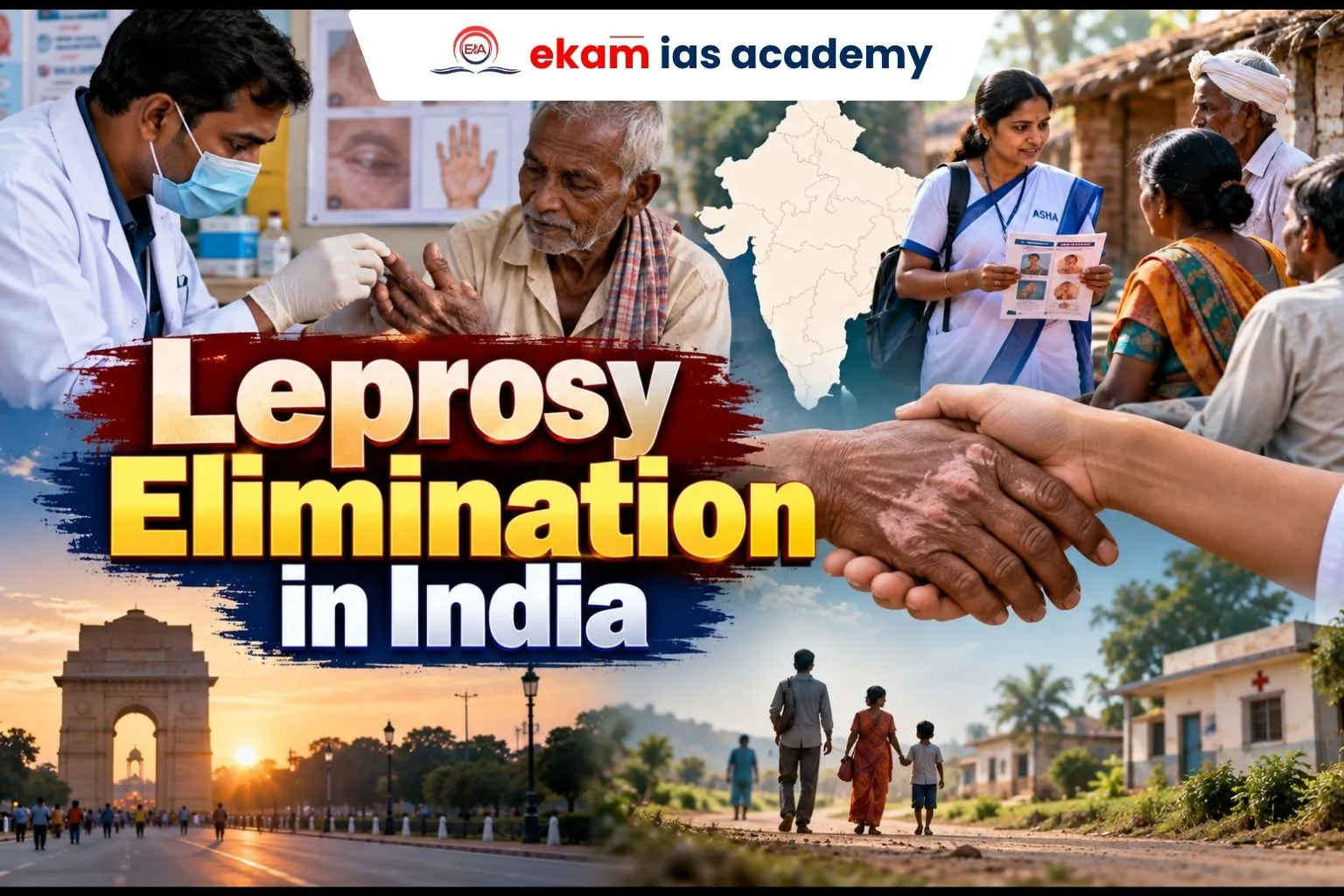
India has reduced Leprosy Cases in India, prevalence and disability, yet continuing transmission, especially among children and high-burden districts, threatens the goals of Leprosy Elimination India 2026 and the broader vision of a Leprosy Free India.
About Leprosy
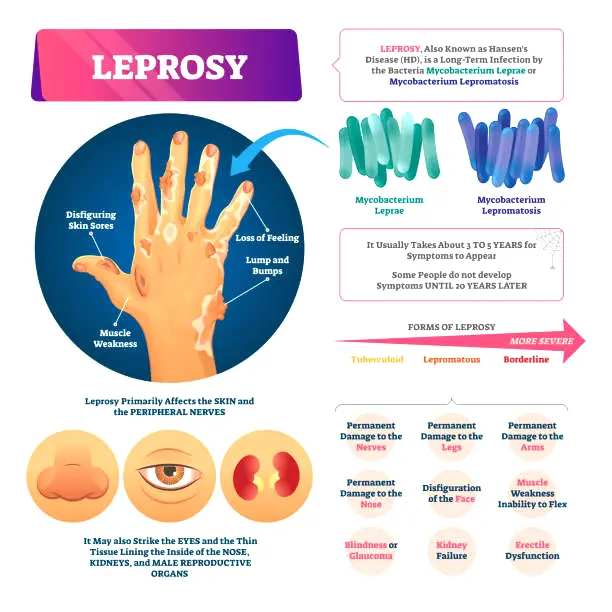
- Leprosy in India (Hansen’s disease) is a chronic infectious disease caused by Mycobacterium leprae.
- It mainly affects the skin, peripheral nerves, eyes and upper respiratory tract.
- It is curable through multidrug therapy (MDT); early Leprosy Treatment in India prevents disability.
- Prolonged close contact with untreated cases increases transmission risk, making household contacts particularly important for surveillance and Leprosy Prevention India.
India’s Progress and Changing Goal
- India achieved national-level “elimination as a public health problem” in 2005, meaning prevalence fell below one case per 10,000 population. This marked an important milestone in the Leprosy Elimination Programme India.
- However, low prevalence does not necessarily mean transmission has stopped.
- WHO now emphasises zero transmission, zero disability and zero discrimination, shifting policy beyond prevalence reduction.
- Persistent child cases are particularly concerning because they indicate relatively recent community transmission and underline the need for a stronger Leprosy Elimination Strategy India.
Challenges
- Regional inequality: Chhattisgarh, Jharkhand, Odisha and Maharashtra continue to carry significant disease burden.
- Delayed diagnosis: Social stigma discourages patients from seeking timely medical care, increasing nerve damage and disability.
- Diagnostic gaps: Leprosy may be mistaken for ordinary skin conditions by inadequately trained healthcare workers.
- Hidden transmission: Long incubation periods make identification of infection chains difficult.
- Social discrimination: Stigma can affect education, employment, marriage and social participation, highlighting the importance of Leprosy Awareness in India.
- The NSP targets only 1,000 child cases and 0.5 Grade-2 disability cases per million by 2026-27, highlighting the need for accelerated action towards Leprosy Elimination in India.
Way Forward
- Shift programme assessment from merely reducing prevalence towards district-level interruption of transmission.
- Intensify contact tracing, active case detection and prophylaxis in endemic clusters.
- Train primary healthcare personnel for early and accurate diagnosis.
- Use digital surveillance to identify geographical transmission hotspots.
GOVERNMENT MEASURES
1. National Leprosy Eradication Programme (NLEP) provides detection, treatment,
prevention and rehabilitation services.
2. Leprosy Case Detection Campaigns conduct active screening in high-endemic districts.
3. ASHA-based surveillance helps identify suspected cases at community level.
4. Single-dose rifampicin is used as post-exposure prophylaxis for eligible contacts.
5. Nikusth 2.0 supports digital reporting and disease surveillance.
6. Leprosy was declared a notifiable disease in 2025, strengthening case reporting.
Conclusion
India can achieve Leprosy Elimination in India only by breaking every transmission chain through early detection, preventive treatment, strong surveillance and stigma-free healthcare. Strengthening the National Leprosy Eradication Programme is essential for achieving a Leprosy Free India, while making Leprosy UPSC and National Health Mission UPSC important areas for understanding India’s public-health strategy.