
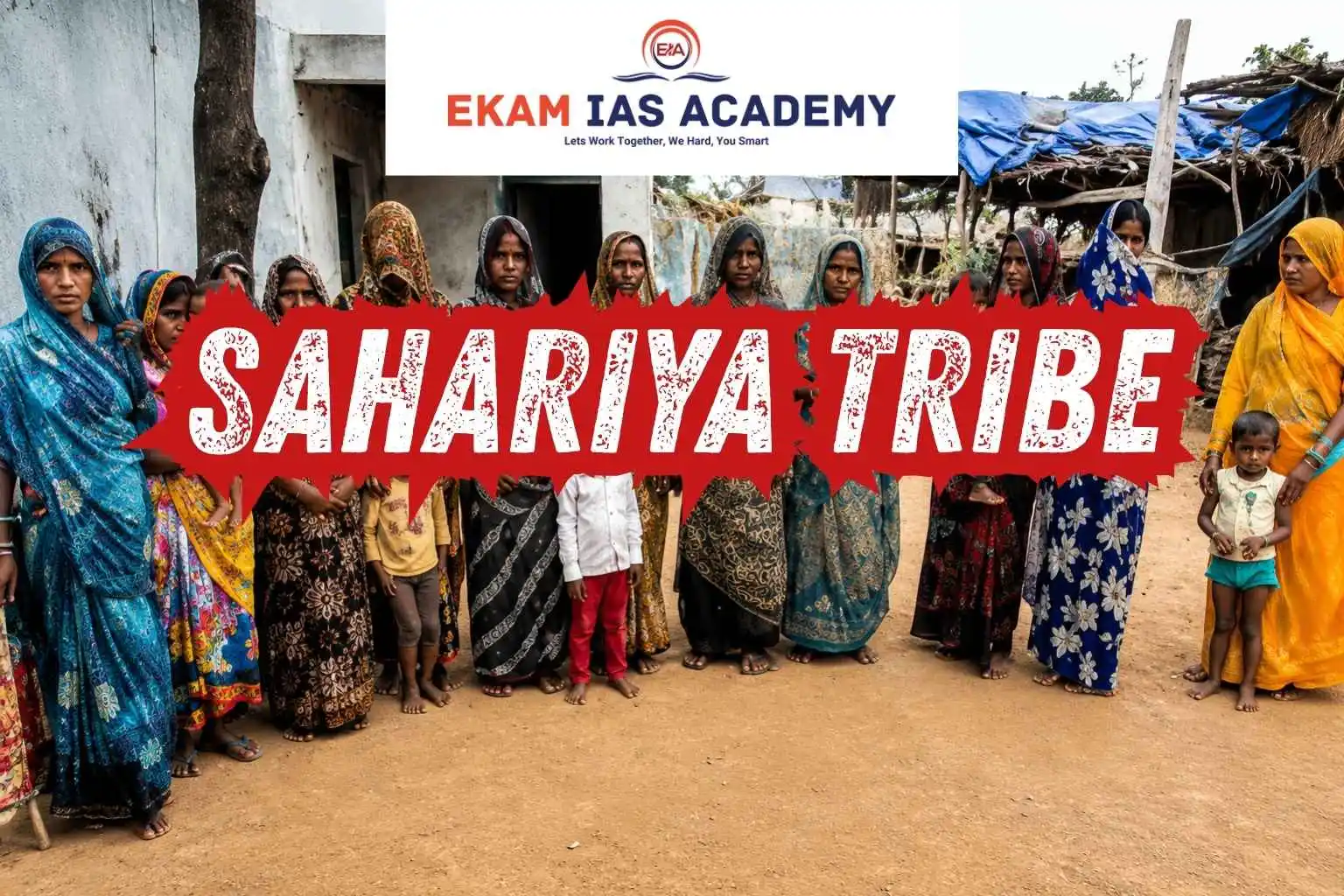
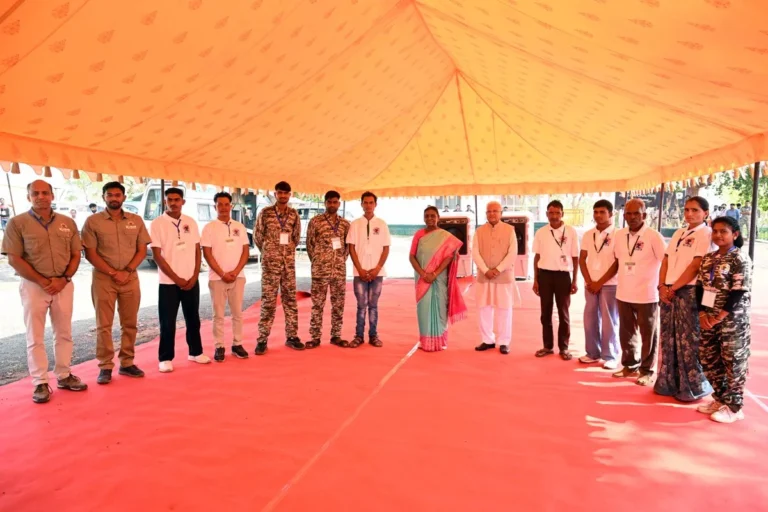
The President of India recently met members of the Sahariya tribe along with Cheetah Mitras at Kuno National Park, Madhya Pradesh, highlighting their role in conservation and community participation. This topic is important for aspirants preparing for GS3 Environment and tribal ecology-related issues through civil services coaching.
Identity and Location
• PVTG Status: Sahariya are listed among India’s Particularly Vulnerable Tribal Groups.
• Other Names: Seher, Sair, Savar, Saonar, Sahra.
• Habitat: Found mainly in Madhya Pradesh and Rajasthan, living in forest margins and villages.
• Settlements: Called Seharana — clusters of stone or mud houses with roofs of stone slabs (Patore).
Language and Religion
• Original language lost; now speak local dialects of their regions.
• Practice Hinduism blended with animistic traditions, worshipping deities like Bhavani, Gond Devta, and Bijasur.
Social Structure
• Divided into five sub-tribes based on occupation:
- Jati – farmers
- Arsi – weavers
- Muli – iron workers
- Kindal – basket makers
- Kumbi – potters
Cultural Practices
• Famous for Saharia Swang dance, performed during Holi.
• Accompanied by dhol, nagari, and matki; features a male performer dressed as female.
Livelihood
• Predominantly forest dwellers, dependent on forest produce.
• Cultivate small plots and often work as landless labourers.
• Skilled in producing catechu from khair trees, a traditional forest-based craft.
Conclusion
The Sahariya, a PVTG community with rich cultural traditions and forest-based livelihoods, remain vital to India’s tribal heritage and conservation efforts.