
Kerala prepared a draft Oil Spill Contingency Plan (OSCP) after two shipwrecks in 2025 (MSC Elsa 3 and MV Wan Hai 503) threatened its marine ecosystem and coastal environment. This topic is important for aspirants preparing through IAS coaching in Hyderabad, UPSC coaching in Hyderabad, and UPSC online coaching.
What Prompted the Plan
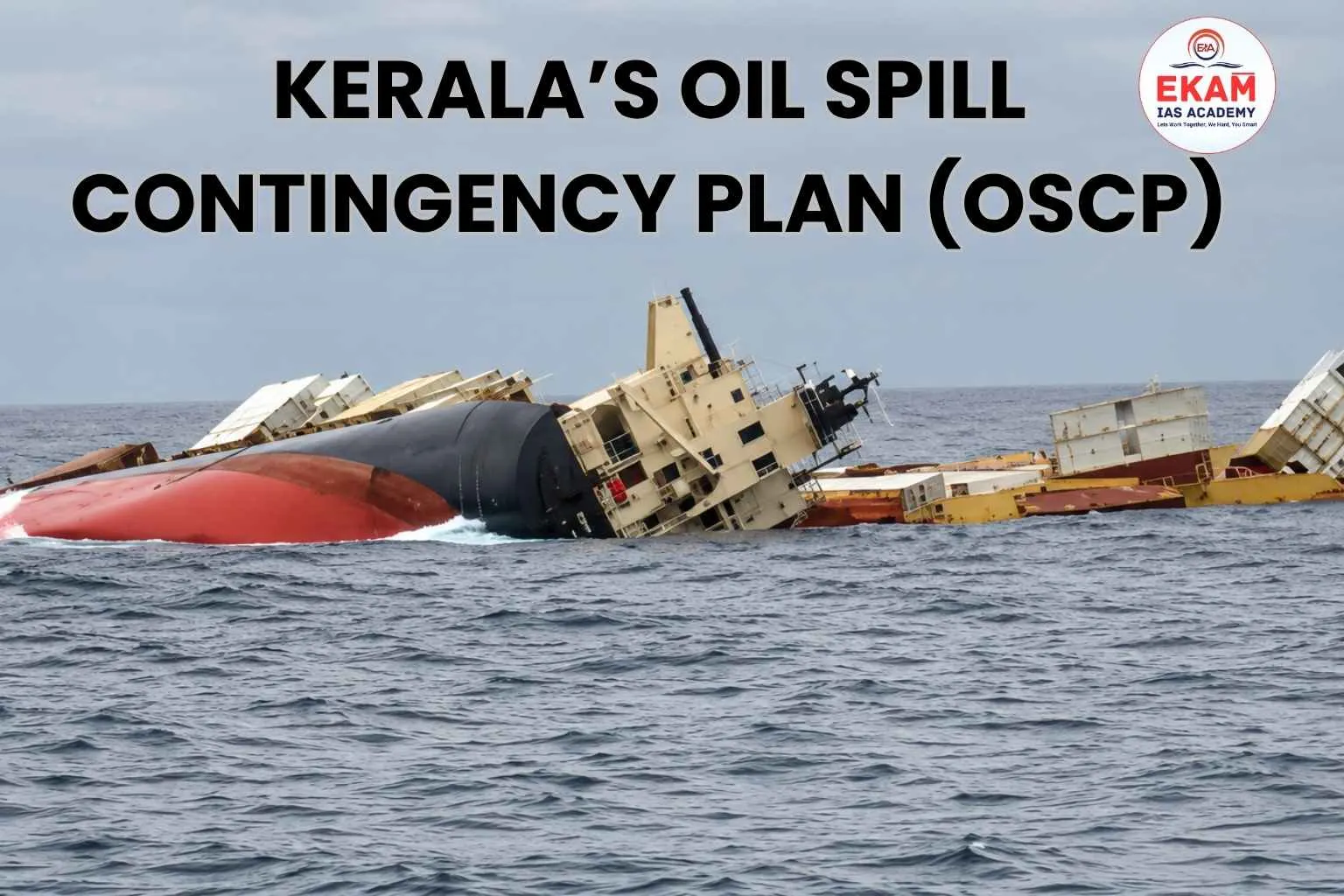
• Shipwrecks in 2025: MSC Elsa 3 sank with 640 containers, including hazardous cargo and calcium carbide. MV Wan Hai 503 wrecked soon after.
• Environmental Impact: Hazardous chemicals and nurdles (plastic pellets) washed ashore. Raised alarm over marine biodiversity and fishing livelihoods.
• Initiation: Proposal first made in 2016 under chemical accident preparedness review, delayed due to technical and financial hurdles.
• Scope: Covers marine oil spills within 12 nautical miles (24 km) of coast and river systems up to 40 km inland.
Oil Spills
• Definition: Leakage of crude oil or petroleum products into sea or rivers due to accidents, shipwrecks, or industrial mishaps.
• Detrimental Effects:
• Coats marine life (fish, turtles, birds) with toxic layers.
• Damages coral reefs, mangroves, and coastal ecosystems.
• Pollutes beaches, affecting tourism and fishing.
• Examples:
• Deepwater Horizon (2010, Gulf of Mexico): Worst marine oil spill, massive ecological damage.
• MSC Elsa 3 (2025, Kerala): Plastic nurdles and hazardous cargo polluted southern coast.
Kerala’s OSCP
• Mapping: Environmental Sensitivity Index for vulnerable coastal areas.
• Response Plans:
• Shipboard pollution emergency plans.
• Wildlife rescue and rehabilitation.
• Tactical booming and site specific response.
• Crisis Management: Clear chain of command, departmental responsibilities, and contact database.
• Shoreline Clean up: Guidelines for assessing oil type, site conditions, and prioritised methods.
• Integration: Prepared in line with National Oil Spill Disaster Contingency Plan (NOS DCP) guidelines (2015, 2018, 2024).
Steps Before Finalisation of OSCP
• Technical Inputs in Draft: The draft plan incorporates hydrodynamic modelling, marine sensitivity mapping, and net environmental benefit analysis to assess risks and responses.
• Expert Review: The draft will be examined by a committee of specialists to ensure scientific accuracy and practical feasibility.
• Submission to Authority: After vetting, the final Oil Spill Contingency Plan (OSCP) will be submitted to the Indian Coast Guard, the nodal agency responsible for tackling marine oil pollution.
Significance of the Plan
• Strengthens disaster preparedness against marine pollution incidents.
• Protects biodiversity, fisheries, tourism, and coastal livelihoods.
• Enhances inter agency coordination between Coast Guard, State authorities, and environmental bodies.
• Supports sustainable coastal governance and climate resilience.
Conclusion
By combining scientific mapping, clear response protocols, and inter agency coordination, Kerala’s OSCP strengthens disaster preparedness and ensures protection of marine biodiversity, fishing livelihoods, and coastal communities. For aspirants preparing through IAS coaching and civils coaching in Hyderabad, this topic is important for GS3 Environment, Disaster Management, and Coastal Ecology.
This topic is available in detail on our main website.