
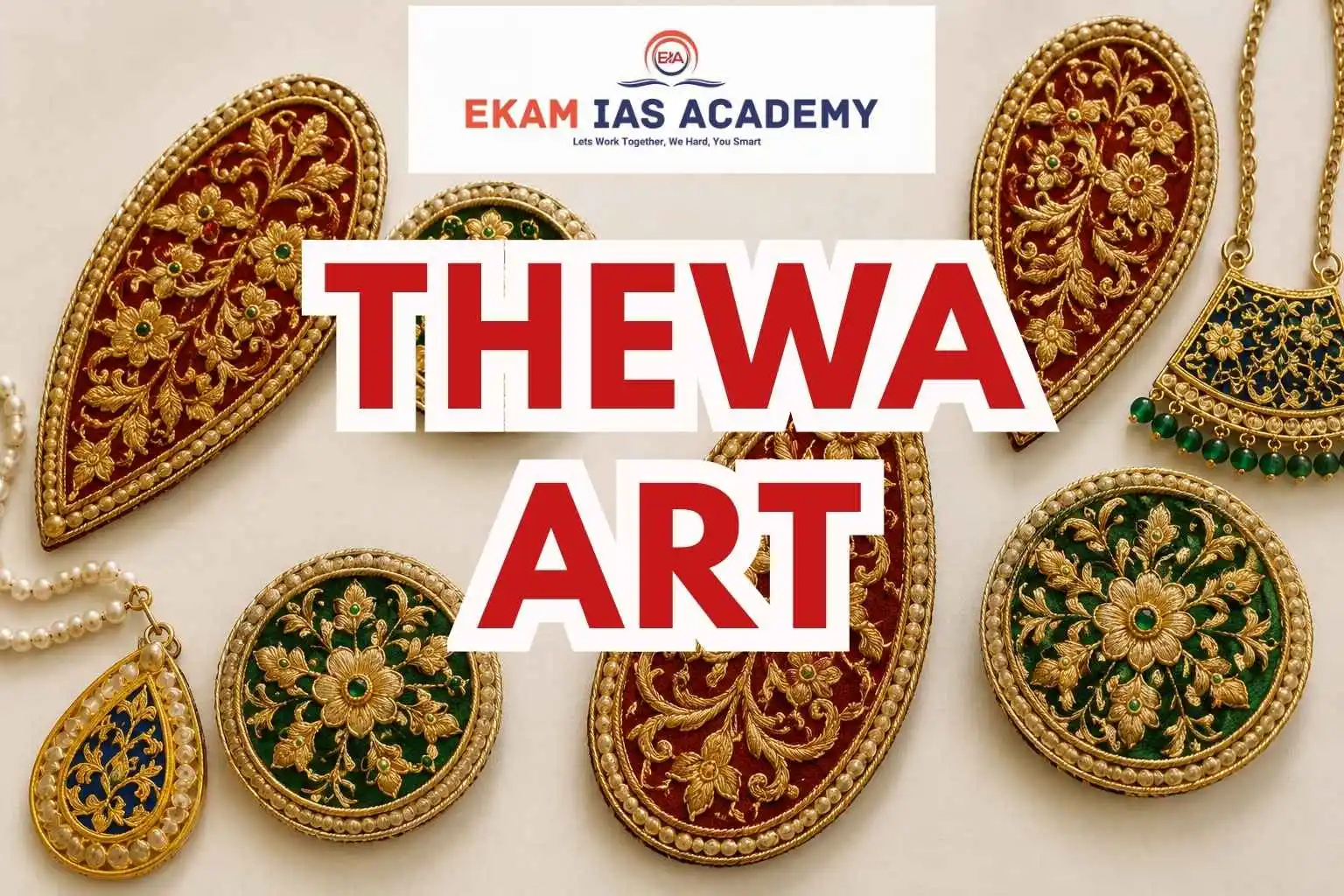
The Prime Minister of India gifted Thewa motif cufflinks to the Slovak President during his recent visit, highlighting India’s rich cultural heritage. This topic is important for aspirants preparing for GS1 Indian Art and Culture and traditional crafts through civil services coaching.
Thewa Art
• Unique Craft: A 400-year-old jewelry tradition from Pratapgarh, Rajasthan, entirely handcrafted.
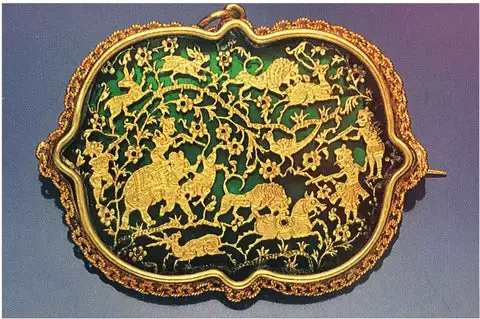
• Technique: Involves fusing 23-carat gold foil onto colored glass using a secret thermal bonding process, without glue or solder.
• Origin: First crafted by Nathu Lal Sonewal in the 18th century; “Thewa” means “setting” in the local dialect.
• Recognition: Received Geographical Indication (GI) tag in 2014, protecting its authenticity.
Process & Themes
• Gold sheet (Thewa ki Patti) fixed on a lac resin base, carved into intricate openwork designs.
• Common motifs: royal life, hunting scenes, peacocks, flowers, mythological figures, and wedding depictions.
• Each piece reflects Rajasthani culture and Mughal influences, making it both artistic and historical.
Significance
• Cultural Diplomacy: Showcased as a symbol of India’s heritage in international exchanges.
• Economic Value: Supports local artisans and promotes traditional crafts under Make in India and Handicrafts Promotion Schemes.
• Tourism & Heritage: Enhances Rajasthan’s identity as a hub of art and jewelry.
Conclusion
Thewa Art is a shining example of how India’s traditional crafts blend artistry, heritage, and diplomacy, keeping cultural legacies alive in the modern world.