
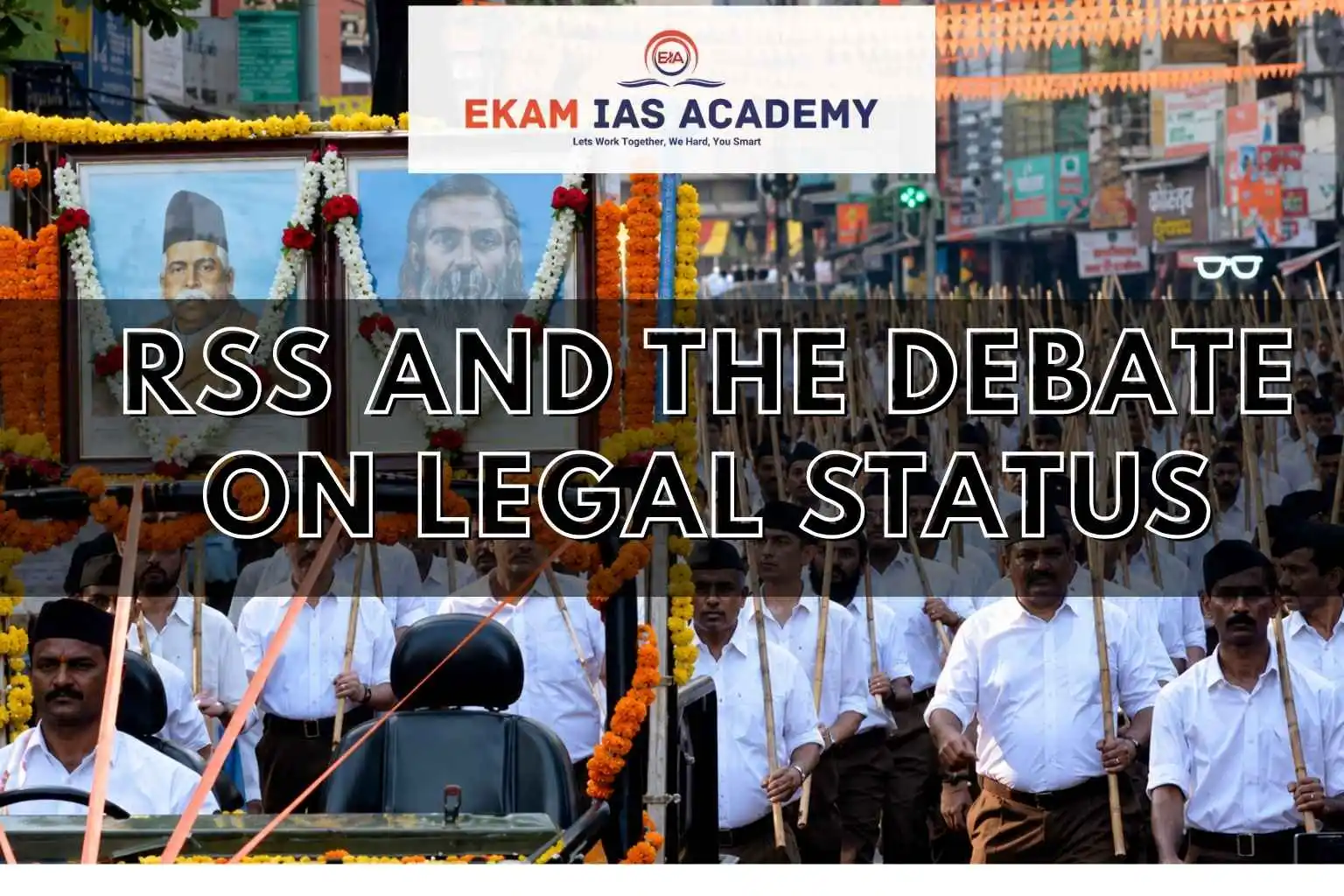
Recently, Karnataka Home Minister Priyank Kharge questioned the legal status of the Rashtriya Swayamsevak Sangh (RSS), asking why it operates without formal registration. This topic is important for aspirants preparing for GS2 Polity and governance of voluntary organisations through civil services coaching.
What is a Legal Person?
• Definition: Jurist John Salmond defined a person as any being capable of rights and duties.
• Types:
- Natural person: Living human beings.
- Artificial/Juridical person: Entities created by law (e.g., companies, societies, trusts).
• Companies Act 2013 (Section 9): Registered companies can sue and be sued, hold property, and have perpetual succession.
RSS’s Organisational Nature
• Voluntary Socio-Cultural Body: RSS describes itself as a body of individuals, not a registered corporate entity.
Court Recognition:
- CIT v RSS (1994, Patna HC): RSS treated as an “association of persons”; donations (gurudakshina) exempted from tax.
- Singhai Lal Chand Jain v RSS (1996, SC): RSS named as a party in eviction proceedings, represented by office bearers.
• Income Tax Act 1961 (Section 2(31)): A “body of individuals” is treated as a taxable entity whether incorporated or not.
Registration Options for Voluntary Associations
Legal Pathways in India:
- Society under the Societies Registration Act, 1860.
- Trust under the Indian Trusts Act, 1882.
- Section 8 Company under the Companies Act, 2013.
Benefits
- Provides legal personality, enabling organisations to own property, sue, and be sued.
Donations and FCRA Compliance
• RSS donations often termed gurudakshina, exempted from tax in past rulings.
• Under FCRA 2010, foreign contributions require registration under an existing statute (Society, Trust, Section 8 Company).
• RSS itself is not registered, but affiliated organisations (e.g., ABVP, Bharatiya Mazdoor Sangh, Vidya Bharati) operate as legal entities.
Regulatory Gap Highlighted
• Legal Limitation: Unregistered bodies like RSS cannot sue or be sued in their own name; rely on office bearers.
• Governance Concern: Raises questions of accountability, transparency, and compliance in funding.
• Debate: Tension between voluntary socio-cultural identity and legal recognition requirements for large organisations.
Broader Dimensions
• Comparative Insight: Many large voluntary organisations globally (e.g., churches, unions) are registered for accountability.
• UPSC Relevance: Highlights issues of legal personality, tax law, FCRA compliance, and governance of socio-political organisations.
• Policy Question: Should India mandate registration for all mass organisations to ensure transparency in donations and operations?
Conclusion
The RSS debate underscores India’s regulatory gap—large voluntary organisations wielding national influence must balance their socio-cultural identity with legal accountability and transparency.