
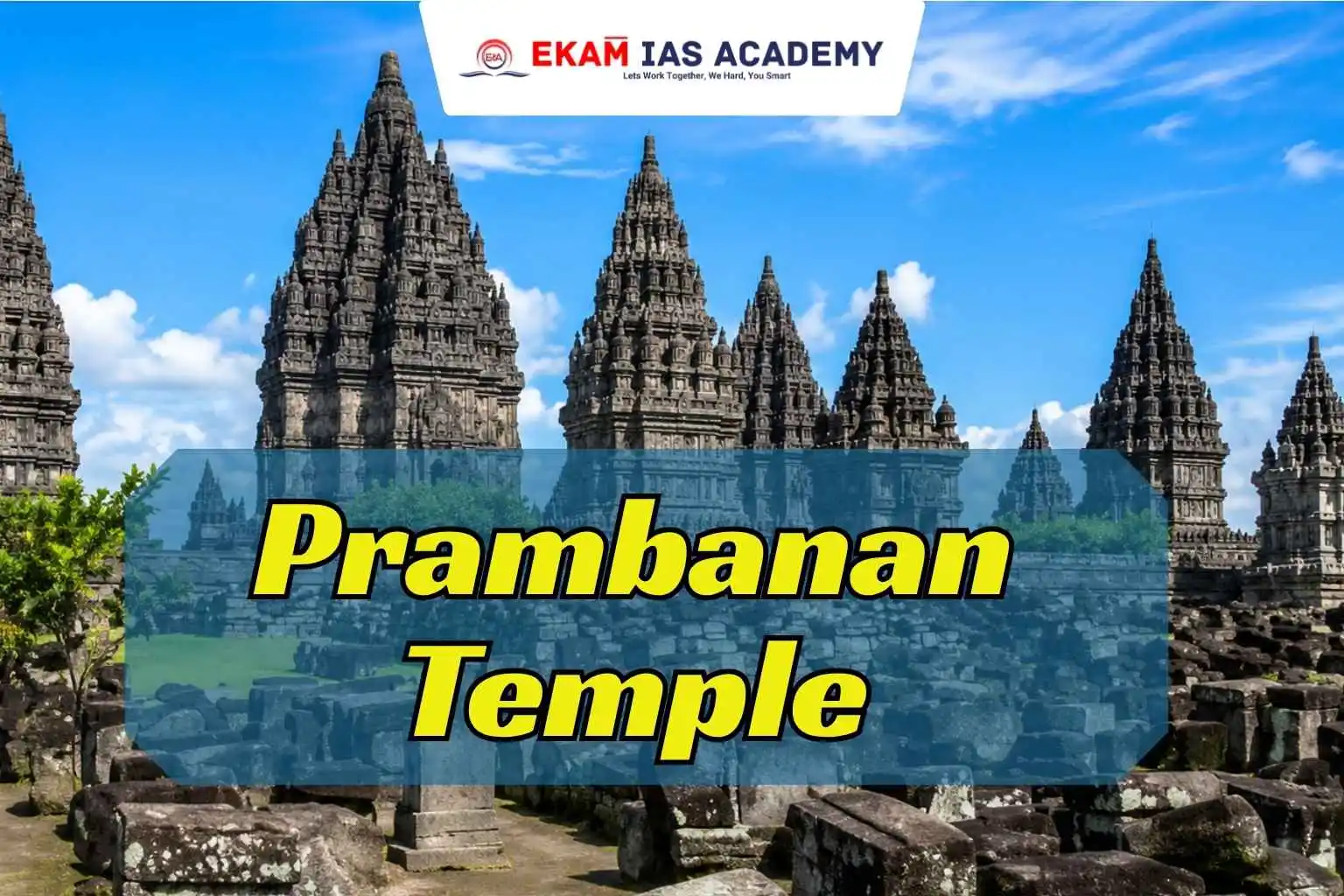
The Prime Minister of India recently visited the Prambanan Temple in Yogyakarta along with the Indonesian President, highlighting shared civilizational ties and cultural diplomacy. This topic is important for aspirants preparing for GS1 Indian Art & Culture through hyderabad ias coaching.
About Prambanan
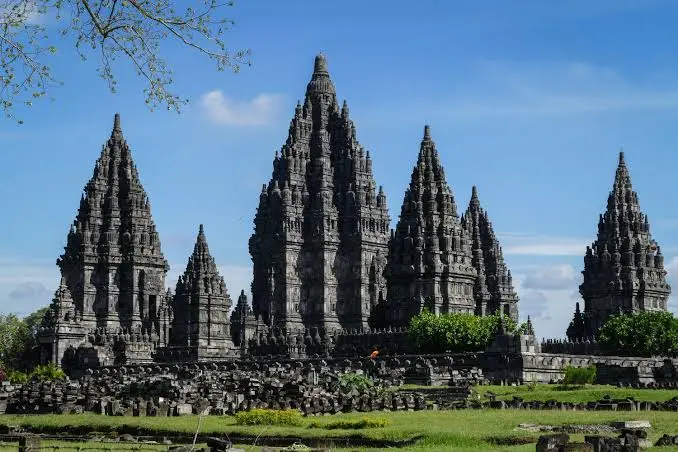
• Location: Sleman, Yogyakarta, Southern Java – largest Hindu temple complex in Indonesia.
• Built By: Sanjaya dynasty in the 9th century.
• Dedication: Dedicated to the Trimurti – Shiva, Vishnu, Brahma.
• Local Name: Roro Jonggrang (Temple of the Slender Virgin).
• UNESCO Recognition: Declared a World Heritage Site in 1991.
Architectural Features
• Blend of Javanese traditions and South Indian Pallava style.
• Bas reliefs depict episodes from the Ramayana, showing cultural exchange.
• Complex has 240 temples, with central compound hosting 16 shrines.
• Shiva temple is the tallest at 47 m, among the highest in Southeast Asia.
• Surrounding area also has Buddhist shrines, reflecting religious coexistence.
Significance
• Symbol of India–Indonesia cultural diplomacy and shared heritage.
• Reinforces soft power through civilizational links in the Indo-Pacific.
• Example of syncretic traditions where Hinduism and Buddhism coexisted.
• Important for tourism, heritage preservation, and global recognition.
• Connects with India’s Act East Policy and UNESCO’s emphasis on safeguarding cultural monuments.
Conclusion
The Prambanan Temple visit underscores that shared heritage strengthens modern partnerships, making culture a vital pillar of India–Indonesia relations.