

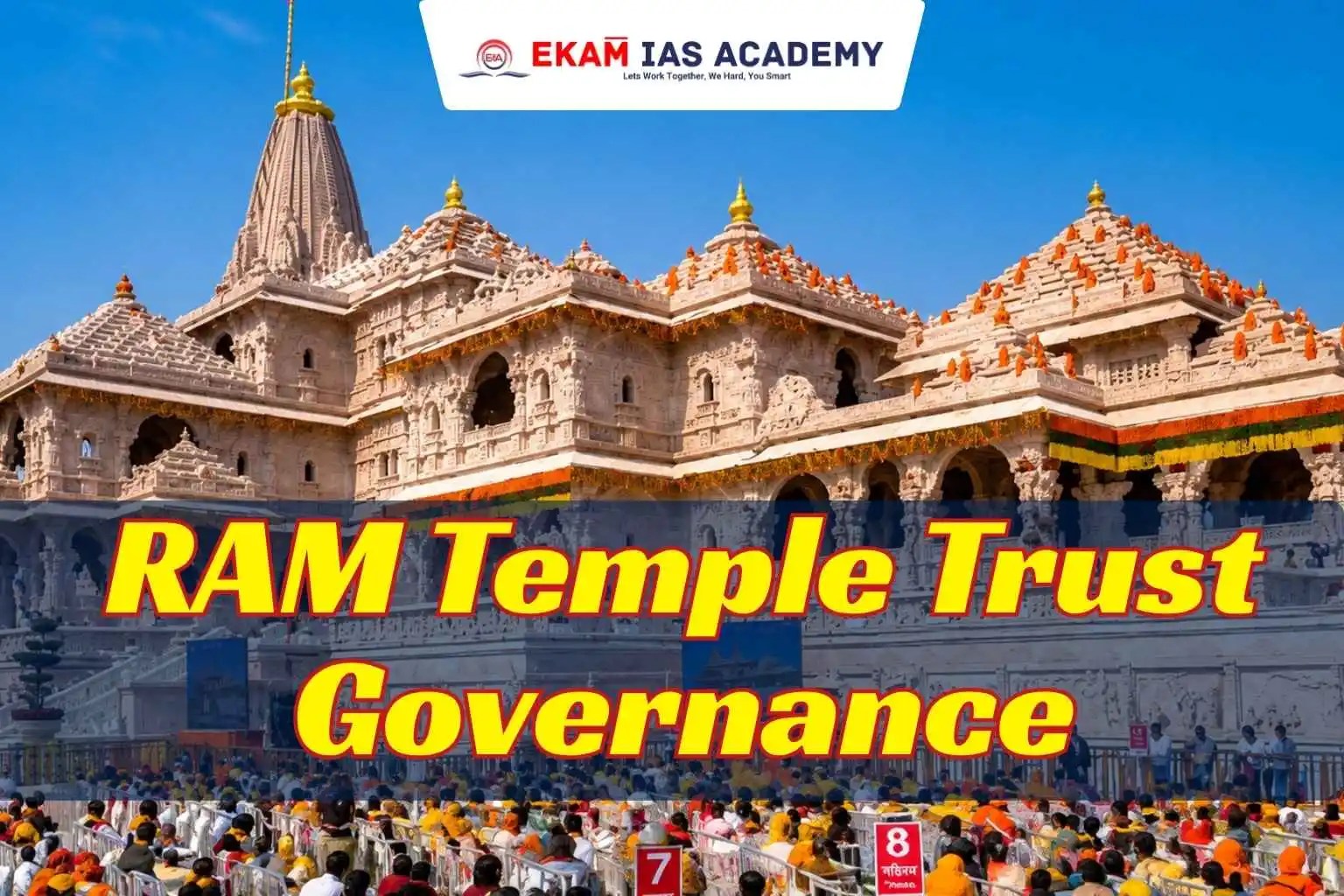
The Ram Janmabhoomi Teerth Kshetra Trust has accepted the resignations of two senior office bearers and announced the appointment of its first Chief Executive Officer (CEO), marking the biggest governance reform since its creation in 2020. This topic is important for aspirants preparing for GS2 Polity and governance issues through IAS coaching in Hyderabad.
Origin of the Trust
• Formation: After the Supreme Court’s Ayodhya judgment (Nov 2019).
• Constitution: Constituted by the Central government in Feb 2020 under the Ayodhya Acquisition Act (1993) and Gazette notification.
• Unique Structure: Neither a private religious trust nor a statutory temple board; instead, a public religious trust created by executive action.
Governance Structure
• 15 members including permanent, nominated, and ex officio representatives.
• Chaired by Mahant Nritya Gopal Das; day-to-day leadership earlier handled by Champat Rai.
• Construction overseen by a separate committee led by Nripendra Mishra (former Principal Secretary to PM).
How It Differs from Other Temples
• Tirupati, Jagannath, Vaishno Devi, Kashi Vishwanath: run under state legislation with government-appointed executive officers.
• Ram Temple: managed directly by trustees without a professional CEO until now.
Governance Challenges
• Donation theft controversy exposed weak management.
• Staff appointments were ad hoc, with missing appointment letters.
• Outsourced donation counters recommended by trustees themselves.
• Internal audit (2020) flagged lack of SOPs, financial records, HR processes, and accountability checks.
Why Appoint a CEO Now
• To professionalise administration and separate policy from daily operations.
• CEO will manage HR, finances, SOPs, and pilgrim services.
• Trustees will focus on policy and spiritual oversight.
• Brings governance closer to models of other major temples with executive officers.
Transparency Concerns
• Trust’s rulebook and deed not public; Centre treats them as confidential.
• CIC ruled Trust is not a “public authority” under RTI Act.
• Contrast: other temples’ governing Acts are publicly available.
Broader Significance
• Reflects need for professional management in large pilgrimage centres.
• Highlights balance between faith and accountability.
• Demonstrates how judicial mandates can create unique governance structures.
Conclusion
The appointment of a CEO marks a shift from founder-led management to professional governance, ensuring the Ram Temple can handle its scale while safeguarding transparency and trust.