

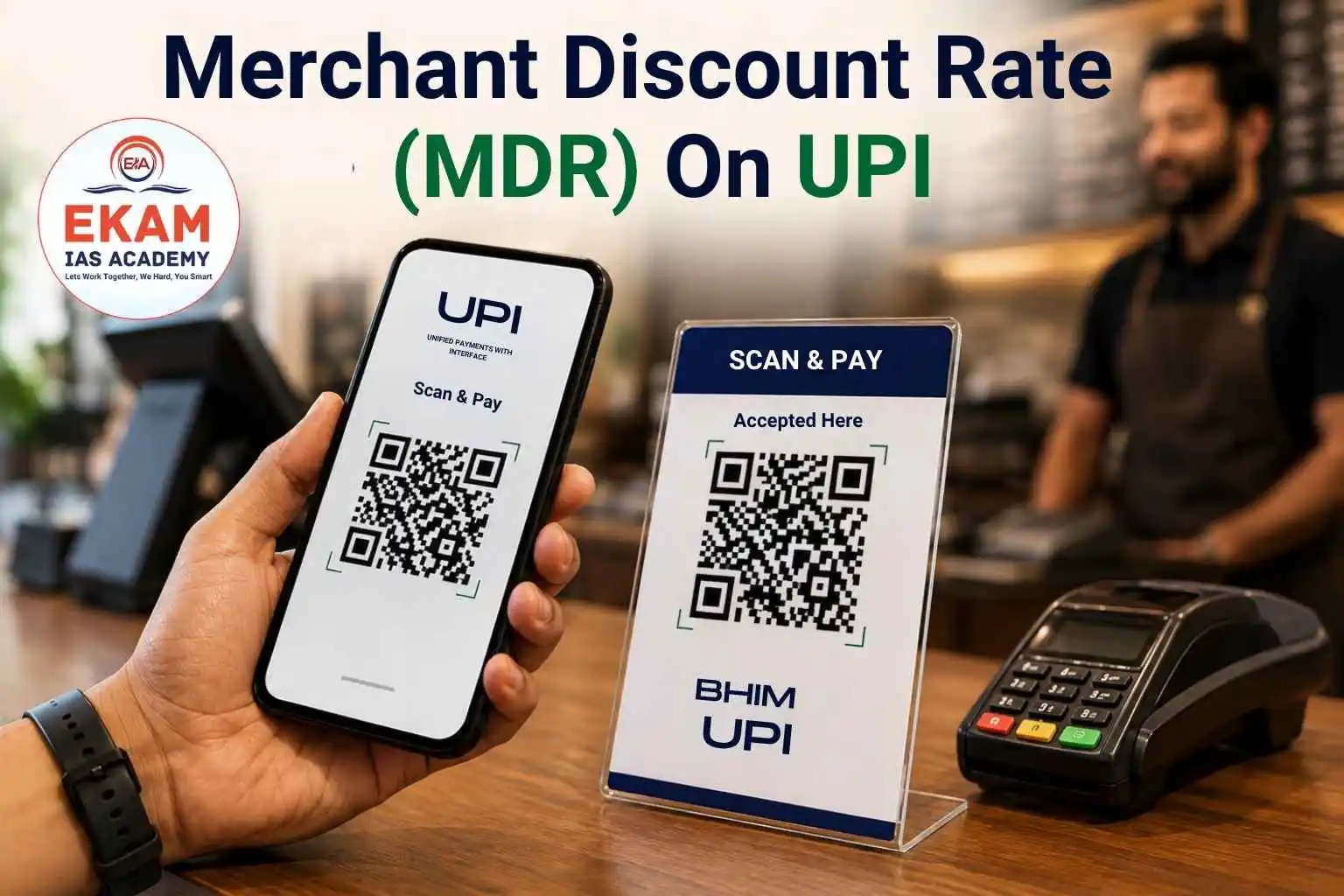
The government’s proposal to introduce a nominal Merchant Discount Rate (MDR) on select UPI transactions has renewed debate over balancing digital payment growth with financial sustainability. While small merchants and person-to-person transfers remain protected, the move aims to create a sustainable revenue model for banks, fintech companies, and payment infrastructure providers. This topic is important for aspirants preparing for GS3 Economy through IAS Preparation in Hyderabad.
Merchant Discount Rate
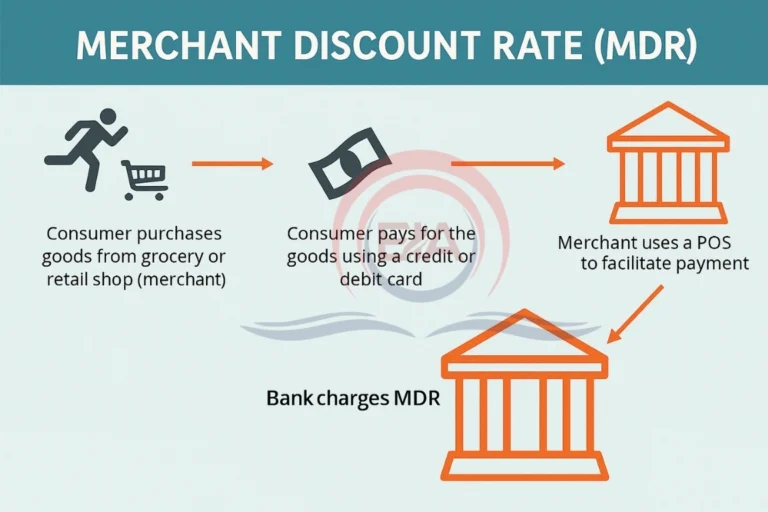
- MDR is the fee charged to merchants when they accept digital payments from customers.
- Payment Chain: The fee covers costs of multiple players, banks, card networks (Visa, RuPay, Mastercard), payment gateways, and processors — who enable the transaction.
- Components: MDR includes:
- Interchange fee (charged by issuing banks).
- Processor fee (charged by payment processors like Razorpay).
- Assessment fee (charged by card networks).
- Fraud prevention/extra service charges.
- Rate Range: Usually 1–3% of the transaction value, deducted before the merchant receives the payment settlement.
MDR and UPI
- Launch Phase (2016): MDR applied to UPI transactions initially.
- Zero MDR Policy (2020): Government removed MDR on UPI and RuPay debit cards to promote digital payments.
- Industry Impact: Banks, NPCI, and fintechs earned nothing per transaction, government compensated them via subsidies.
- Recent Amendment (2026): The Taxation and Other Laws (Amendment) Bill empowers government to levy MDR of 0.25–0.4% on business‑related UPI transactions above a threshold.
Features of New Proposal
- Nominal Rate: Much lower than debit/credit card MDRs.
- Limited Scope: Applies only to merchant transactions above a certain value.
- Consumer Protection: Person‑to‑person transfers remain free.
- Small Merchants: Transactions below threshold exempt to safeguard small businesses.
Key Aspects of MDR Policy
- Digital Push: MDR reforms are designed to strengthen Digital India and promote a cashless economy, ensuring wider adoption of electronic payments across all sectors.
- Revenue Model: Introducing a nominal MDR provides sustainable funding for banks, NPCI, and fintechs that maintain UPI infrastructure, reducing reliance on government subsidies.
- Global Comparison: Countries like Singapore and UK levy small fees on digital transactions. India’s proposed MDR remains lower, reflecting its focus on affordability and inclusion.
Conclusion
The MDR reform seeks to balance digital adoption with financial sustainability, ensuring UPI remains free for individuals while creating a viable ecosystem for merchants and payment providers.

One thought on “Merchant Discount Rate (MDR) On UPI”