

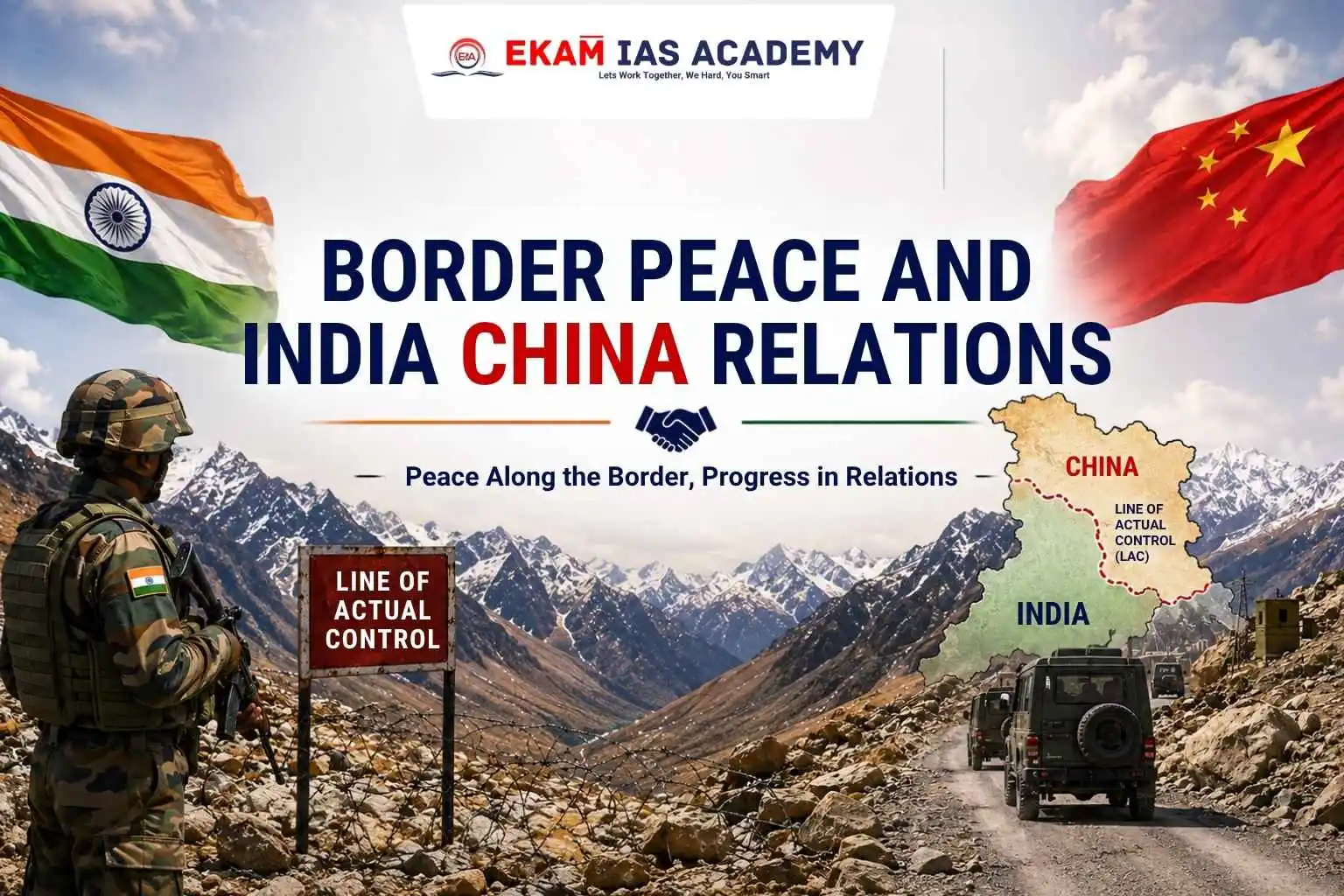
The India–China border dispute continues to remain a major challenge in bilateral relations. India has reiterated that peace and stability along the Line of Actual Control (LAC) are essential for maintaining normal diplomatic, economic, and strategic engagement with China. This topic is important for aspirants preparing for GS2 International Relations through Civil Services Preparation.
Background
- Allegations surfaced of Chinese troops crossing the Line of Actual Control (LAC) at Pukar La and Ollo in Upper Subansiri district, Arunachal Pradesh.
- The Ministry of External Affairs (MEA) conveyed to China that border issues are serious and directly affect overall relations.
- The Indian Army and Indo‑Tibetan Border Police (ITBP) have been deployed to dominate the border areas and check Chinese activities.
India’s Strategic Approach to Border Management
- Peace as Priority: India underscores that peace and tranquility along the border are essential for stable diplomatic and economic relations.
- Firm Response: Security forces remain prepared to counter incursions and safeguard territorial sovereignty.
- Diplomatic Channels: India continues to engage China through bilateral talks, WMCC consultations, and military commander meetings to resolve disputes.
Challenges in Border Management
- Recurring LAC Violations: Regular incidents of Chinese troops crossing the Line of Actual Control highlight different perceptions of the boundary, creating friction and mistrust.
- Balancing Security with Economy: India must manage economic ties with China (as a major trading partner) while simultaneously addressing national security concerns at the border.
- Civilian Safety and Development: Ensuring local population security, infrastructure growth, and livelihood opportunities in border districts remains a pressing challenge.
- Confidence‑Building Measures: Stronger mechanisms for dialogue, transparency, and military coordination are needed to prevent escalation and maintain peace.
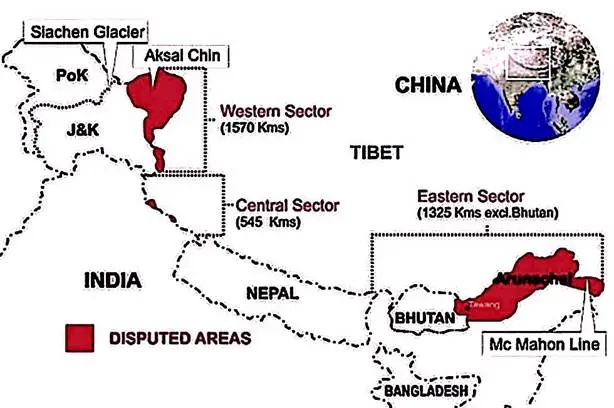
INDIA CHINA BORDER
India considers the border to be 3,488 km long, while China claims it is about 2,000 km.
- Nature: The boundary is not formally demarcated; instead, the Line of Actual Control (LAC) separates areas under Indian and Chinese control.
- Terrain: The border runs across high‑altitude regions of Ladakh, Himachal Pradesh, Uttarakhand, Sikkim, and Arunachal Pradesh.
Historical Context
- 1962 War: China occupied Aksai Chin and advanced across the McMahon Line, leading to India’s defeat.
- 1967 Clashes: At Nathu La and Cho La (Sikkim), India repelled Chinese forces.
Recent Standoffs:
- Doklam (2017): India intervened in Bhutanese territory against Chinese road construction.
- Galwan Valley (2020): Violent clash in Ladakh led to casualties on both sides.
Conclusion
India’s message is clear: border peace is the foundation of bilateral relations, and without stability along the LAC, broader cooperation with China cannot progress.

One thought on “Border Peace And India China Relations”