

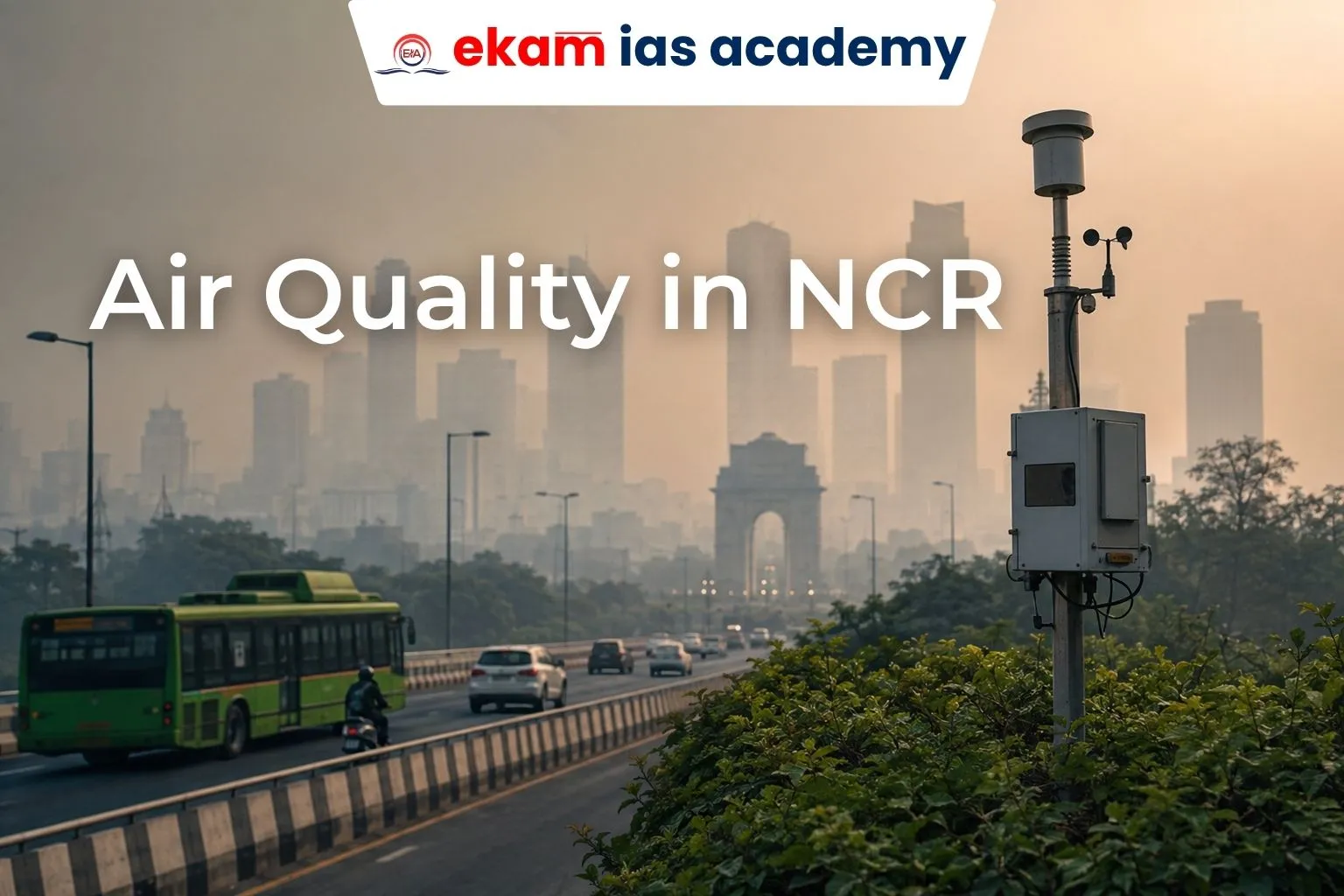
The Commission for Air Quality Management (CAQM) is collaborating with ISRO and state authorities to improve tracking of farm fires in Punjab and Haryana. This initiative is important for strengthening Delhi NCR Air Quality, improving Air Quality Measurement in NCR, and addressing the wider challenge of NCR Air Pollution. Better monitoring is also essential for effective Delhi NCR Pollution Control and long-term Air Pollution Control in NCR.
How Air Quality is Measured
- Continuous Ambient Air Quality Monitoring Stations (CAAQMS): Provide real-time data on pollutants and form an important part of Air Quality Monitoring Stations across urban areas.
- Manual Monitoring: Conducted by CPCB and SPCBs at fixed intervals as part of CPCB Air Quality Monitoring and broader Air Pollution Monitoring in India.
- Satellite Monitoring: ISRO satellites track stubble burning and pollution hotspots, helping identify major Delhi Air Pollution Causes such as farm fires and regional pollution transport.
- Indices Used:
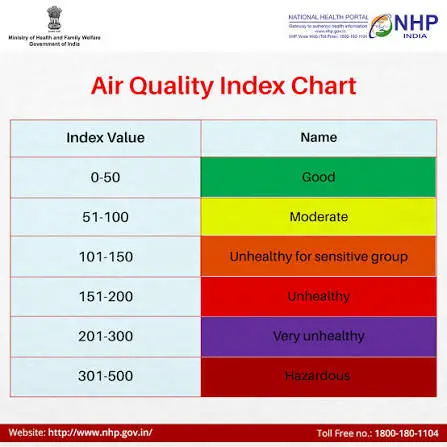
- Air Quality Index (AQI): Composite measure of pollutants and a key tool for understanding Air Quality Index India.
- Pollutant Standards Index (PSI): Internationally used, similar to AQI.
- Particulate Matter Concentration: Direct measurement of PM2.5 and PM10 levels.
- The National Air Quality Index enables standardised public communication of pollution levels, while AQI Measurement in India supports pollution alerts, health advisories, and policy responses.
Parameters Used by Government
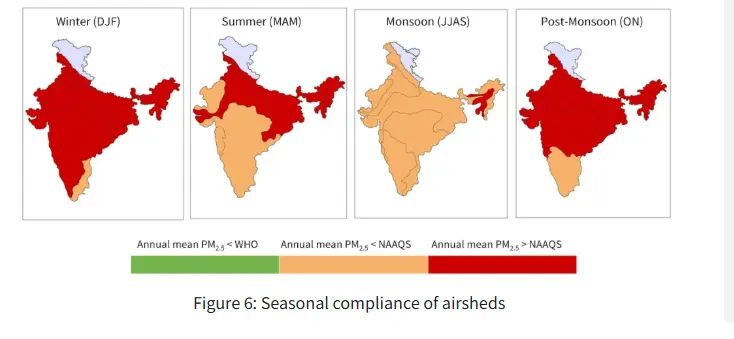
- PM2.5 & PM10: Fine particles harmful to lungs and heart and major contributors to Delhi Air Pollution.
- SO₂ & NOx: Emitted from coal combustion and vehicles, cause acid rain.
- Carbon Monoxide (CO): From incomplete combustion, toxic to humans.
- Ozone (O₃): Secondary pollutant formed in sunlight.
- Ammonia (NH₃): From agricultural activities and waste.
- Lead (Pb): Industrial emissions, harmful to the nervous system.
- Monitoring these parameters through Air Quality Monitoring Stations is central to reliable Air Quality Measurement in NCR and pollution-control planning.
Serious Air Pollutants
- PM2.5: Penetrates deep into lungs, linked to respiratory and cardiovascular diseases.
- PM10: Causes asthma, bronchitis, and reduced lung function.
- SO₂ & NOx: Lead to acid rain, smog formation, and respiratory irritation.
- Ozone: Damages lung tissue and reduces crop yields.
- CO: Reduces oxygen delivery in the body and is dangerous for heart patients.
- These pollutants contribute significantly to NCR Air Pollution and underline the public-health dimension of Delhi NCR Air Quality management.
Government Measures in NCR
- Graded Response Action Plan (GRAP): Emergency measures during severe pollution episodes. GRAP in Delhi NCR includes graded restrictions based on worsening AQI levels.
- National Clean Air Programme (NCAP): Targets a 40% reduction in PM levels by 2026.
- Stubble Management: Subsidies for Happy Seeders, bio-decomposers, and crop diversification to address one of the important Delhi Air Pollution Causes.
- Switch to Cleaner Fuels: Promotion of natural gas, bio-CNG, and renewables.
- Vehicle Emission Norms: Implementation of BS-VI standards.
- Together, these measures strengthen Air Pollution Control in NCR and support broader Delhi NCR Pollution Control efforts.
Conclusion
Air pollution in NCR is a multi-source crisis. Accurate measurement through CAAQMS, NCAP, and ISRO collaboration is crucial to safeguard public health and ensure sustainable urban living. Strengthening CPCB Air Quality Monitoring, expanding Air Pollution Monitoring in India, and improving implementation of the National Air Quality Index can make pollution control more effective.
The topic is also important for Air Pollution UPSC, particularly under GS Paper 3 themes related to environmental pollution, public health, urban governance, air-quality monitoring, and sustainable development.



One thought on “Air Quality Measurement And Pollution Control In NCR”