

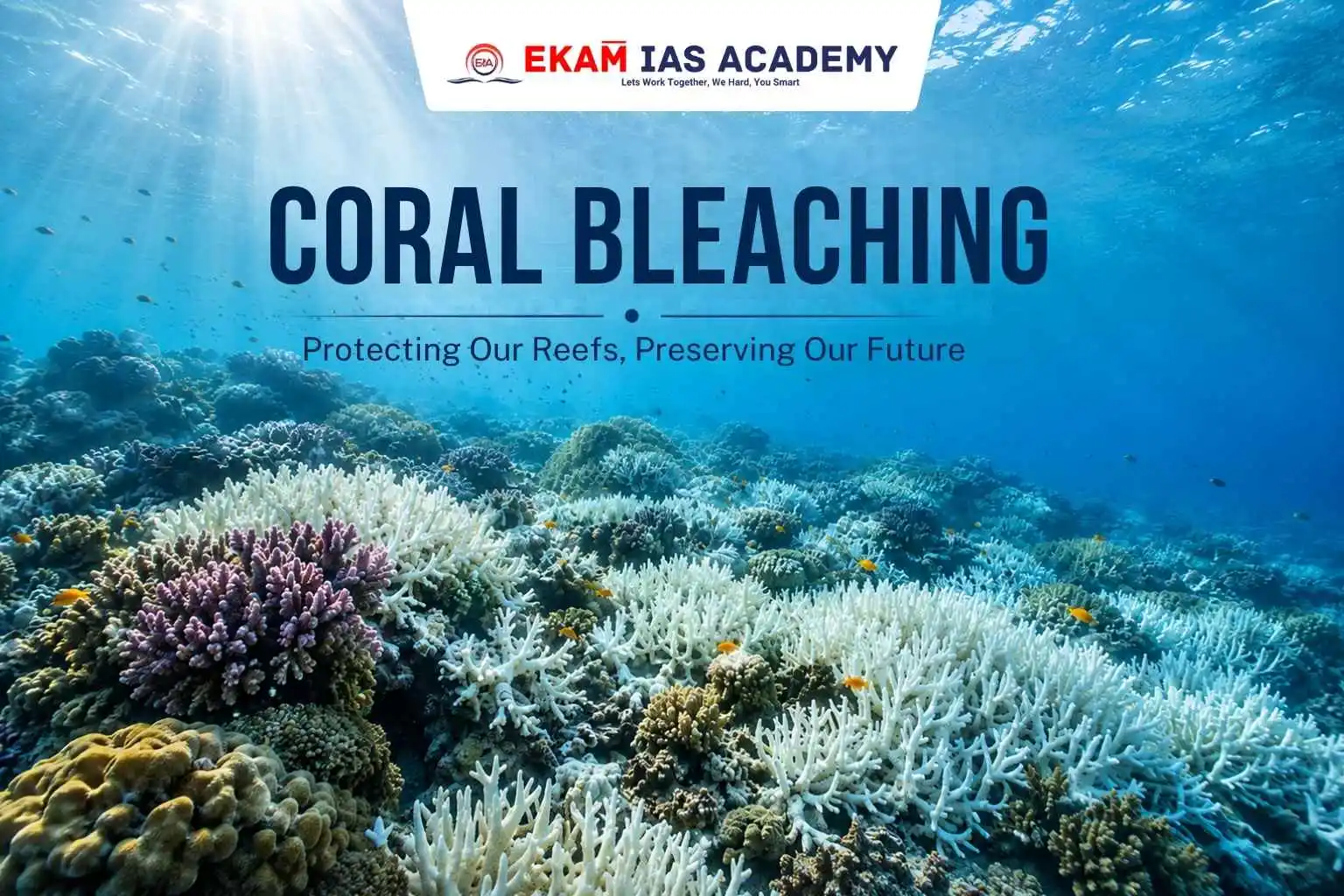
The seventh Status of Coral Reefs of the World report by the Global Coral Reef Monitoring Network (GCRMN) highlighted that Coral Bleaching events are becoming more frequent, with recovery periods shortening dramatically. The growing incidence of Coral Reef Bleaching is closely linked to rising ocean temperatures and broader concerns surrounding Coral Bleaching and Climate Change.
What is Coral Bleaching?
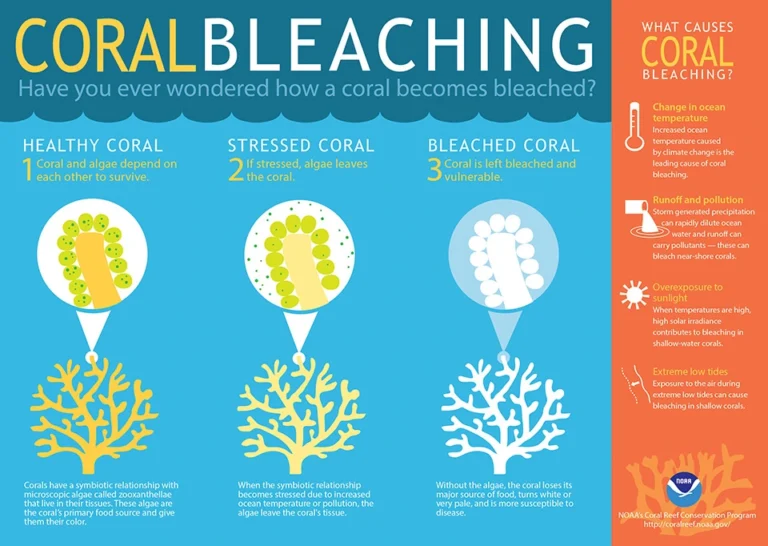
- Coral Bleaching occurs when corals face stress due to temperature rise, pollution, or ocean acidification.
- Under stress, zooxanthellae algae inside coral polyps produce harmful reactive oxygen species.
- Corals expel these algae, losing their colour and exposing a pale white exoskeleton.
- This ends the symbiotic relationship that sustains coral survival and growth.
- This process is important for understanding Coral Bleaching in India, particularly in ecologically sensitive reef regions.
- Repeated Coral Reef Bleaching events can weaken the overall Coral Reef Ecosystem and reduce its ability to recover.
Causes of Coral Bleaching
- Ocean temperature rise: Climate change is the leading driver and one of the major Causes of Coral Bleaching.
- Runoff and pollution: Storms dilute seawater and bring pollutants.
- Excess sunlight: High irradiance worsens bleaching in shallow waters.
- Low tides: Air exposure during extreme tides stresses corals.
- Marine Heatwaves and Coral Bleaching are increasingly associated as prolonged heat stress can trigger widespread bleaching episodes.
- Rising temperatures also strengthen the link between Coral Bleaching and Climate Change across tropical oceans.
- Similar patterns have been observed in areas affected by Great Barrier Reef Coral Bleaching and Coral Bleaching in Indian Ocean regions.
What are Corals?
- Corals are marine invertebrates forming colonies of polyps.
- They share a symbiotic relationship with zooxanthellae algae.
- Algae provide food via photosynthesis, while corals offer shelter and nutrients.
- Zooxanthellae also give corals their bright colours.
- Together, coral colonies form a complex Coral Reef Ecosystem that supports diverse marine organisms.
- Coral Reefs in India are important marine habitats supporting fisheries, coastal communities, and biodiversity.
Significance
- Coral reefs support marine biodiversity, fisheries, and coastal protection.
- Their role in sustaining Coral Reef Biodiversity makes them among the most valuable marine ecosystems.
- Effects of Coral Bleaching include loss of reef productivity, declining fish populations, habitat degradation, and weakened coastal protection.
- Bleaching threatens ecosystems, livelihoods, and global climate resilience.
- Effective Coral Reef Conservation is therefore critical to protect these fragile marine habitats.
- Measures such as monitoring, pollution control, reducing climate stress, and Coral Restoration in India can support damaged reef systems.
- Protecting reefs affected by Coral Bleaching in India and Coral Bleaching in Indian Ocean regions is essential for long-term marine ecological security.
Conclusion
Coral Bleaching is a visible indicator of climate stress on oceans. Urgent global action on climate change, pollution control, and Coral Reef Conservation is essential to safeguard these fragile ecosystems.
Stronger monitoring, ecosystem protection, and Coral Restoration in India can help improve reef resilience. The topic is also important for Coral Bleaching UPSC, particularly under GS Paper 3 themes related to climate change, marine ecosystems, biodiversity, and environmental conservation.