

The Madras High Court reportedly constituted a five-member Management Board for the Chidambaram Sabanayagar Temple in Tamil Nadu over allegations of administrative irregularities. The issue highlights Chidambaram Temple Administration, Temple Governance in Tamil Nadu and the broader debate on Temple Administration in India.
About Chidambaram Sabanayagar Temple
- Location: Chidambaram, Cuddalore district, Tamil Nadu.
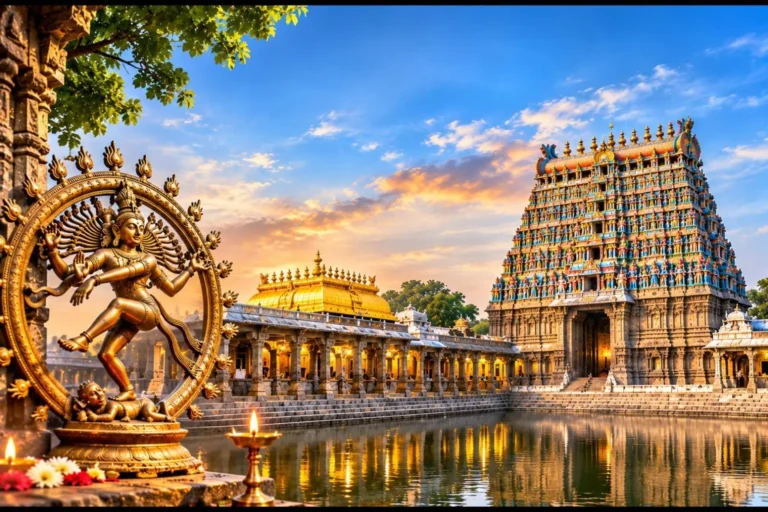
- Other names: Thillai Nataraja Temple and Sri Sabanayagar Temple, widely known as the Chidambaram Nataraja Temple and Nataraja Temple Tamil Nadu.
- Deity: Lord Shiva as Nataraja, representing the cosmic dance of creation and destruction.
- Religious importance: One of the Pancha Bhoota Sthalams, representing the element Akasha (space).
- The temple is an important topic for Chidambaram Nataraja Temple UPSC and Indian Art and Culture UPSC preparation.
Historical Background
- The shrine existed before the seventh century CE.
- Chola dynasty: Significantly expanded the temple from the tenth century onwards.
- Parantaka Chola I: Traditionally credited with covering the sanctum roof with gold.
- Later contributions came from Vijayanagara rulers, Nayakas and other patrons.
- The historical development of the temple forms an important part of Chidambaram Temple History.
Architectural Features
- Dravidian style: Characterised by monumental gateways, courtyards and pillared halls.
- Temple complex: Covers approximately 40 acres.
- Gopurams: Elaborately sculpted entrance towers.
- Dance sculptures: Depictions of the 108 karanas described in Bharata Muni’s Natya Shastra.
- Five Sabhas: Chit Sabha, Kanaka Sabha, Nritta Sabha, Deva Sabha and Raja Sabha.
- These features make Nataraja Temple Architecture an important example of Indian Temple Architecture UPSC.
Temple Administration and Constitutional Issues
- Podhu Dikshitars: Hereditary priestly community traditionally responsible for temple administration.
- 2014 Supreme Court ruling: Protected their denominational management rights in the relevant dispute.
- Article 26: Protects religious denominations’ rights to manage religious affairs, subject to public order, morality and health.
- Governance challenge: Balancing religious autonomy with accountability and protection of temple resources.
- The issue raises broader questions regarding Hindu Religious Institutions Management, Religious Institutions and State Regulation, Temple Management and Administration and Religious Endowments in India.
- The role of the HR and CE Department Tamil Nadu is also relevant to the wider debate on temple governance and regulation in the State.
Conclusion
Chidambaram Temple represents India’s rich Chola heritage, where preservation of sacred traditions must coexist with transparent and constitutionally sound administration. The temple’s history, architecture and governance make Chidambaram Nataraja Temple, Chidambaram Temple Administration, Temple Governance in Tamil Nadu and Indian Art and Culture UPSC important areas of study.