
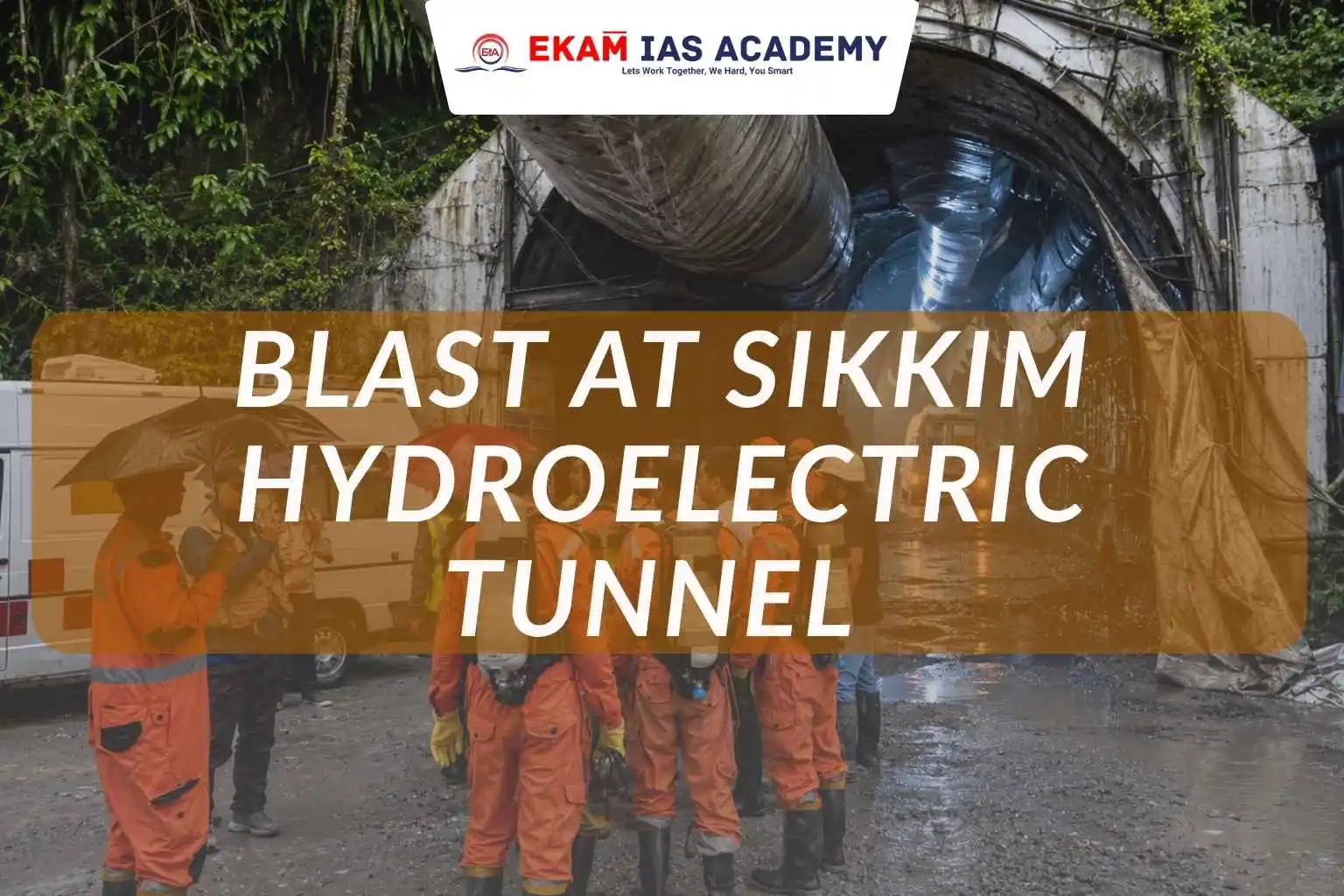
A methane gas leak and explosion at an under-construction tunnel of the Teesta Stage VI Hydroelectric Project in Namchi district, Sikkim on July 21, 2026, killed 20 people and left 5 trapped. This topic is important for aspirants preparing for GS3 Disaster Management through upsc coaching in Hyderabad.
Incident Details
• Location: Samardung, Namchi district, Sikkim.
• Project: Teesta Stage VI Hydroelectric Project.
• Victims: Included personnel from NHPC (National Hydroelectric Power Corporation) and Patel Engineering.
• Cause: Blast suspected due to methane gas accumulation inside the 7 km tunnel.
Incident Details
• Location: Samardung, Namchi district, Sikkim.
• Project: Teesta Stage VI Hydroelectric Project.
• Victims: Included personnel from NHPC (National Hydroelectric Power Corporation) and Patel Engineering.
• Cause: Blast suspected due to methane gas accumulation inside the 7 km tunnel.
Industrial Safety Concerns
• Methane is a highly flammable gas, often found in underground construction sites.
• Lack of gas detection systems and ventilation mechanisms can lead to disasters.
• Similar accidents have occurred in coal mines and hydro projects, showing systemic safety gaps.
• Example: The 2023 Silkyara tunnel collapse in Uttarakhand raised similar concerns about worker safety and emergency preparedness.
Impact on Development Projects
• Hydroelectric projects are crucial for renewable energy goals under India’s National Electricity Plan.
• Accidents delay projects, increase costs, and erode public trust.
• Safety lapses undermine India’s target of 500 GW renewable capacity by 2030.
Government & Legal Dimensions
• Labour Ministry and Power Ministry expected to initiate inquiries.
• Factories Act, 1948 and Mines Act, 1952 mandate safety standards, but enforcement remains weak.
• NDMA guidelines stress risk assessment and emergency drills, often ignored in practice.
Socio-Economic Angle
• Victims often include migrant labourers from poor states, highlighting labour vulnerability.
• Families face loss of livelihood and compensation delays.
• Raises ethical questions about development vs. human cost.
Way Forward
• Mandatory gas detection and ventilation systems in tunnels.
• Strict third-party safety audits before project clearance.
• Training and insurance coverage for workers.
• Integration of IoT sensors and AI monitoring for early warning.
• Learning from global best practices (e.g., Japan’s tunnel safety protocols).
Conclusion
The Sikkim tunnel blast is a grim reminder that development without safety is unsustainable, and India must prioritize worker protection and risk management in all infrastructure projects.