
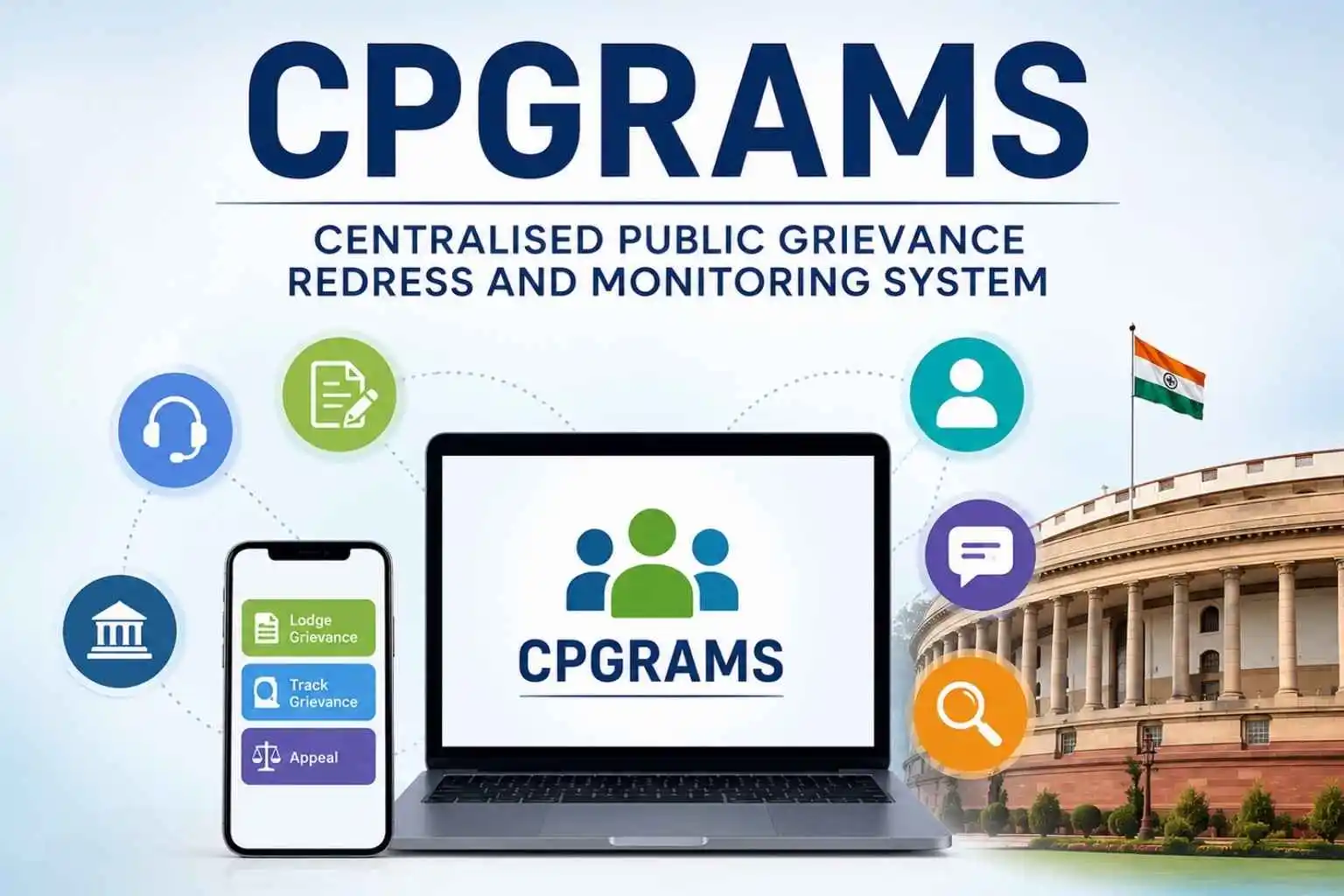
The Centralised Public Grievance Redress and Monitoring System (CPGRAMS) has emerged as one of the world’s largest digital grievance redressal platforms, strengthening citizen-centric governance, administrative accountability, and transparency. The platform reflects India’s shift towards responsive governance through digital public infrastructure. This topic is important for aspirants preparing for GS2 Governance through UPSC Preparation.
About CPGRAMS
- Flagship grievance redressal portal of the Government of India, developed by the Department of Administrative Reforms and Public Grievances (DARPG).
- Functions as a 24×7 digital ecosystem connecting all Central Ministries, Departments, States, and Union Territories.
- Promotes citizen participation and administrative accountability.
Key Features
- One Nation–One Portal: Unified grievance system integrating state portals.
- Language Inclusivity: Supports submissions in 22 scheduled languages plus English.
- Time‑bound Resolution: Complaints must be resolved within 21 days.
- Tracking Facility: Citizens can monitor grievance status using a unique registration ID.
- Appeal Mechanism: If dissatisfied, complainants can rate the resolution and file an appeal; appeals are also trackable.
Significance
- Strengthens digital governance and citizen trust.
- Reduces bureaucratic delays by providing direct access to ministries.
- Encourages feedback‑based accountability, aligning with Good Governance Index principles.
- Acts as a model for e‑governance reforms, comparable to grievance systems in advanced democracies.
Conclusion:
CPGRAMS exemplifies India’s push towards transparent, responsive, and citizen‑centric governance, making grievance redressal accessible to every citizen in the digital era.