

The National Stock Exchange (NSE) has launched Electronic Gold Receipts (EGRs), a new exchange-traded segment for buying and selling gold in digital form. This topic is important for aspirants preparing for GS3 Economy and financial markets through upsc coaching in Hyderabad.
About Electronic Gold Receipts
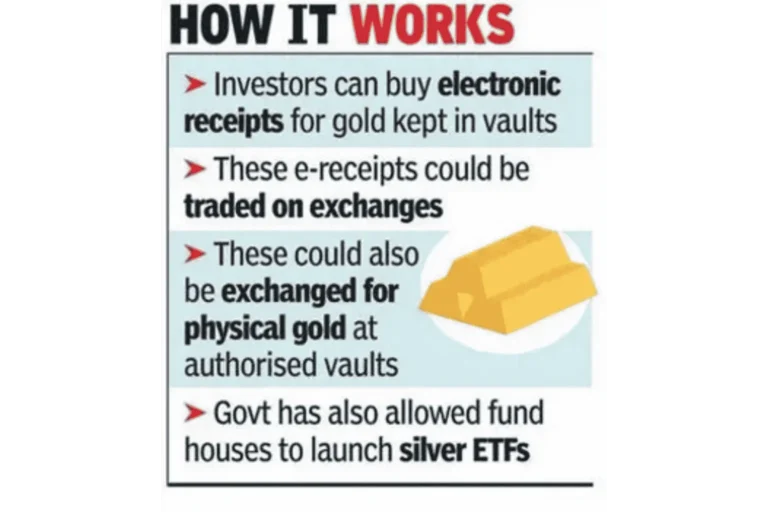
• Definition: EGRs are exchange-traded securities representing ownership of physical gold of specified purity stored in SEBI-regulated vaults.
• Holding: Investors hold EGRs in demat accounts, similar to shares.
• Conversion: Can be converted into physical gold through a prescribed process.
Features
• Trading Mechanism: Operates on a T+1 settlement cycle; receipts credited to buyer’s demat account the next day.
• Participants: Retail investors, jewellers, bullion traders, refiners, and institutions.
• Purity Standards: Available in 999 (99.9%) and 995 (99.5%) purity.
• Denominations: Six denominations — 10 mg, 100 mg, 1 g, 10 g, 100 g, and 1 kg.
• Transparency: Removes concerns over purity and personal storage.
Significance
• Investor Confidence: Provides a secure and standardised way to own gold.
• Market Formalisation: Helps reduce black market transactions and integrates gold into the formal financial system.
• Financial Inclusion: Enables small investors to buy gold in micro denominations.
• Policy Linkages: Operates under SEBI guidelines, ensuring regulatory oversight.
Conclusion
Electronic Gold Receipts mark a transformative reform in India’s gold market, combining the trust of physical gold with the efficiency of digital trading.