
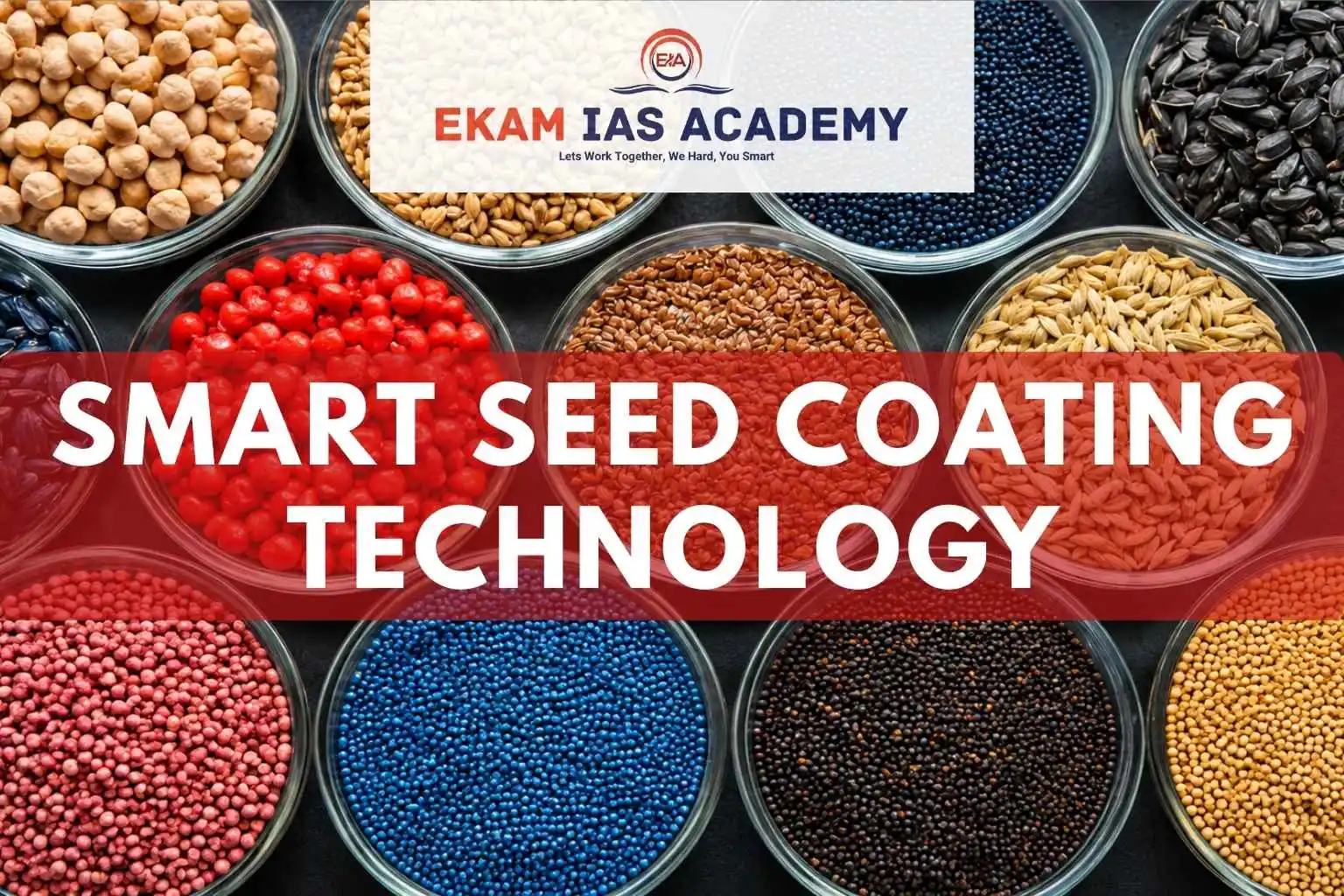
The Indian Council of Agricultural Research – Indian Institute of Oilseeds Research (ICAR IIOR), Hyderabad has recently developed a Smart Seed Coating Technology, aimed at improving crop establishment and resilience, especially in rainfed farming systems. This topic is important for aspirants preparing for GS3 Economy and agricultural technology-related issues through civil services coaching.
Seed Coating Technology
• Developer: ICAR IIOR, Hyderabad.
• Technology: Based on biodegradable biopolymers forming a multifunctional protective layer around seeds.
• Function: Acts as a delivery platform for nutrients, beneficial microbes, and crop protection agents directly at the seed–soil interface.
Key Features
• Multifunctional Layer: Provides protection and carries inputs for targeted delivery.
• Improved Germination: Creates a favourable microenvironment for faster sprouting and stronger seedlings.
• Stress Tolerance: Enhances resilience against biotic stresses (pests, diseases) and abiotic stresses (drought, heat, poor soils).
• Crop Versatility: Applicable to cereals, pulses, millets, vegetables, and horticultural crops.
• Rainfed Suitability: Particularly effective in rainfed agriculture, covering ~55% of India’s net sown area (Agriculture Census).
Significance
• Climate Resilience: Supports adaptation to erratic rainfall and rising temperatures.
• Sustainable Agriculture: Aligns with national priorities under the National Mission on Sustainable Agriculture (NMSA).
• Resource Efficiency: Reduces wastage of inputs by targeted delivery at the seed level.
• Seed System Strengthening: Improves seed quality and performance, critical for doubling farmers’ income and achieving SDG 2 (Zero Hunger).
• Example: Similar seed enhancement technologies are promoted under Pradhan Mantri Krishi Sinchayee Yojana (PMKSY) and ICAR seed hubs for pulses.
Conclusion
Smart Seed Coating Technology is a game changer for rainfed farming, combining science and sustainability to boost productivity and resilience.