
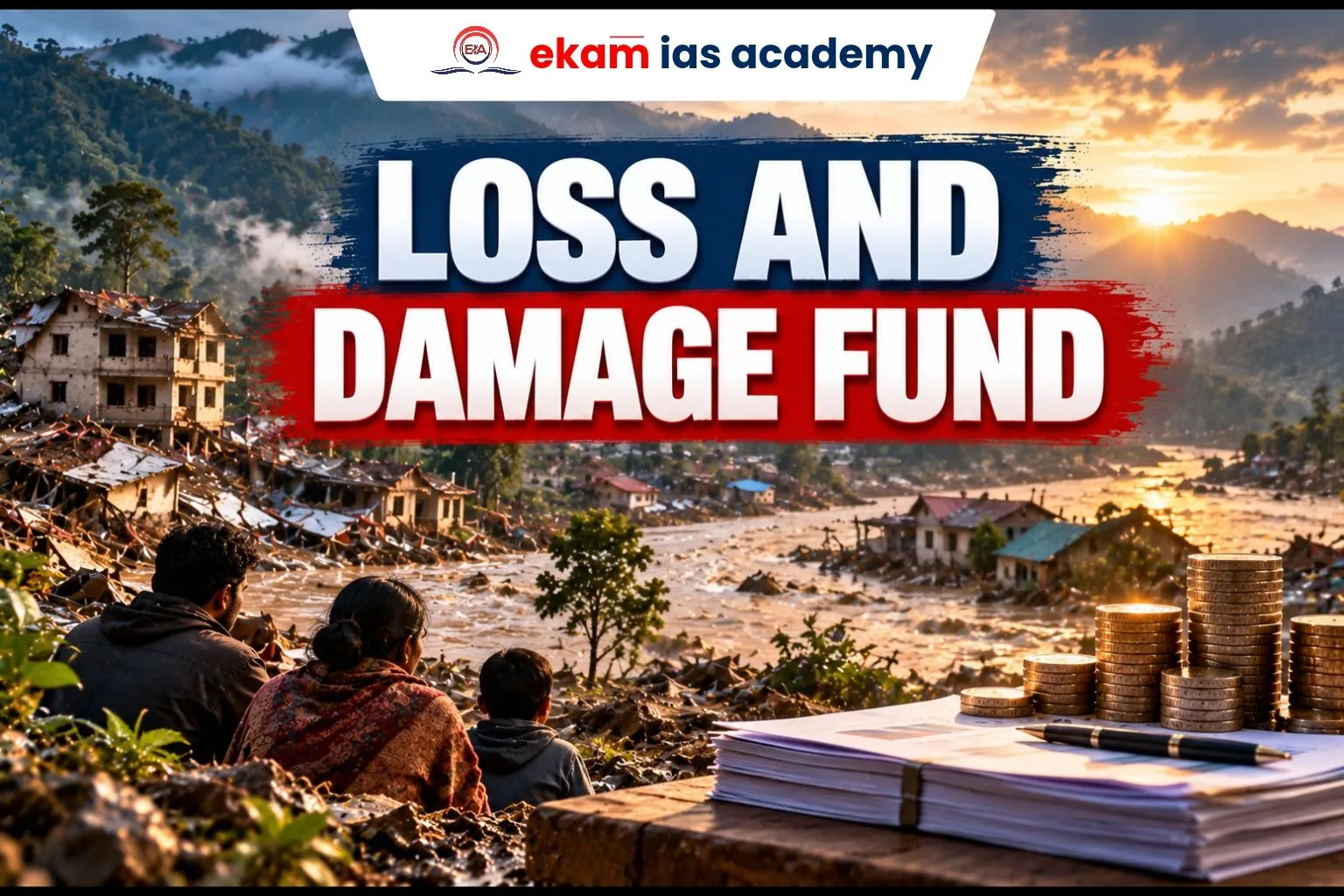
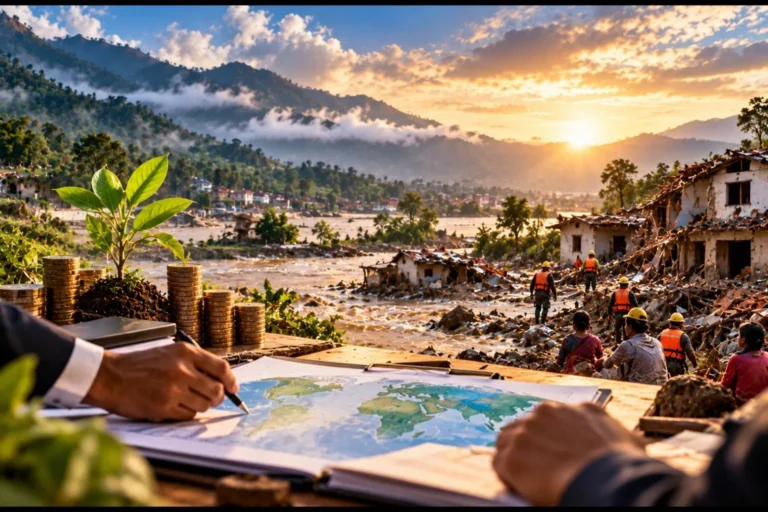
The Fund for Responding to Loss and Damage (FRLD) has provisionally allocated $21.6 million for Nepal’s August 2026 floods. The FRLD Fund is an important Climate Change Loss and Damage Fund mechanism for vulnerable developing countries.
What is the FRLD?
- An international climate-finance mechanism supporting developing countries vulnerable to climate-related disasters through FRLD Climate Finance and Climate Finance for Developing Countries.
- Established at COP27 (2022), Egypt, and operationalised at COP28 (2023), Dubai.
- Functions under the financial mechanism of the UNFCCC Loss and Damage Fund and Paris Agreement.
- Covers both sudden disasters, such as floods, and slow-onset events, such as sea-level rise, addressing Climate Change Loss and Damage.
Institutional Structure
- Governing Board: 26 members — 12 from developed and 14 from developing countries.
- Board host country: Philippines.
- World Bank: Serves as interim trustee and hosts the Secretariat under agreed arrangements.
- Promotes country-led recovery based on local priorities, strengthening support for Developing Nations Climate Support and Vulnerable Countries Climate Finance.
Significance
- Climate justice: Supports vulnerable nations that contributed relatively little to historical emissions, reinforcing the principle of Climate Justice and Loss and Damage.
- Economic recovery: Helps rebuild damaged infrastructure and livelihoods through the Climate Disaster Recovery Fund approach.
- Non-economic losses: Recognises harm to lives, cultural heritage and ecosystems.
- Example: Flood-affected communities in Nepal may require housing reconstruction and livelihood restoration through accessible Climate Change Adaptation Finance and recovery support.
Challenges
- Limited financial contributions may fall short of growing climate-related losses.
- Complex procedures can delay assistance to vulnerable communities.
- Predictable funding, simplified access and transparent allocation are essential for an effective COP Climate Finance Mechanism.
- India and other developing countries advocate stronger climate-finance commitments.
Conclusion
The FRLD can advance global climate justice by converting international responsibility into timely, accessible and effective support for vulnerable communities. The Fund for Responding to Loss and Damage, Loss and Damage Fund COP28, UNFCCC Loss and Damage Fund, Loss and Damage Fund UPSC and Environment and Climate Change UPSC perspectives highlight the importance of equitable and predictable climate finance for developing countries.