
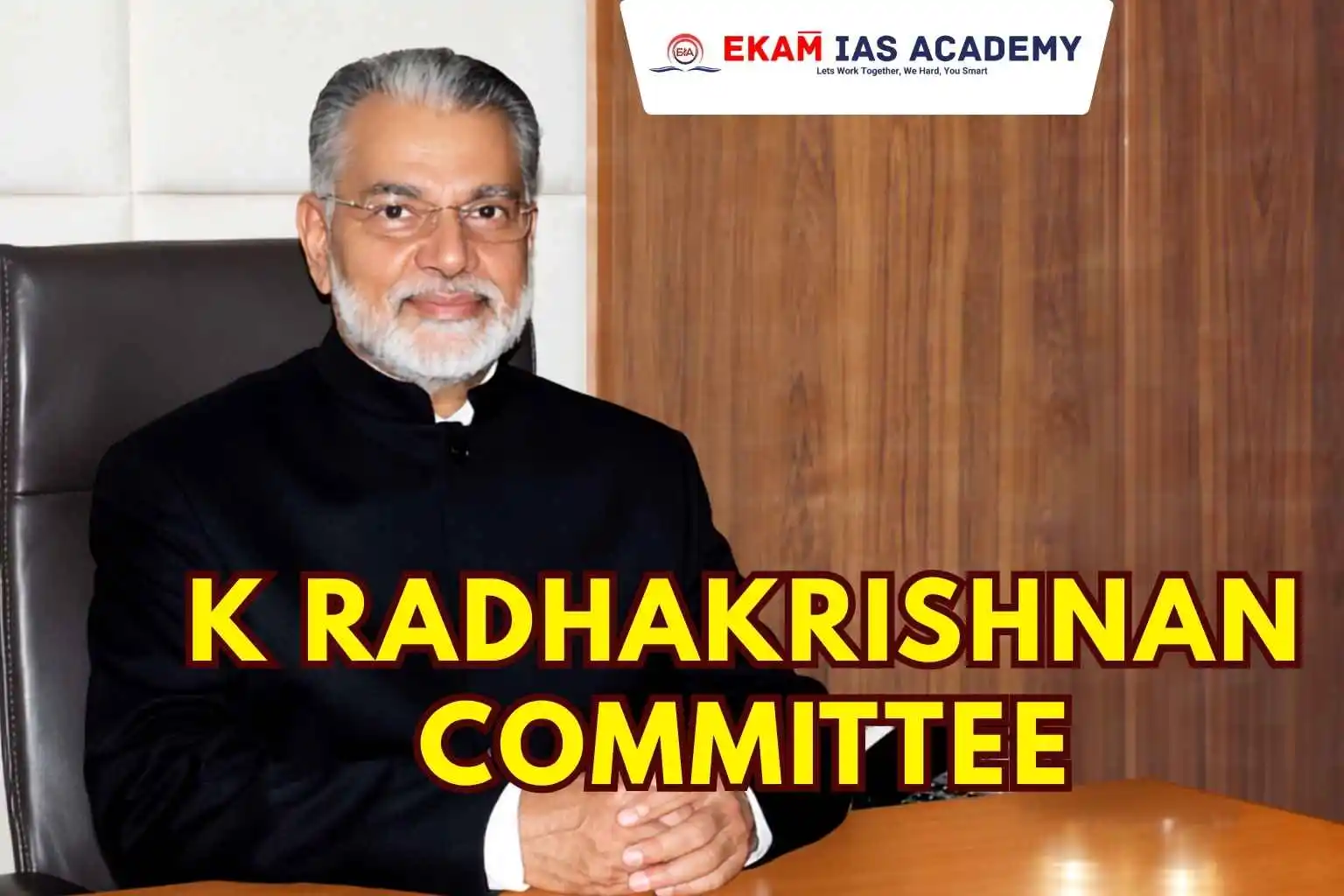
The Government introduced the Public Examinations (Prevention of Unfair Means) Amendment Bill in Lok Sabha to strengthen anti-leak safeguards. The Centre highlighted the K. Radhakrishnan Committee Report (2024) as a reform blueprint to transform the examination ecosystem by improving transparency, data security, and accountability in the National Testing Agency (NTA). This topic is important for aspirants preparing for GS2 Polity and Governance through civils coaching in Hyderabad
Background
- Formed in 2024 after the NEET‑UG paper leak controversy.
- Headed by Dr K Radhakrishnan, former ISRO Chairman.
- Report submitted in October 2024 after 23 sittings and 37,000+ public responses via MyGov.
- Vision: Transform NTA into a “zero‑error, adaptive and integrative” testing agency.
Mandate
- Initial: Strengthen exam processes, data security, and NTA’s functioning.
- Expanded (SC directions): Exam security, technology safeguards, policy reforms, international collaboration, staff training, and student mental health.
Key Findings
- Paper leaks not isolated → vulnerabilities across the entire testing life cycle.
- NTA conducted 240+ exams for 5.4 crore candidates, but lacked adequate capacity.
- Needed stronger institutional expertise and reduced dependence on outsourced agencies.
Technological Recommendations
- Computer‑assisted Secure Pen‑and‑Paper Testing (CPPT): Encrypted papers transmitted electronically, printed just before exams. Eliminates risks in long‑distance transport of question papers.
- DIGI‑EXAM Framework: Aadhaar, biometrics, AI analytics for multi‑stage candidate authentication. Inspired by Digi Yatra model.
Institutional & Centre Reforms
- Recast NTA Governing Body as an empowered Apex Body led by a Director General.
- Create 10 verticals (Testing Infrastructure, Info Security, Vigilance, R&D).
- Establish 1,000 secure testing centres at reputed institutions.
- Mobile testing buses for underserved regions (~150 candidates each).
- Multi‑session testing with transparent score normalisation.
- Long‑term shift to Computer Adaptive Testing.
Student Welfare Measures
- Dedicated mental‑health cell, helplines, counselling services.
- Oversight of coaching institutes to reduce stress and financial burden.
- AI/ML‑based grievance redressal chatbots in multiple languages.
Implementation Mechanism
- Proposed a high‑powered steering committee under Ministry of Education.
- Mission‑mode execution with regular progress reports to avoid reform stagnation.
Conclusion
The K Radhakrishnan Committee offered a comprehensive life‑cycle blueprint for exam reforms, but its limited implementation highlights India’s recurring challenge visionary reports often falter due to weak execution.