
The Union Home Minister is set to launch the Land Port Management System (LPMS) in New Delhi, marking a major step in digitizing India’s border trade and passenger movement. This topic is important for aspirants preparing for GS3 Economy and infrastructure-related issues through IAS coaching.
What is Land Port Management System?
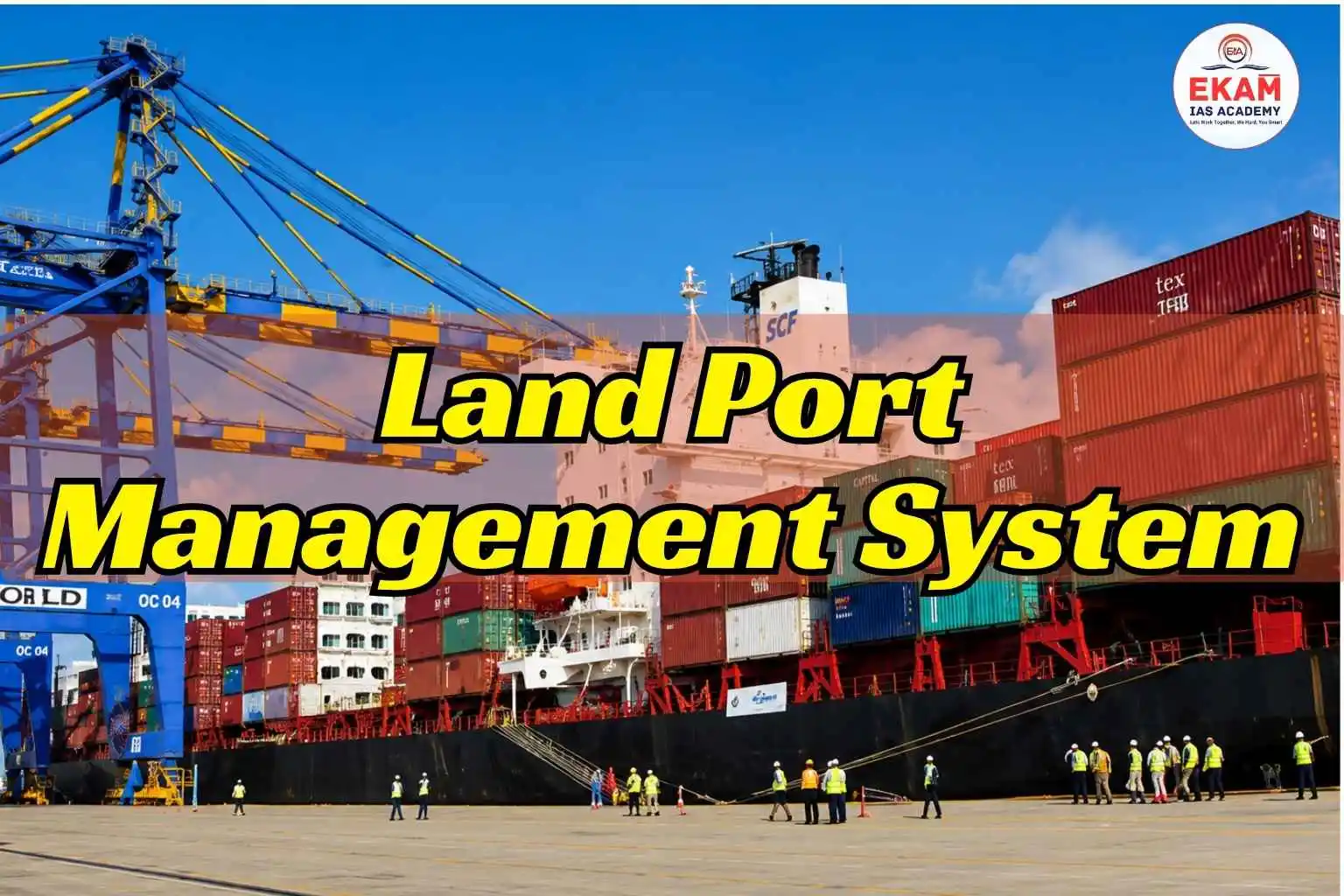
• The Land Port Management System (LPMS) is a modern digital platform that integrates operations across India’s land ports into one unified system.
• It aims to digitize cargo, passenger, logistics, and regulatory processes at land ports.
• Its objective is to bring land ports at par with airports and seaports in terms of efficiency, transparency, and technology.
Key Features
• Real Time Information: Enables secure and instant exchange of logistics and regulatory data.
• Stakeholder Coordination: Connects government agencies, customs, immigration authorities, and private operators seamlessly.
• Digitization: Provides end to end digital workflows for cargo and passenger processing, including slot booking, payments, tracking, and clearances.
• Integration: Linked with ICEGATE, ULIP, and the motor vehicle ecosystem for better interoperability.
Significance
• Efficiency: Reduces delays, improves transparency, and enhances border management.
• Trade Facilitation: Supports India’s regional connectivity goals under the Act East Policy and Neighbourhood First Policy.
• Security: Strengthens monitoring of cargo and passengers, reducing risks of illegal trade or infiltration.
• Economic Impact: Boosts cross border commerce, especially with Nepal, Bhutan, Bangladesh, and Myanmar.
Land Ports Authority of India (LPAI)
• The Land Ports Authority of India is a statutory body under the Ministry of Home Affairs, Department of Border Management.
• It operates 15 land ports across India’s borders.
• India–Pakistan: Attari, Dera Baba Nanak.
• India–Nepal: Rupaidiha, Raxaul, Jogbani.
• India–Bhutan: Darranga.
• India–Bangladesh: Petrapole, Dawki, Sutarkandi, Golakganj, Mankachar, Agartala, Srimantapur, Sabroom.
• India–Myanmar: Moreh.
Conclusion
The Land Port Management System is a game changer for India’s border infrastructure. By ensuring digitized, secure, and efficient border trade, it strengthens India’s connectivity, regional cooperation, and economic integration with neighbouring countries.