
Why Himalayan Glaciers Matter
- The Himalayas are the source region of major river systems such as the Indus, Ganga and Brahmaputra.
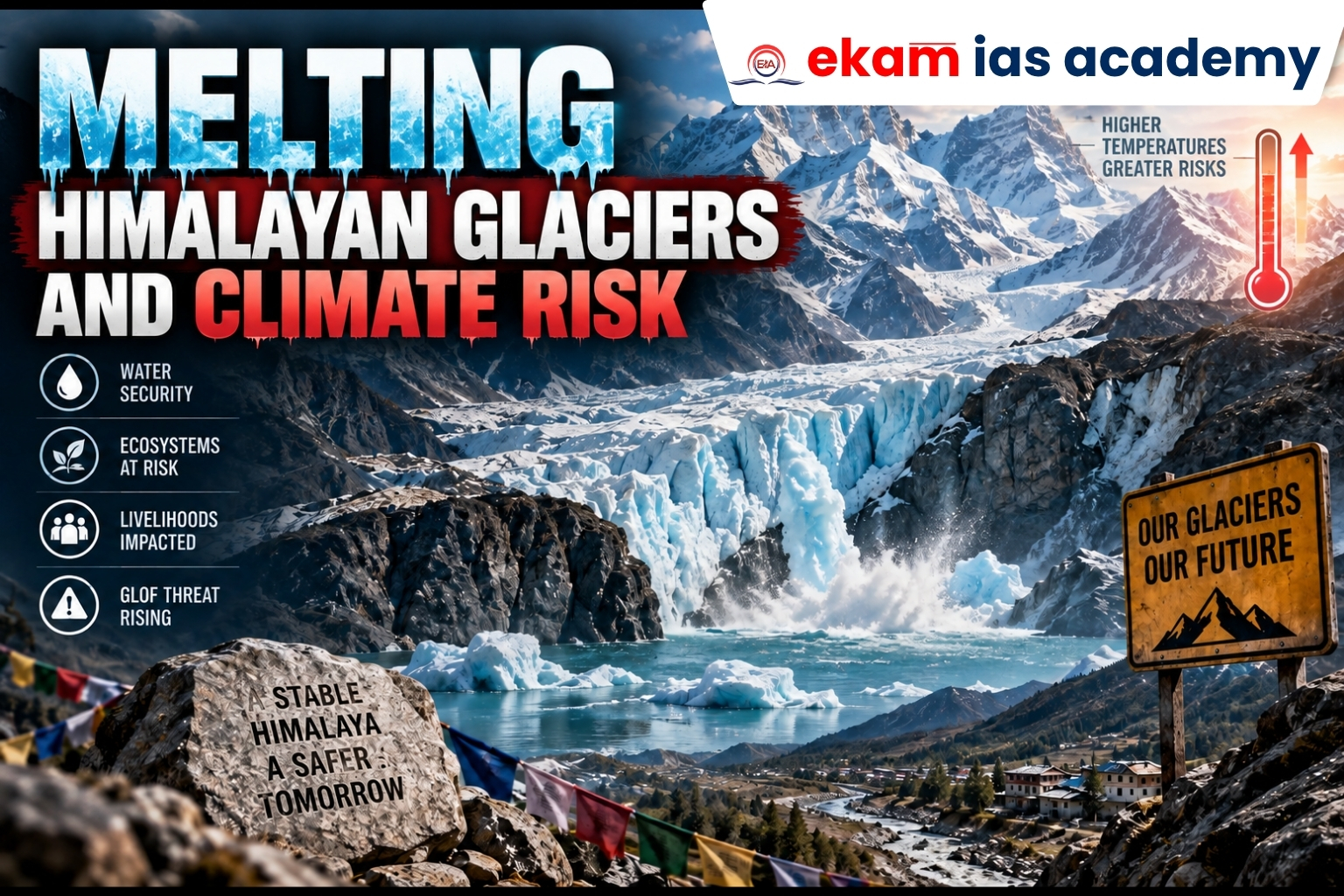
- Himalayan Glaciers and Climate Change are closely linked to regional water security.
- Glaciers function as natural water storage systems, releasing meltwater and supporting river flows, particularly during dry periods.
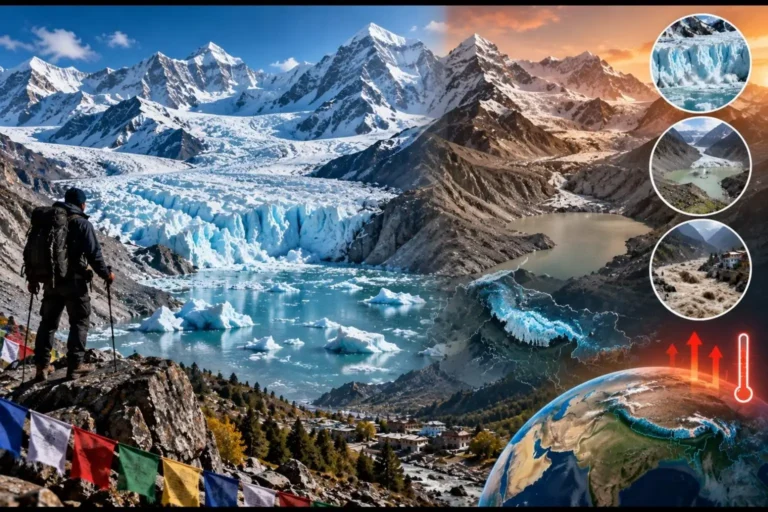
- Government research confirms that several Himalayan Glaciers are retreating at varying rates. For example, the Dokriani Glacier in Uttarakhand has shown retreat of around 15–20 metres per year since 1995.
- Himalayan Glacier Retreat and excessive glacier loss can initially increase water availability but eventually reduce the ice reserve supporting long-term river flows.
Major Causes
- Himalayan Climate Change: Rising temperatures increase glacier melting and reduce snow accumulation.
- Black carbon: Soot from incomplete combustion settles on snow and ice, lowering albedo and increasing heat absorption.
- Human activities: Transport, biomass burning, industries and construction add local pollution and environmental pressure.
- Unsuitable infrastructure: Roads, hydropower projects and tourism facilities can increase ecological disturbance and disaster exposure in fragile mountain terrain.
Major Impacts
- Water Security: Changing glacier mass can alter the seasonal availability of water for downstream populations. It can affect drinking water, irrigation and groundwater recharge, creating risks for Himalayan Water Security.
- Agriculture and Livelihoods: Changes in river flows can affect crops in the Indo-Gangetic plains and mountain agriculture.
- Disaster Risk: Rapid melting can enlarge glacial lakes behind unstable moraine dams. Their sudden failure can trigger Glacial Lake Outburst Floods India, flash floods, landslides and avalanches.
- Ecological Impact: Changes in temperature, water availability and snow cover can disturb alpine biodiversity and habitats, affecting the Himalayan Ecosystem and Climate Change relationship.
India’s Response
- National Mission for Sustaining the Himalayan Ecosystem (NMSHE) works on glacier monitoring, climate research, vulnerability assessment and sustainable development.
- As of 2026, NMSHE has supported 13 State Climate Change Centres and three Centres of Excellence for Himalayan research.
- NCPOR under the Ministry of Earth Sciences monitors representative Himalayan glaciers and has established the Himansh research station in the Chandra basin.
- NDMA has initiated the National Glacial Lake Outburst Flood Risk Mitigation Programme in vulnerable Himalayan regions.
Way Forward
- Develop a Himalayan-wide glacier and glacial-lake monitoring network using satellites, drones, sensors and ground observations.
- Expand GLOF in Himalayas early-warning systems, hazard maps and community-based evacuation plans.
- Apply carrying-capacity and cumulative-impact assessments before approving major infrastructure.
- Reduce black carbon through cleaner transport, improved cookstoves, cleaner industries and better waste/biomass management.
Conclusion
Protecting Melting Himalayan Glaciers is not merely an environmental priority; it is essential for securing India’s water, food, energy and disaster resilience in a warming climate. Understanding Himalayan Glacier Melting, Glacial Melt in India, Glacier Retreat in India, Climate Risk in the Himalayas, Himalayan Glaciers UPSC, and Climate Change in Himalayas UPSC is crucial for analysing India’s long-term climate resilience.