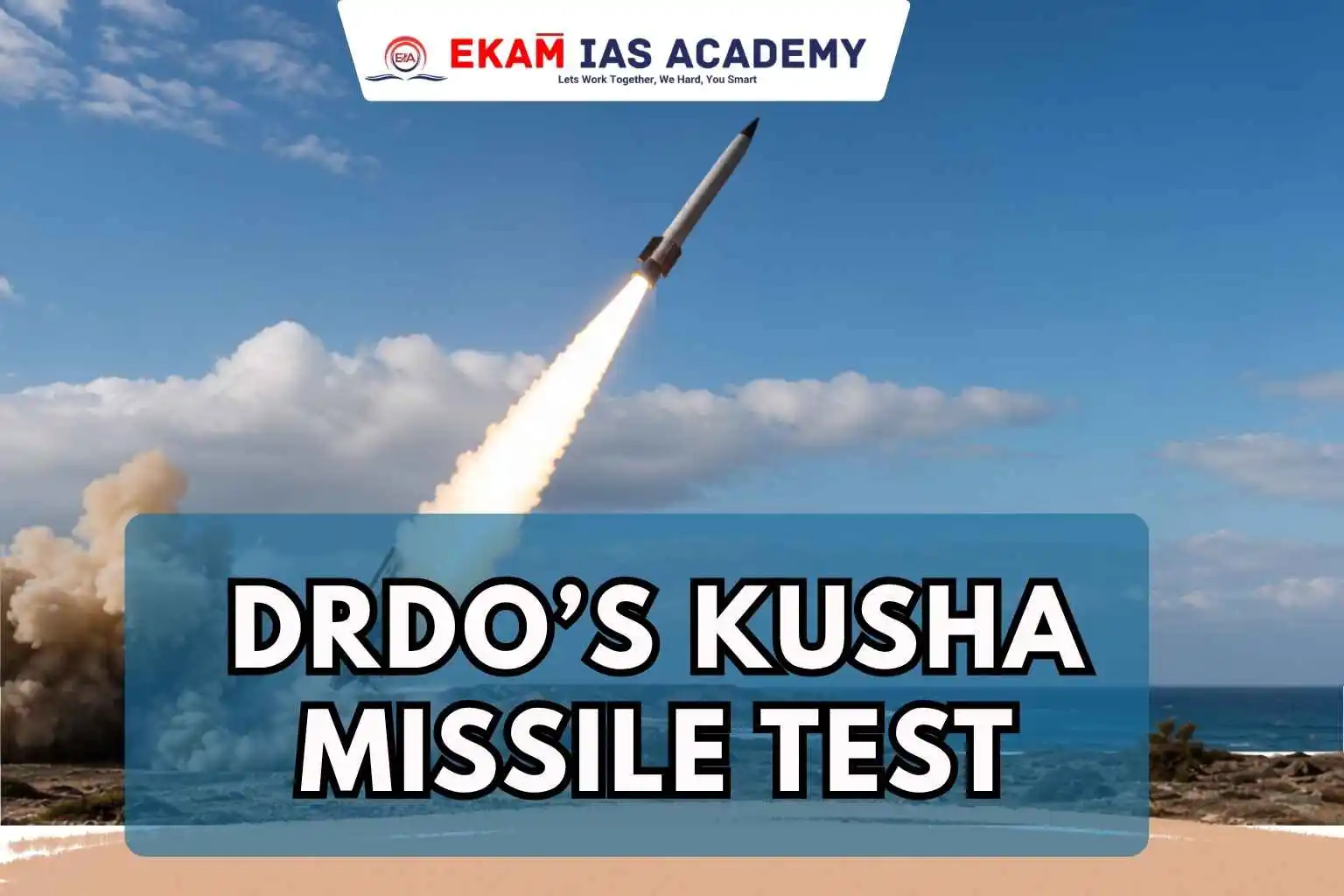

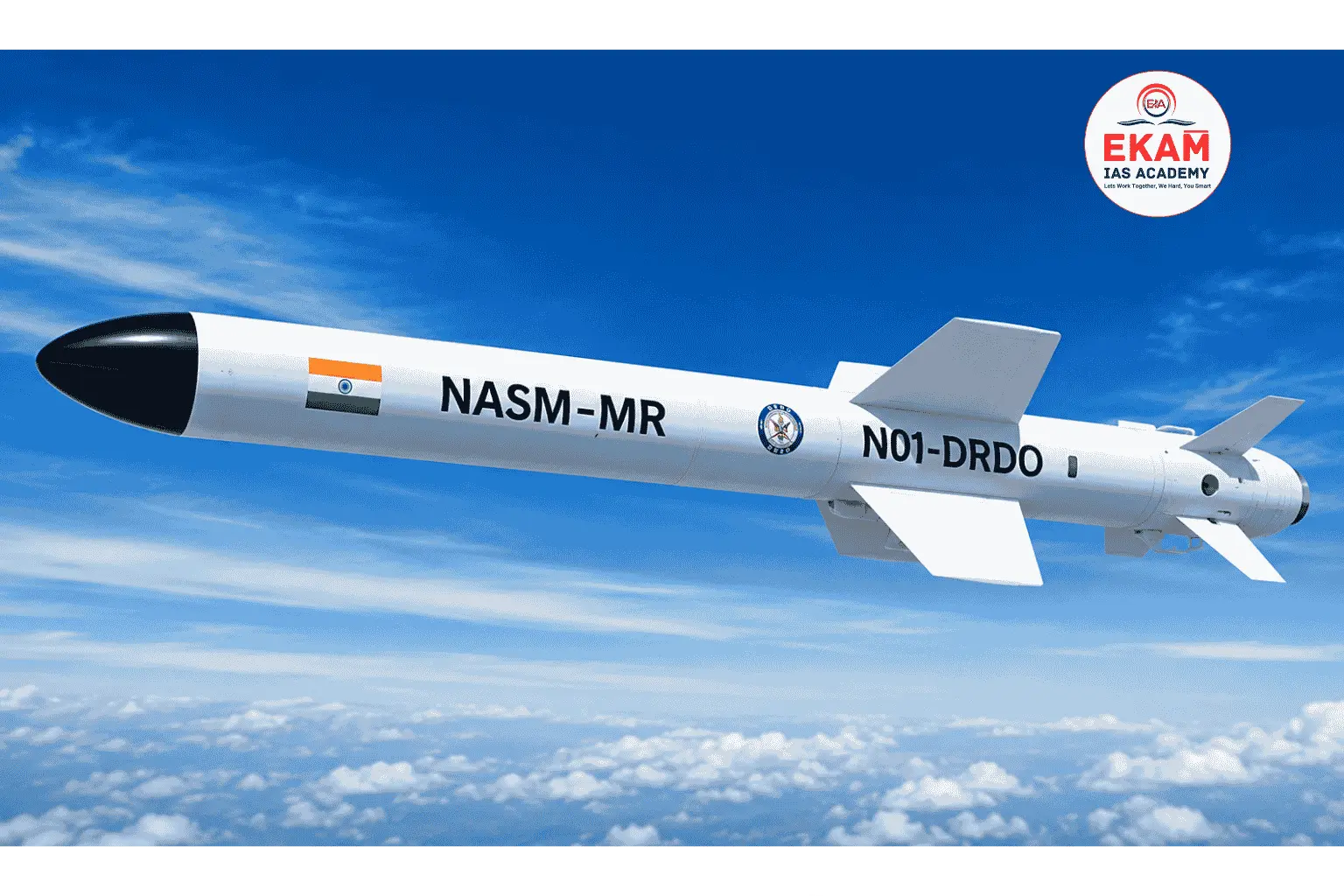
India recently conducted successful trials of its multi-layered Ballistic Missile Defence (BMD) system and the maiden flight test of the Naval Anti Ship Missile–Medium Range (NASM–MR). This topic is important for aspirants preparing for GS3 Security and defence technology-related issues through IAS coaching in Hyderabad.
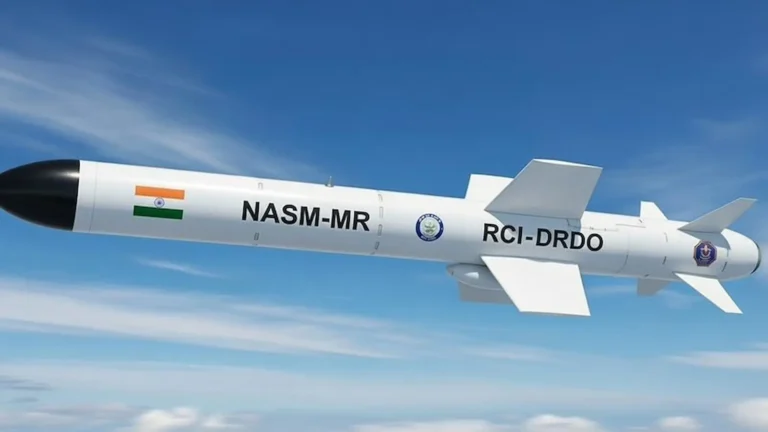
Naval Anti Ship Missile–Medium Range (NASM–MR)
• Type: Subsonic, sea-skimming anti-ship missile developed by DRDO for the Indian Navy.
• Targets: Designed to engage frigates, corvettes, and destroyers.
• Variants: Ship launched, air launched, and submarine launched versions are planned.
• Complementary Role: Works alongside NASM–SR (short range) tested earlier, providing layered strike capability.
Features
- Powered by Small Gas Turbine Jet Engine (SGTJE).
- Strike range up to 350 km.
- Warhead weight > 200 kg.
- Advanced guidance with active radar seeker and imaging IR seeker.
Significance: Enhances sea denial capability, critical for safeguarding India’s 7,500 km coastline and maritime trade routes.
Ballistic Missile Defence (BMD) System – Phase II
• Interceptor Missiles: AD 1 (endo-atmospheric) and AD 2 (exo-atmospheric) tested.
• Capabilities: Designed to neutralise intermediate-range and intercontinental ballistic missiles (IRBMs & ICBMs) up to 5,000 km class.
• AD 1: Two-stage solid motor; intercepts missiles within Earth’s atmosphere during terminal phase.
• AD 2: Intercepts missiles in space during mid-course flight, preventing re-entry.
• Performance: Hypersonic speeds of Mach 6–7, highly manoeuvrable.
• Strategic Impact: Places India among elite nations (US, Russia, Israel) with the capability to intercept ICBMs.
Broader Significance
• Strengthens Indian Navy’s deterrence in the Indian Ocean Region.
• Supports Atmanirbhar Bharat by indigenously developing advanced missile systems.
• Enhances strategic autonomy in defence, reducing reliance on imports.
• Provides multi-layered protection against both maritime and ballistic threats.
• Complements India’s role in Quad and Indo-Pacific security frameworks.
Conclusion
The successful NASM–MR and BMD trials highlight India’s growing technological edge in missile systems, reinforcing its maritime strength and strategic deterrence against evolving threats.