

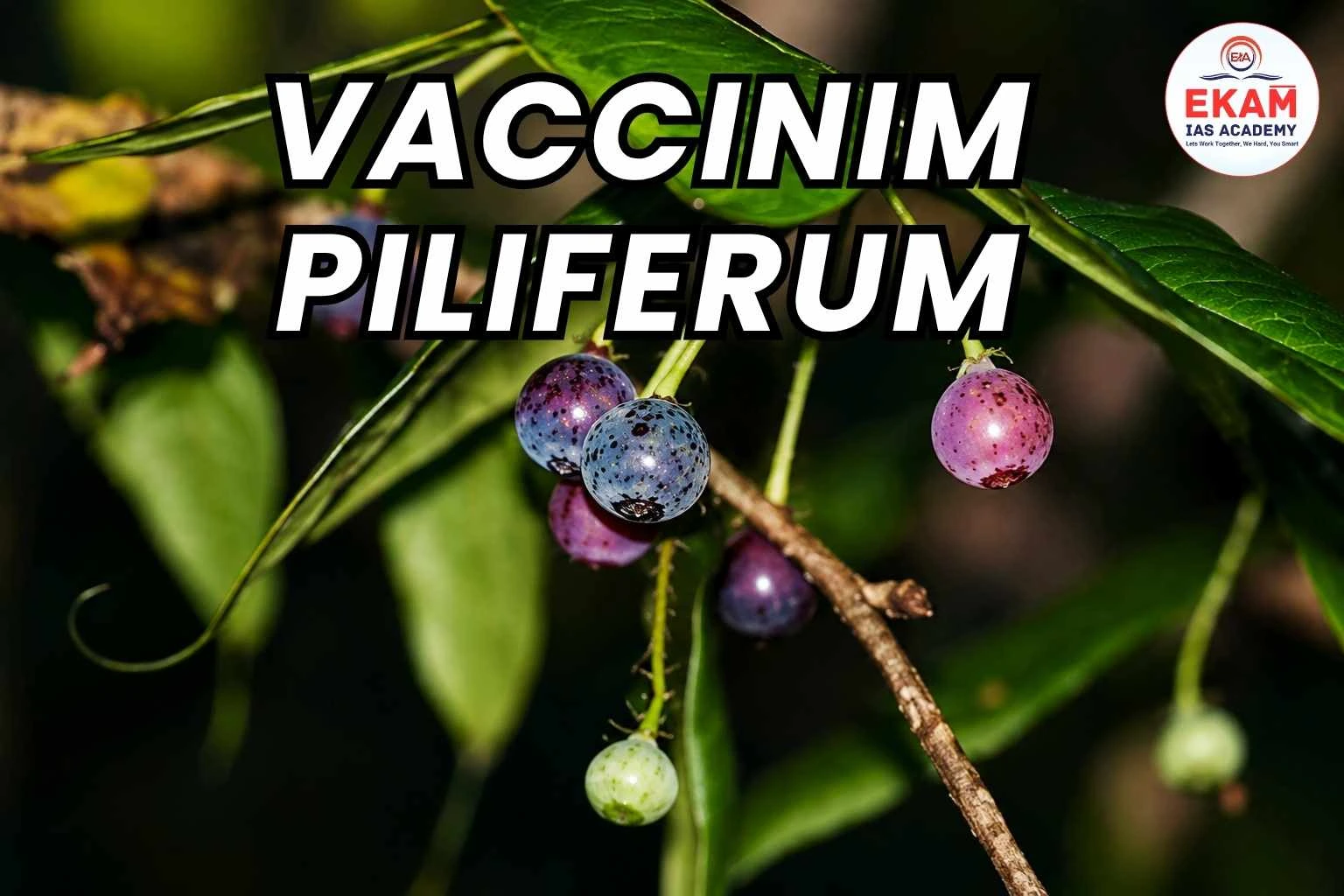
Researchers have rediscovered Vaccinium piliferum, a rare wild relative of the blueberry, in the remote forests of Vijoynagar, Changlang district, Arunachal Pradesh, nearly after 188 years. This finding revives interest in India’s Eastern Himalayan biodiversity. This topic is important for aspirants preparing through IAS coaching in Hyderabad, UPSC online coaching, and UPSC coaching in Hyderabad.
Vaccinium piliferum
• Taxonomy: Belongs to the Ericaceae family, which includes blueberries and cranberries.
• Habitat: Found near tributaries of the Noa Dihing River in dense forests of Arunachal Pradesh.
• Conservation Status: Listed as Endangered by the IUCN.
• Ecological Role: Acts as a wild genetic resource for improving cultivated blueberry varieties.
• Historical Record: First documented in 1836 and rediscovered in 2024–25 after nearly two centuries.
Blueberries
• Family: Ericaceae or heath family.
• Types: Lowbush (Vaccinium angustifolium), Highbush (Vaccinium corymbosum), and Bilberry (Vaccinium myrtillus).
• Climate: Requires cold conditions with 150–1200 chill hours to break dormancy.
• Soil: Prefers acidic, well-drained sandy loam rich in organic matter.
• Nutritional Value: Rich in vitamin C, vitamin K, fibre, and antioxidants that combat free radicals.

Significance of Rediscovery
• Biodiversity Conservation: Reinforces the need to protect Eastern Himalayan ecosystems.
• Scientific Importance: Offers potential for genetic research and crop improvement.
• Policy Implication: Calls for habitat protection and species monitoring under India’s biodiversity mission.
• Climate Relevance: Helps scientists study how rare plant species respond to changing Himalayan climatic conditions.
Importance for UPSC
• Relevant for GS3 Environment, biodiversity conservation, and species in news.
• Important for topics related to Eastern Himalayas, IUCN status, genetic diversity, and conservation policy.
• Useful for Prelims as a rare plant species in news and for Mains under biodiversity protection.
Students preparing through Hyderabad IAS coaching, IAS coaching, and civils coaching in Hyderabad should focus on rare species discoveries and Himalayan biodiversity hotspots.
Conclusion
The rediscovery of Vaccinium piliferum after 188 years underscores India’s hidden ecological wealth and the importance of scientific exploration for conservation. Protecting such rare species is essential for biodiversity security, genetic research, and ecological resilience.
This topic is available in detail on our main website.