

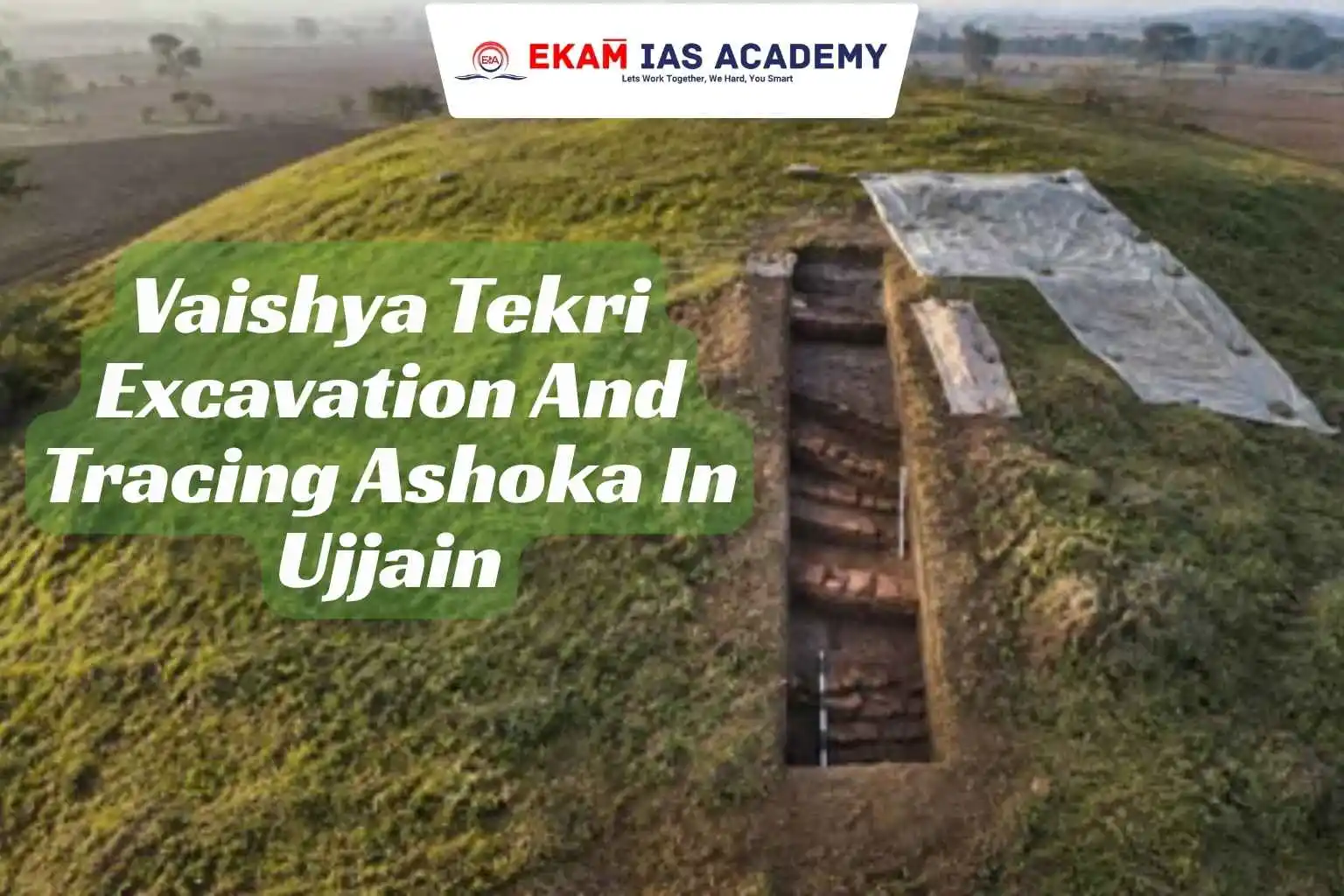
The Madhya Pradesh government has initiated new excavations at Vaishya Tekri, Ujjain, to restore Buddhist monuments linked to Ashoka, reviving scholarly interest in his viceroyalty and Ujjain’s historical significance. For aspirants preparing for competitive examinations, UPSC coaching in Hyderabad .
Vaishya Tekri Stupa
- Largest stupa at the site: 350 feet base, 100 feet high, larger than Sanchi’s 54-foot stupa.
- Initial excavations (1938–39) uncovered large bricks and punch-marked coins, dating it to the Mauryan period.
- Historians urge caution, noting reliance on Alexander Cunningham’s accounts and the need for updated evidence.
- Nearby Kumhar Tekri also holds significance, associated with burial grounds and Xuanzang’s account of Ashoka’s “hellish prison.”
Ashoka and Ujjain
- Ujjain (Ujjayini) was capital of Avanti, a major trade hub connecting western ports like Broach and Sopara with Pataliputra.
- Ashoka served as viceroy in Avanti around 282 BCE, spending nearly a decade here.
- En route, he met Devi at Vidisha, daughter of a merchant, with whom he had children Mahinda and Samghamitta.
- His edicts later mention a kumara stationed at Ujjain, corroborating his posting.
- Ujjain was already an urban centre with centuries of history, fortifications, and astronomical importance called the “Greenwich of India.”
Traditions and Evidence
- Vaishya Tekri & Devi: Local traditions associate the stupa with Devi’s merchant (Vaishya) family background.
- Xuanzang’s Account: The 7th‑century Chinese pilgrim recorded Kumhar Tekri as the site of Ashoka’s “hellish prison.”
- Archaeological Findings: Excavations revealed burial-cum-cremation grounds dating to the 3rd century BCE, supporting textual traditions.
- Evidence Gap: No Ashokan pillars or edicts have been discovered in Ujjain, leaving uncertainty about direct Mauryan inscriptions.
Conclusion
Vaishya Tekri excavation offers insights into Ashoka’s Ujjain viceroyalty and Buddhism in Malwa, but requires contextual, landscape-level study beyond old evidence to ensure reliable historical conclusions.