
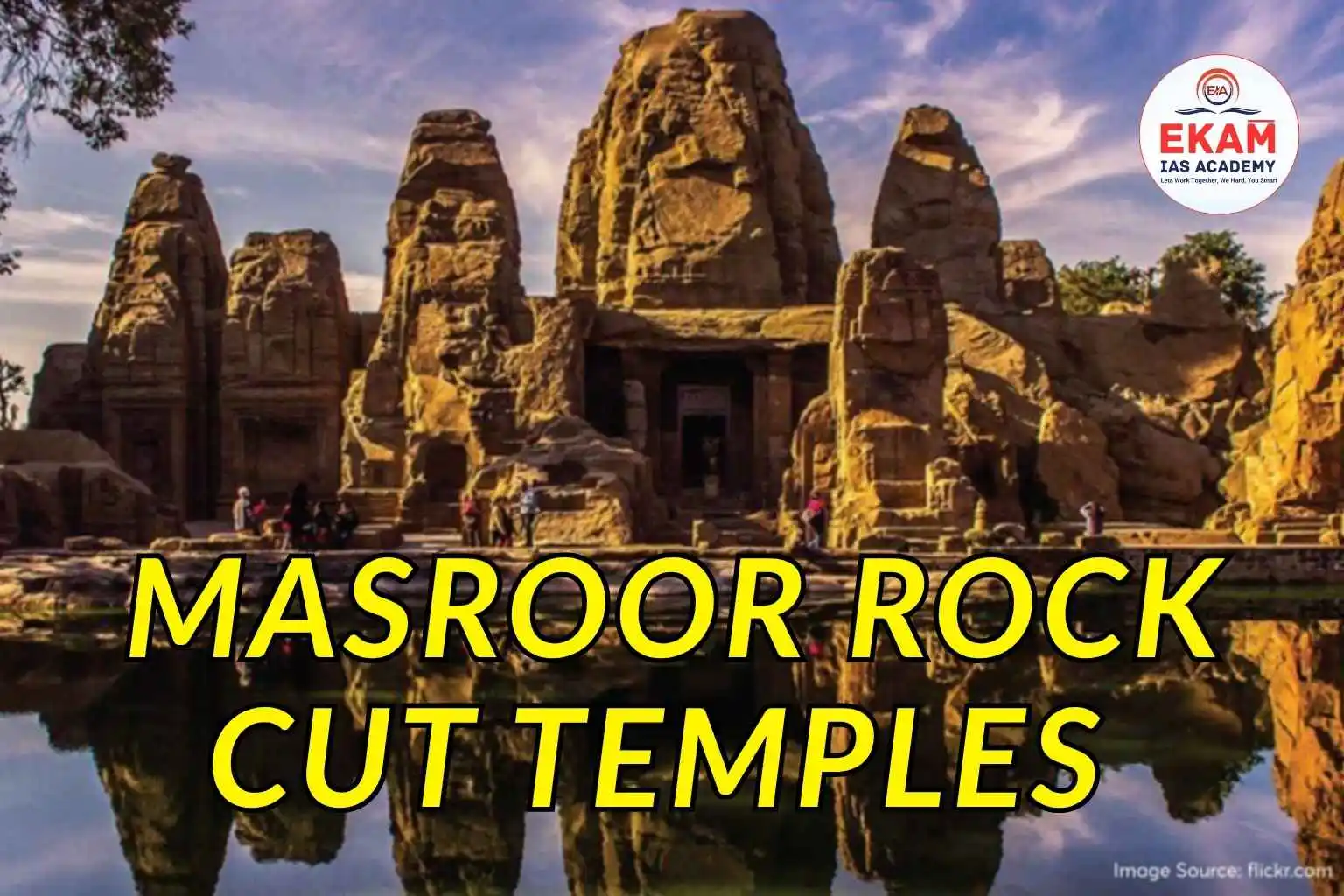
The Masroor Rock Cut Temples in Kangra Valley, Himachal Pradesh, an 8th century heritage site, have drawn attention for their unique architecture and neglect in preservation. Often referred to as the “Ellora of Himachal,” this topic is important for aspirants preparing for GS1 Art & Culture and heritage conservation-related issues through IAS coaching in Hyderabad.
Historical Background
• Construction Period: Built around the 8th century CE, nearly 1200 years ago, reflecting Gupta era architectural influences.
• Discovery: First reported by Henry Shuttleworth in 1913; later surveyed by Harold Hargreaves of ASI in 1915.
• Records: Not mentioned in ancient scriptures, making its origins mysterious.
Architectural Features
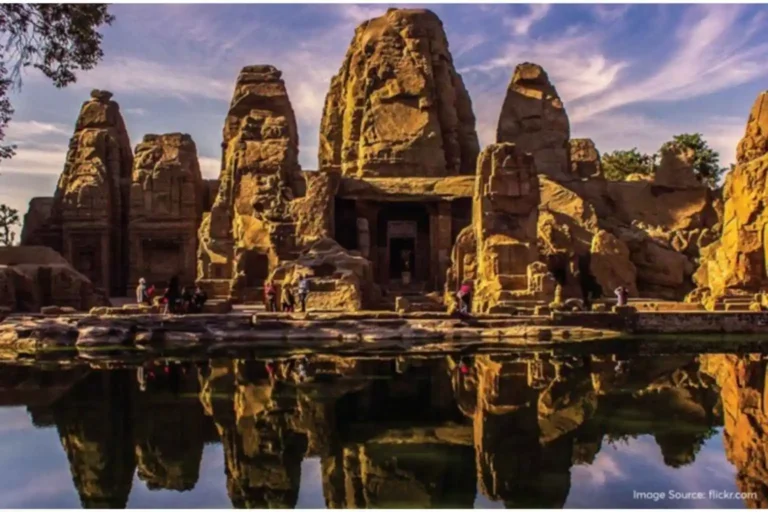
• Temple Complex: Consists of 15 rock cut monuments carved from monolithic stone.
• Style: Resembles Nagara style architecture; dedicated to deities like Shiva, Rama, Sita, and Lakshmana.
• Orientation: Faces northeast towards the Dhauladhar mountains, unlike the typical east-facing temples.
• Layout: Square plan with a central shrine surrounded by smaller temples arranged in a mandala pattern.
• Entrances: Three functional entrances (NE, SE, NW); evidence of an unfinished fourth entrance.
• Sacred Pool: Water tank adds ritual and symbolic significance.
• Reliefs: Elaborate carvings of Vedic and Puranic deities; many damaged over time due to earthquakes.
Significance
• Cultural Value: Called the “Himalayan Pyramid,” showcasing India’s rock cut heritage beyond Ellora and Ajanta.
• Tourism Potential: Has the potential to boost Himachal Pradesh’s cultural tourism if properly promoted.
• Preservation Issues: Earthquake damage and neglect threaten the site’s survival; the Archaeological Survey of India (ASI) needs stronger conservation efforts.
• Comparative Example: Architecturally similar to Ellora caves in Maharashtra, but less recognized nationally.
Conclusion
The Masroor Rock Cut Temples are a hidden jewel of Indian heritage, demanding urgent preservation and recognition as a national treasure.