
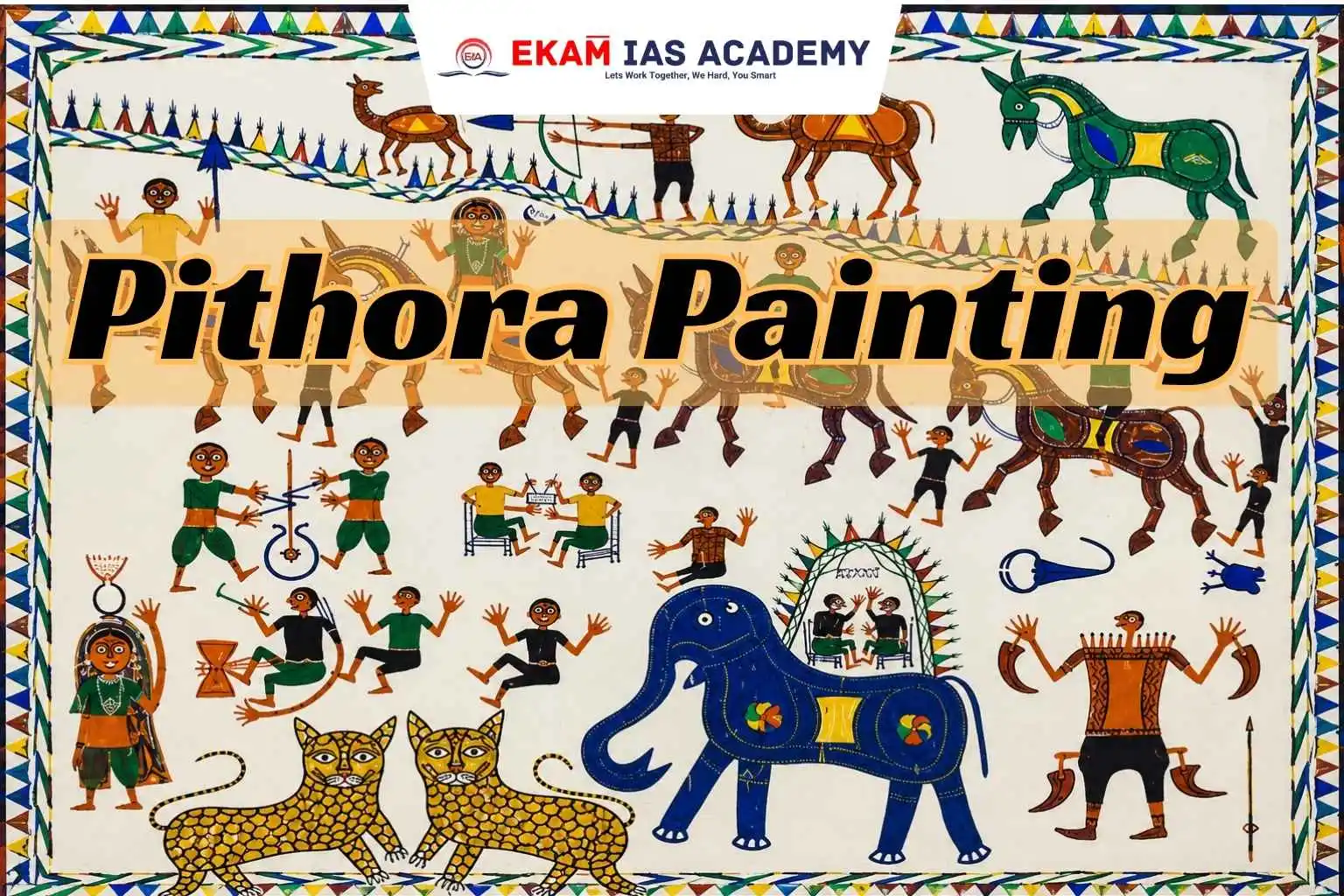
The Pithora painting, a centuries-old tribal wall art tradition of Gujarat’s Rathwa community, has received a Geographical Indication (GI) tag in 2026, recognising its unique cultural identity, traditional knowledge, and economic importance. This topic is important for aspirants preparing for GS1 Indian Art and Culture through ias coaching in Hyderabad.
Origins & Cultural Significance
- Emerged in tribal regions of Panchmahal and Chhota Udaipur around the 13th century.
- Named after Pithora De, the tribal deity linked to marriage, prosperity, and well‑being.
- Traditionally painted during life events like weddings, births, and festivals to invoke blessings.
Community & Ritual Process
- Practiced by Rathwa, Bhil, and Bhilala tribes, reflecting their deep bond with nature and spirits.
- Executed by ritual painters called Lakharas, under guidance of a priest known as Badwa.
- Walls prepared with cow dung and clay, symbolizing purity and connection to earth.
Artistic Features
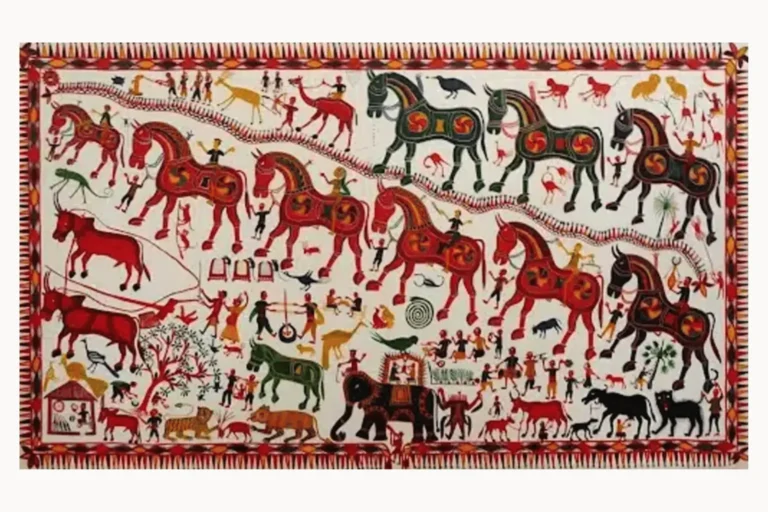
- Uses natural pigments from minerals and plants; common colors are red, yellow, green, and blue.
- Tools include bamboo sticks, cotton, and wooden stencils.
- Themes: tribal and Hindu deities, horses, farming, hunting, and dancing scenes, preserving oral traditions.
Modern Adaptations
- Earlier confined to house walls, now extended to paper and canvas for commercial sale.
- Provides livelihood opportunities while keeping tribal heritage alive.
- GI tag ensures authenticity, protection, and market recognition for tribal artisans.
Conclusion
The GI recognition of Pithora painting highlights India’s commitment to preserving tribal heritage while empowering artisans, making it a living bridge between tradition and modernity.