


A new study in Science journal has produced the first global map of Arbuscular Mycorrhizal (AM) fungi, highlighting their underground networks and ecological importance. This topic is important for aspirants preparing for GS3 Science and Technology and environmental biology-related issues through IAS coaching in Hyderabad.
Arbuscular Mycorrhizal Fungi (AMF)
• Definition: AMF are root-dependent obligate biotrophs belonging to the Glomeromycota phylum.
• Interaction: They penetrate plant root cortical cells and form arbuscules (tree-like structures) facilitating nutrient exchange.
• Type: Endomycorrhiza, distinct from ectomycorrhiza where fungi remain outside root cells.
• Distribution: Found in ~80% of terrestrial vascular plants, including crops, grasses, and forests; present in ecosystems from tropical forests to semi-arid grasslands.
• Example: India’s Banni grasslands host part of the largest AM fungal networks globally.
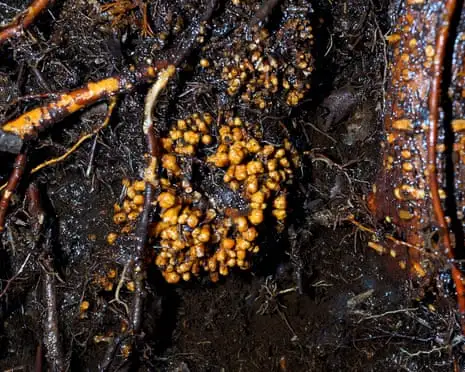
Structure
• Hyphae: Microscopic branching threads acting as two-way pipelines, transporting nutrients (phosphorus, nitrogen, sulfur, micronutrients) to plants and receiving carbon compounds.
• Ecosystem Presence: Grasslands in South Sudan, Tibetan Plateau, and India’s Banni region contain ~40% of global AM fungal networks.
• Carbon Storage: Networks hold ~300 million tonnes of carbon, four to six times the weight of the human population.
Ecological Role
• Natural Biofertilizers: Provide water, nutrients, and pathogen resistance to plants in exchange for carbon.
• Climate Regulation: Draw carbon into soils, reducing atmospheric CO₂.
• Symbiotic Reach: Associated with ~70% of plant species, enhancing soil fertility.
• Carbon Sequestration: Estimated to capture 4 billion tonnes of CO₂ equivalent annually.
Significance for India and the World
• Soil Health: Crucial for sustainable farming and restoring degraded lands.
• Biodiversity Link: Support plant diversity and resilience against environmental stress.
• Policy Implications: Mapping aids climate-smart agriculture and conservation planning.
• Indian Context: Presence in Banni grasslands highlights India’s role in global carbon storage.
Conclusion
Arbuscular Mycorrhizal fungi form the invisible backbone of ecosystems, ensuring nutrient cycles, carbon storage, and climate stability—making them vital allies in sustainable development.