
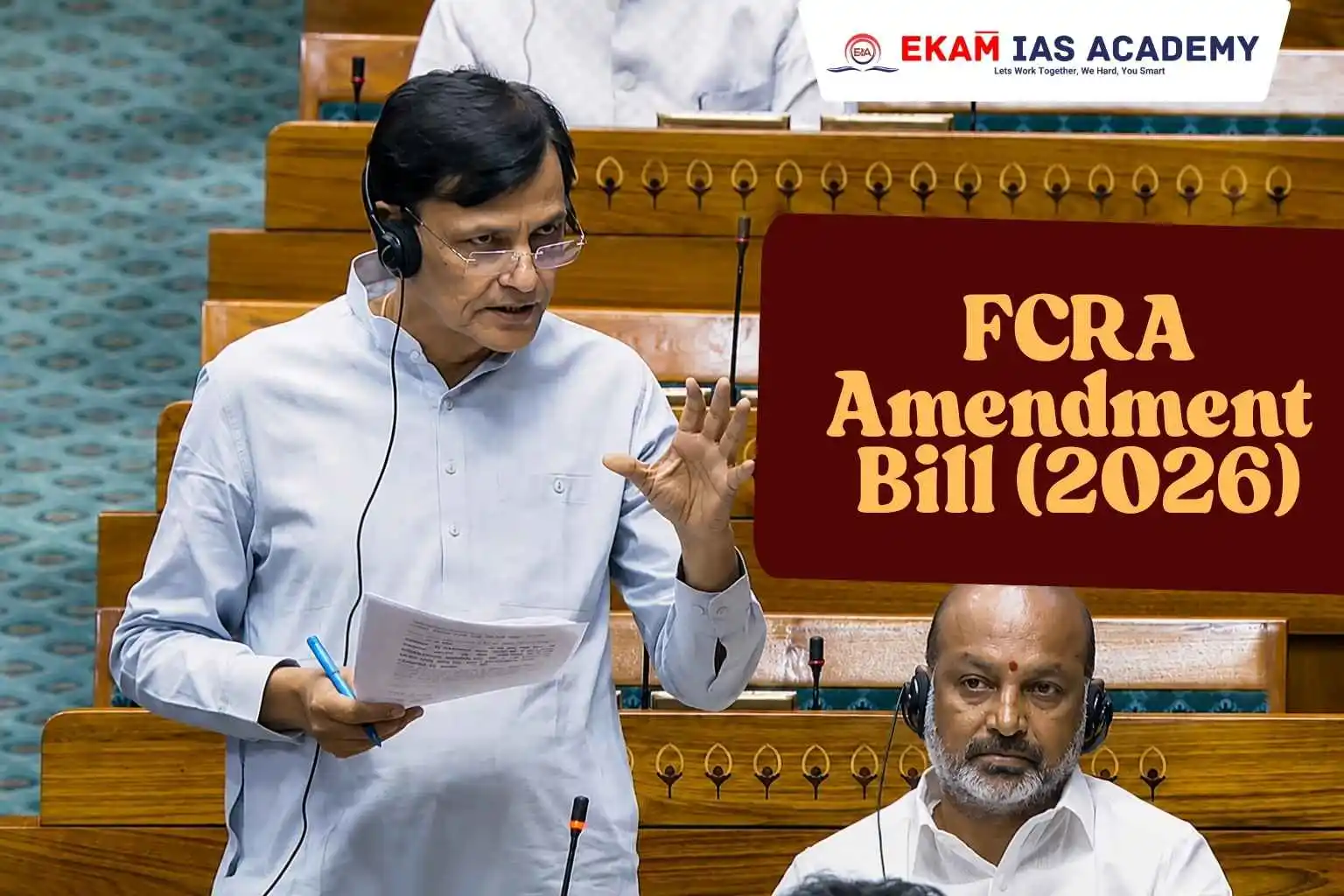
The Foreign Contribution Regulation Act (FCRA) Amendment Bill has been introduced in the Monsoon Session of Parliament to strengthen regulation of foreign contributions, improve compliance mechanisms, and ensure greater accountability among organisations receiving overseas funds. The Bill has also raised concerns regarding its impact on NGOs, religious institutions, and educational organisations dependent on foreign funding. This topic is important for aspirants preparing for GS2 Polity and Governance through Best UPSC Coaching Centre in Hyderabad.
Introduction to FCRA Framework
- The FCRA framework regulates foreign contributions to ensure transparency and prevent misuse.
- The new amendment bill seeks to strengthen compliance, address lapses in registration, and introduce stricter asset assessment mechanisms.
- However, it has triggered political and social debate due to its potential implications for NGOs, religious institutions, and educational bodies dependent on foreign funding.
Key Provisions of the Bill
- Section 14B – Cessation of Certificates: Provides for penal action against institutions whose FCRA registration has lapsed, ensuring accountability for past investments.
- Section 16A – Renewal Process: Introduces stricter renewal norms for FCRA certificates, requiring continuity in management and compliance.
- Section 16B – Asset Assessment: Establishes a new framework for evaluating assets of institutions receiving foreign contributions.
Government’s Position
- Ensuring transparency: The government argues the bill will prevent misuse of foreign funds and strengthen institutional accountability.
- Continuity in management: Emphasis on ensuring that institutions maintain compliance even after lapses in registration.
- Political outreach: Parliamentary Affairs Minister Kiren Rijiju indicated willingness to soften provisions to address opposition concerns.
Challenges
- Impact on minorities: Religious and minority institutions fear exclusion due to stricter renewal norms.
- Autonomy issues: Critics argue the bill could undermine independence of NGOs and educational institutions.
- Political debate: Opposition leaders demand clarity on police action against protesters and seek assurances that the bill will not be misused.
Broader Implications
- Institutional credibility: Strengthening compliance may improve transparency but risks alienating genuine organisations.
- Foreign funding flows: Stricter rules could reduce inflows, affecting social and developmental projects.
- Judicial scrutiny: Past amendments have faced challenges in courts, raising questions about constitutional validity.
Conclusion
The FCRA Amendment Bill reflects the government’s intent to tighten regulation of foreign contributions for transparency and accountability. A balanced approach is essential to ensure that regulation does not stifle genuine social and developmental work while safeguarding national interests.