
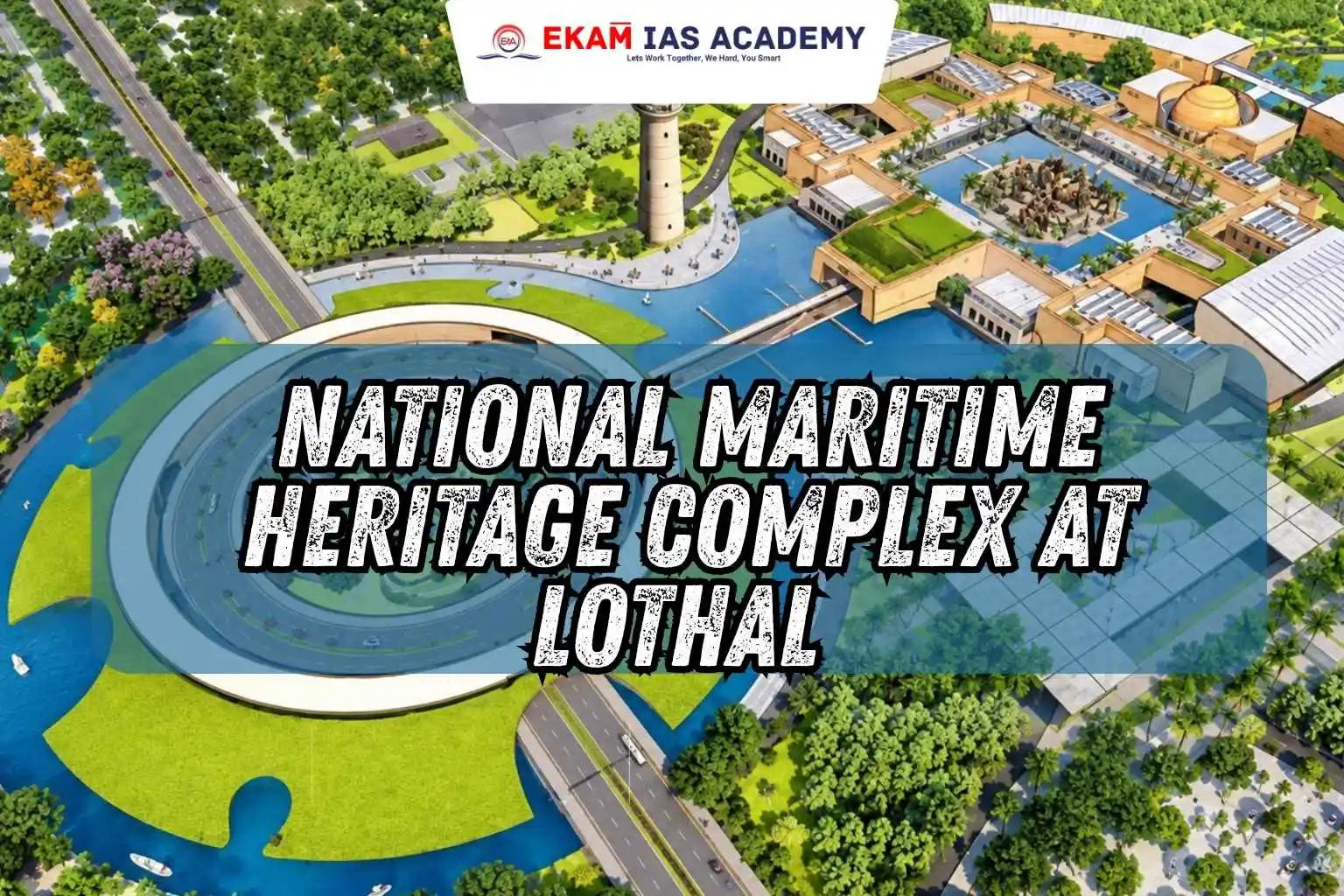
The Government of India is building a National Maritime Heritage Complex (NMHC) near Lothal, Gujarat, with a life-size recreation of a Harappan town. This topic is important for aspirants preparing for GS1 Indian Art & Culture through civils coaching in Hyderabad.
Features of the Complex
• Recreation of Harappan Town: Streets, dockyards, civic spaces, and markets will be reconstructed to give visitors an immersive experience of the Indus Valley Civilization.
• Museums and Galleries: First phase worth ₹775 crore includes six museums, galleries, and maritime artifacts spanning ancient to modern times.
• Modern Attractions: Lighthouse museum, 5D theatre, children’s galleries, promenades, eco-resorts, and interactive exhibits.
• Educational Value: Combines archaeology with maritime history, offering insights into trade, shipbuilding, and cultural exchanges of Harappans.
Significance for India
• Cultural Heritage: Highlights India’s maritime legacy, connecting ancient Harappan dockyards with modern naval strength.
• Tourism Boost: Expected to attract domestic and international tourists, strengthening Gujarat’s cultural tourism profile.
• Economic Angle: Supports local employment, eco-resorts, and heritage-based economy.
• Global Context: Comparable to maritime heritage centres in Athens, Alexandria, and Venice, positioning India on the global heritage map.
• UPSC Linkages: Connects with Maritime India Vision 2030, SAGAR doctrine, and UNESCO heritage preservation goals.
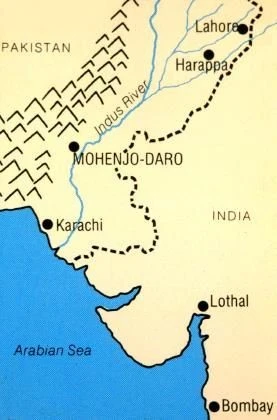
Lothal Site Features
Dockyard:
- The most famous structure at Lothal is its rectangular dockyard (214 × 36 m), connected to the Sabarmati river through channels.
- It is considered one of the world’s earliest dockyards, showing Harappans’ advanced maritime trade.
Town Planning:
- The settlement was divided into citadel and lower town, with grid‑pattern streets and drainage systems.
- Houses were built with mud bricks, often with private wells and bathing platforms.
Industrial Area:
- Evidence of bead‑making workshops, shell‑working, and metallurgy.
- Lothal was a major centre for semi‑precious stone beads (carnelian, agate), exported to Mesopotamia.
Artifacts:
- Discovery of seals, weights, terracotta figurines, and pottery.
- Unique cylinder seals indicate trade links with West Asia.
- Presence of rice husk remains shows agricultural diversity beyond wheat and barley.
Burial Practices:
Evidence of joint burials (male and female together), suggesting social or ritual significance.
Conclusion
The NMHC at Lothal will be a living bridge between India’s Harappan past and maritime future, reinforcing cultural pride and global recognition.