
With Karnataka appointing a new Urban Development Minister, experts highlight the need to integrate climate resilience and public health into urban planning. This topic is important for aspirants preparing for GS3 Environment and climate governance issues through IAS coaching in Hyderabad.
Unequal Climate Experiences
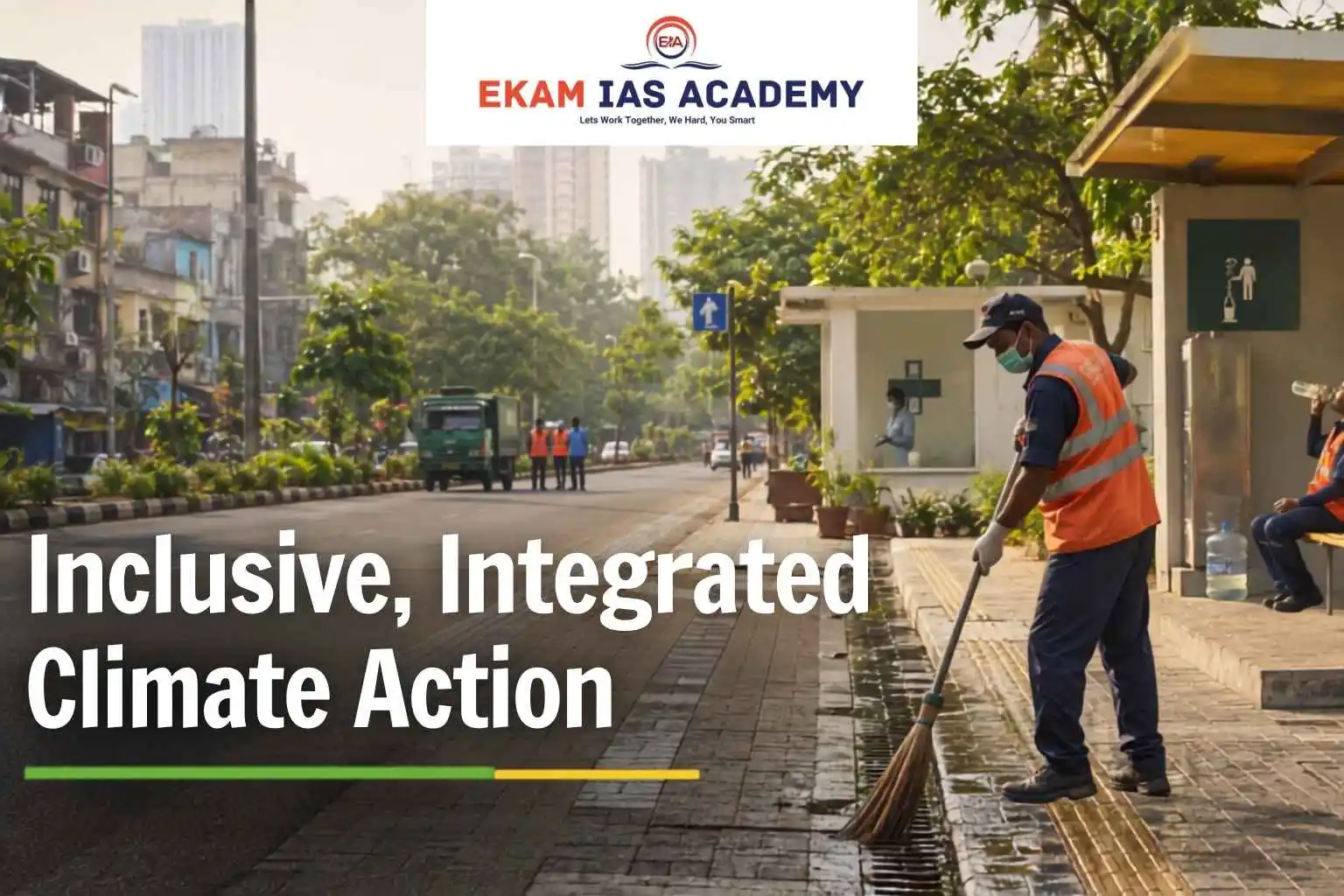
• Sanitation Workers: Long outdoor hours expose them to heat stress, dehydration, kidney and cardiovascular illnesses.
• Informal Settlements: Poor housing, ventilation, water supply, and drainage amplify risks of heatwaves, flooding, and disease outbreaks.
• Double Burden: Workers face climate hazards both at work and at home, making them a barometer of urban system performance.
Gaps in Urban Systems
• Healthcare Access: Primary health centres often lack capacity to treat heat-related illnesses; awareness among workers remains low.
• Social Protection: Schemes exist but are hindered by documentation barriers, lack of awareness, and fragmented governance.
• Governance Disconnect: Climate resilience, labour welfare, and public health are treated separately, though workers experience them as interconnected.
Climate-Centric Urban Policy Priorities
• Occupational Health Integration: Heat action plans must include water access, shaded rest areas, flexible work schedules, and health monitoring for sanitation workers.
• Investment in Informal Settlements: Improve housing, drainage, water supply, and green cover to reduce vulnerability.
• Strengthen Urban Healthcare: Train providers to handle climate-sensitive conditions and ensure services reach vulnerable workers.
• Better Data Systems: Collect evidence on heat exposure, healthcare costs, and long-term health impacts to guide policy.
• Integrated Governance: Align climate, health, housing, and labour policies for holistic resilience.
Conclusion
Urban resilience is not just about infrastructure — it is about protecting vulnerable workers and integrating health into climate action, ensuring cities remain equitable and sustainable.