


Continuous heavy rainfall in August 2026 triggered severe floods across Kerala, particularly affecting Kottayam, Pathanamthitta, and Alappuzha districts. While Kerala’s geography makes it naturally vulnerable to floods, increasing flood intensity highlights the role of human-induced factors such as unplanned urbanisation, wetland loss, river degradation, and changing land use patterns. This topic is important for aspirants preparing for GS3 Disaster Management through UPSC Preparation.
Introduction
- Kerala is one of India’s most flood-prone states due to its heavy monsoon rainfall, short rivers, and steep terrain.
- However, recent floods indicate that natural factors alone are not responsible.
- Unplanned development, shrinking wetlands, sediment-filled rivers, and changing land use have significantly reduced the state’s ability to absorb and drain excess rainwater, making floods more frequent and destructive.
Major Reasons Behind the Severity of Kerala Floods
Reduced Carrying Capacity of Rivers
- Rivers have accumulated large amounts of silt and sand, reducing their water-carrying capacity.
- The 2018 floods deposited massive sediments in river channels, which were not adequately removed.
- Frequent landslides in hilly regions continue to add soil and debris into rivers.
- Formation of sandbars and small deltas slows the flow of floodwater, causing rivers to overflow quickly.
Sedimentation in Reservoirs and Dams
- Many reservoirs have lost a significant portion of their storage due to continuous silt deposition.
- Lower storage capacity forces dam authorities to release water earlier during heavy rainfall, increasing downstream flood risk.
- Lack of regular sediment studies and desilting has worsened the situation.
Loss of Wetlands and Paddy Fields
- Wetlands, marshes, and paddy fields naturally absorb excess rainwater and recharge groundwater.
- Rapid urbanisation and conversion of agricultural land have drastically reduced these natural flood buffers.
- As a result, rainwater flows directly into rivers instead of being temporarily stored in low-lying areas.
Changes in Natural Drainage
- Expansion of roads, buildings, parking areas, and concrete surfaces has increased impermeable land cover.
- Rainwater now runs off rapidly into rivers instead of percolating into the soil.
- This accelerates flooding, especially in urban and low-lying areas.
Climate Change
- Rising temperatures have increased the frequency of extreme rainfall events over short durations.
- Such intense rainfall overwhelms rivers and drainage systems, increasing the likelihood of flash floods.
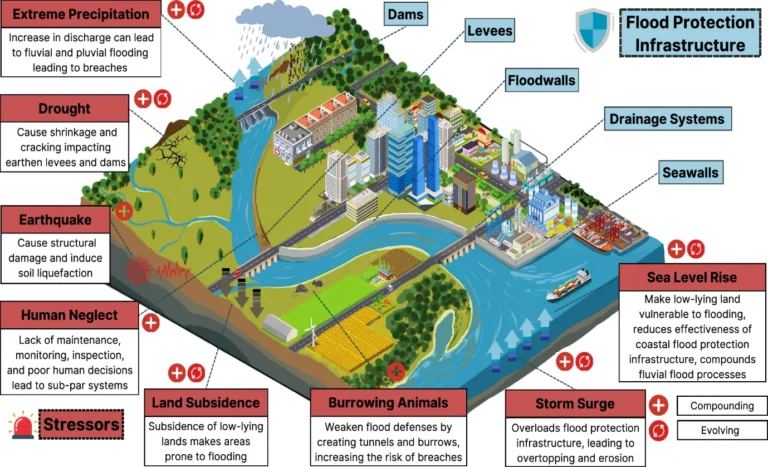
Impacts of the Floods
- Loss of lives and large-scale displacement of people.
- Damage to houses, roads, bridges, and public infrastructure.
- Crop losses and disruption of local livelihoods.
- Increased risk of water-borne diseases after floodwaters recede.
- High expenditure on relief, rehabilitation, and reconstruction.
Government Measures
- Proposal to desilt rivers and reservoirs to improve water storage and flow.
- Preparation of an asset register for rivers, streams, and lakes.
- Land audits to prevent encroachment of water bodies.
- Better coordination in dam management and flood forecasting.
- Promotion of scientific river restoration and sustainable watershed management.
Way Forward
- Restore wetlands, floodplains, and paddy fields as natural water-storage systems.
- Undertake periodic desilting of rivers and reservoirs based on scientific assessment.
- Enforce strict land-use regulations to prevent encroachments in flood-prone areas.
- Strengthen urban drainage systems and adopt sponge city concepts.
- Integrate climate-resilient infrastructure, early warning systems, and community-based disaster preparedness.
Conclusion
Long-term flood management requires a combination of scientific planning, ecosystem restoration, and sustainable urban development. Building resilience today will reduce future disaster losses and support environmentally responsible growth.



One thought on “Kerala Floods And Human-induced Factors”