
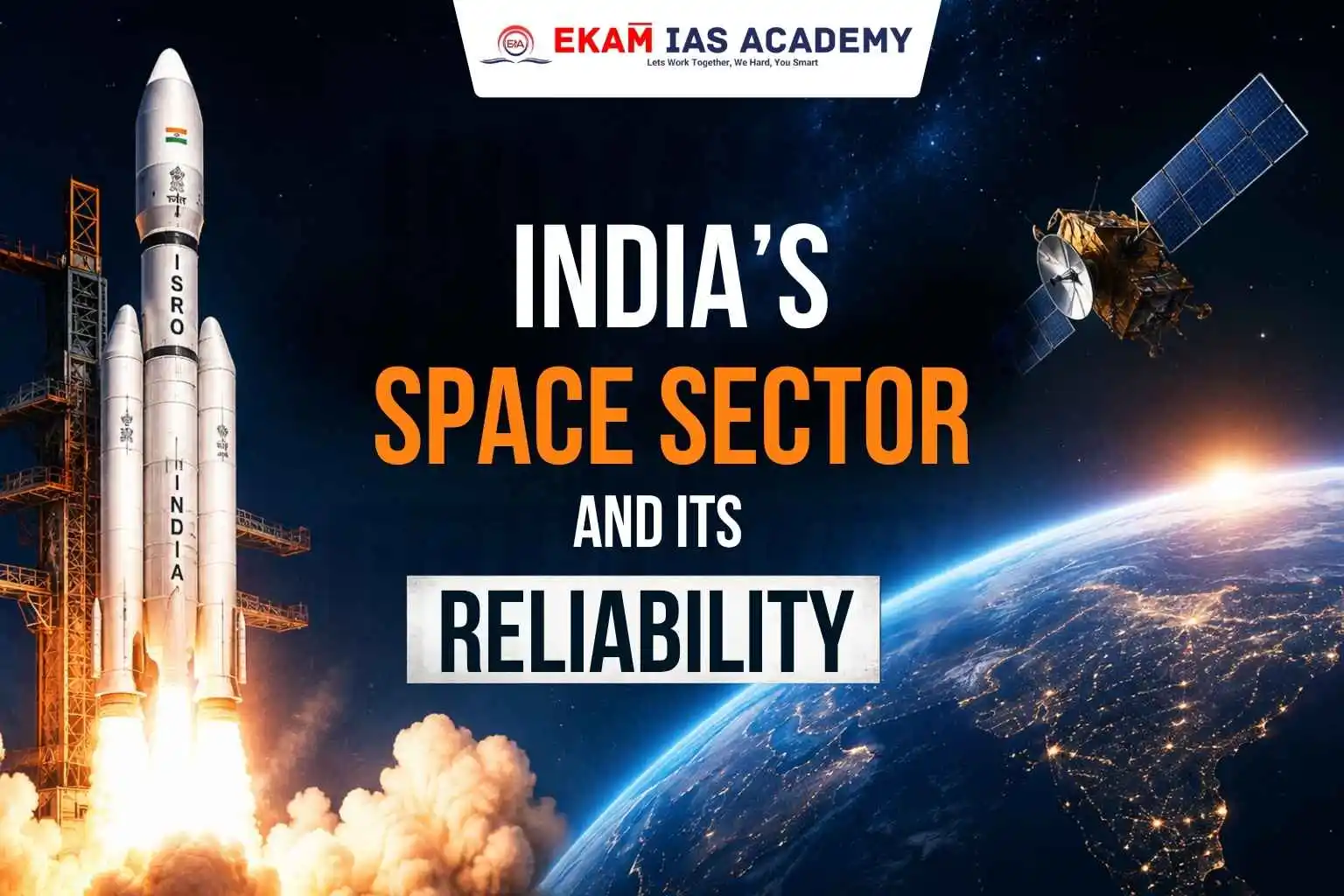
On the third National Space Day, marking Chandrayaan‑3’s lunar south pole landing, Prime Minister Narendra Modi urged space startups to build an “aura” to attract global talent. However, experts argue that India’s space sector must prioritize reliability and regular launches over image‑building. For aspirants preparing for competitive examinations, Best IAS coaching in Hyderabad .
Historical Context
- In the 20th century, space launches symbolized national pride, much like football for Argentina or Brazil.
- India, despite poverty and food insecurity, invested in rockets and atomic energy as a bet on future technological strength.
- Earlier, the symbolism of launches mattered more than payload utility; today, satellites and rockets are critical infrastructure for navigation, banking, weather, and defence.
Current Challenges
- High Launch Costs: A 2025 study found India’s launch cost at $13,302/kg to low‑earth orbit, far higher than China ($5,809) and the U.S. ($3,225).
- Low Frequency: India conducted only five launches in 2025, far below the projected 30, limiting economies of scale and reliability.
- Dependence on Foreign Launchers: Heavy payloads like GSAT‑N2 and satellites from startups Pixxel and Digantara were launched on SpaceX’s Falcon 9.
- Global Competition: SpaceX alone carried 75% of global payloads in 2025, highlighting its dominance and India’s lag.
Strategic Imperatives
- Reliability First: Regular, successful launches are essential to build global trust and attract clients.
- Heavy‑Lift Capability: Expand and upgrade rockets like LVM‑3 to handle larger payloads, reducing dependence on foreign launchers.
- Private Sector Integration: Encourage startups to move beyond “aura” and focus on jobs, capital investment, and tax revenues.
- Global Market Entry: Compete with SpaceX and China by offering cost‑effective, reliable launch services.
- Balanced Vision: Moon bases and interplanetary missions are important but should remain ornaments, not engines of the sector.
Conclusion
India’s space journey can no longer rely on romance or aura. Its future lies in scaling launch frequency, reducing costs, and ensuring reliability — the true escape velocity needed to transform India into a global space leader.