
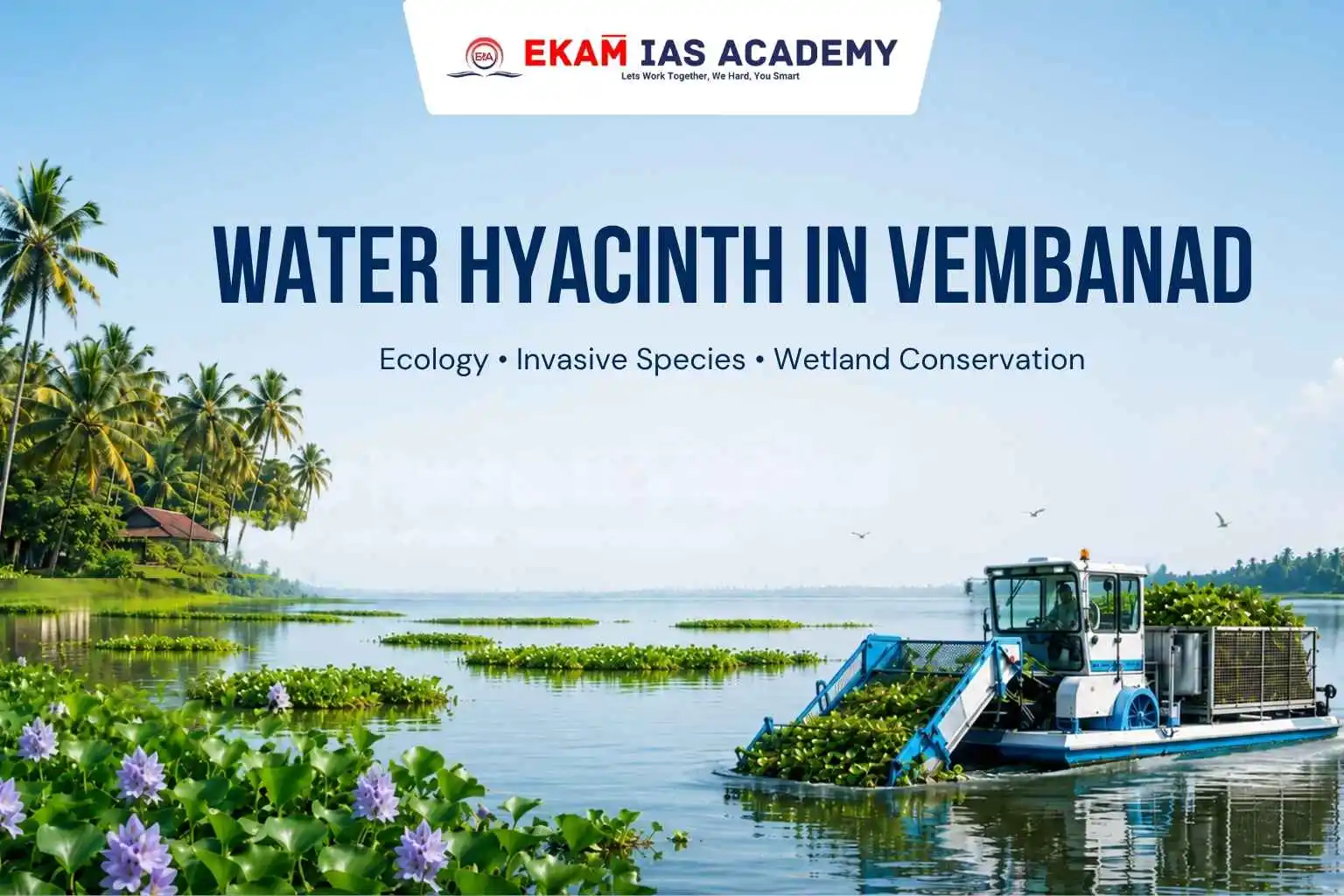
Recently, the State Wetland Authority of Kerala, in collaboration with local stakeholders, launched a robotic pilot project at Kumarakom to harvest the invasive Water Hyacinth in Vembanad Lake. The initiative is significant for Vembanad Lake Ecology, as uncontrolled growth of Water Hyacinth Kerala has affected navigation, livelihoods and aquatic biodiversity.
What are Invasive Species?
- Non-native species introduced into ecosystems that spread rapidly, harming biodiversity, the economy or human life.
- Such Aquatic Invasive Species India pose a major challenge to wetlands, rivers and lakes.
- Examples in India:
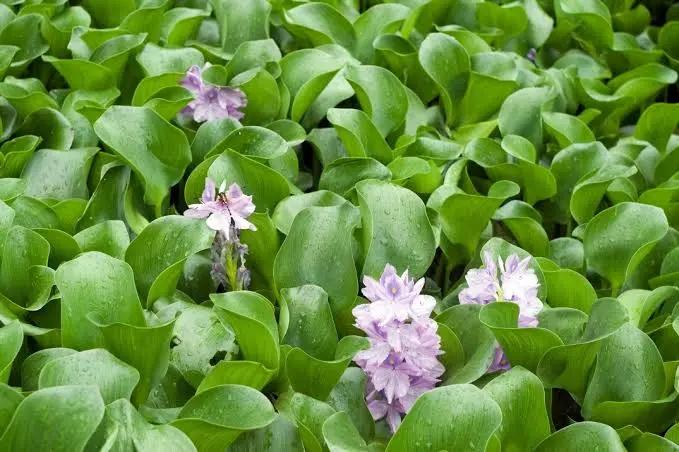
- Water Hyacinth – clogs lakes and rivers and is one of the major Aquatic Weeds in India.
- Lantana camara – invades forests, reducing grazing land.
- Prosopis juliflora (Vilayati Babool) – spreads in arid regions.
- African Catfish – threatens native fish diversity.
- The spread of such species also highlights the growing issue of Invasive Species in Kerala and the wider problem of Water Hyacinth Invasion in India.
About the Project
- Non-native species introduced into ecosystems that spread rapidly, harming biodiversity, the economy or human life.
- Such Aquatic Invasive Species India pose a major challenge to wetlands, rivers and lakes.
- Examples in India:
- Water Hyacinth – clogs lakes and rivers and is one of the major Aquatic Weeds in India.
- Lantana camara – invades forests, reducing grazing land.
- Prosopis juliflora (Vilayati Babool) – spreads in arid regions.
- African Catfish – threatens native fish diversity.
- The spread of such species also highlights the growing issue of Invasive Species in Kerala and the wider problem of Water Hyacinth Invasion in India.
Impact of Infestation
- Tourism & Transport: Boats get stuck, and 6–7 daily services have been cancelled between Muhamma and Kumarakom.
- Livelihoods: Fisherfolk and farmers face reduced access to markets.
- Environment: The weed clogs waterways, reduces oxygen and threatens aquatic biodiversity.
- The Water Hyacinth Environmental Impact includes disruption of navigation, reduced water quality and obstruction of sunlight penetration.
- The Water Hyacinth Ecological Impact can alter aquatic habitats and adversely affect fish and other organisms dependent on the Vembanad Wetland Ecosystem.
- Persistent infestation can also worsen concerns related to Vembanad Lake Pollution by trapping organic matter and affecting water circulation.
- Controlling invasive weeds is therefore important for protecting Vembanad Lake Biodiversity and maintaining the ecological health of the wetland.
Conclusion
The robotic intervention in Vembanad reflects how technology and ecology must converge to combat invasive species, ensuring sustainable livelihoods and biodiversity conservation. Effective Water Hyacinth Control Measures, stronger monitoring of Aquatic Invasive Species India, and long-term Wetland Conservation in India are essential for restoring the ecological health of the Vembanad Wetland Ecosystem.
The issue is also important from the perspective of Water Hyacinth UPSC, especially under GS Paper 3 topics related to invasive species, wetland conservation, biodiversity and environmental management.