

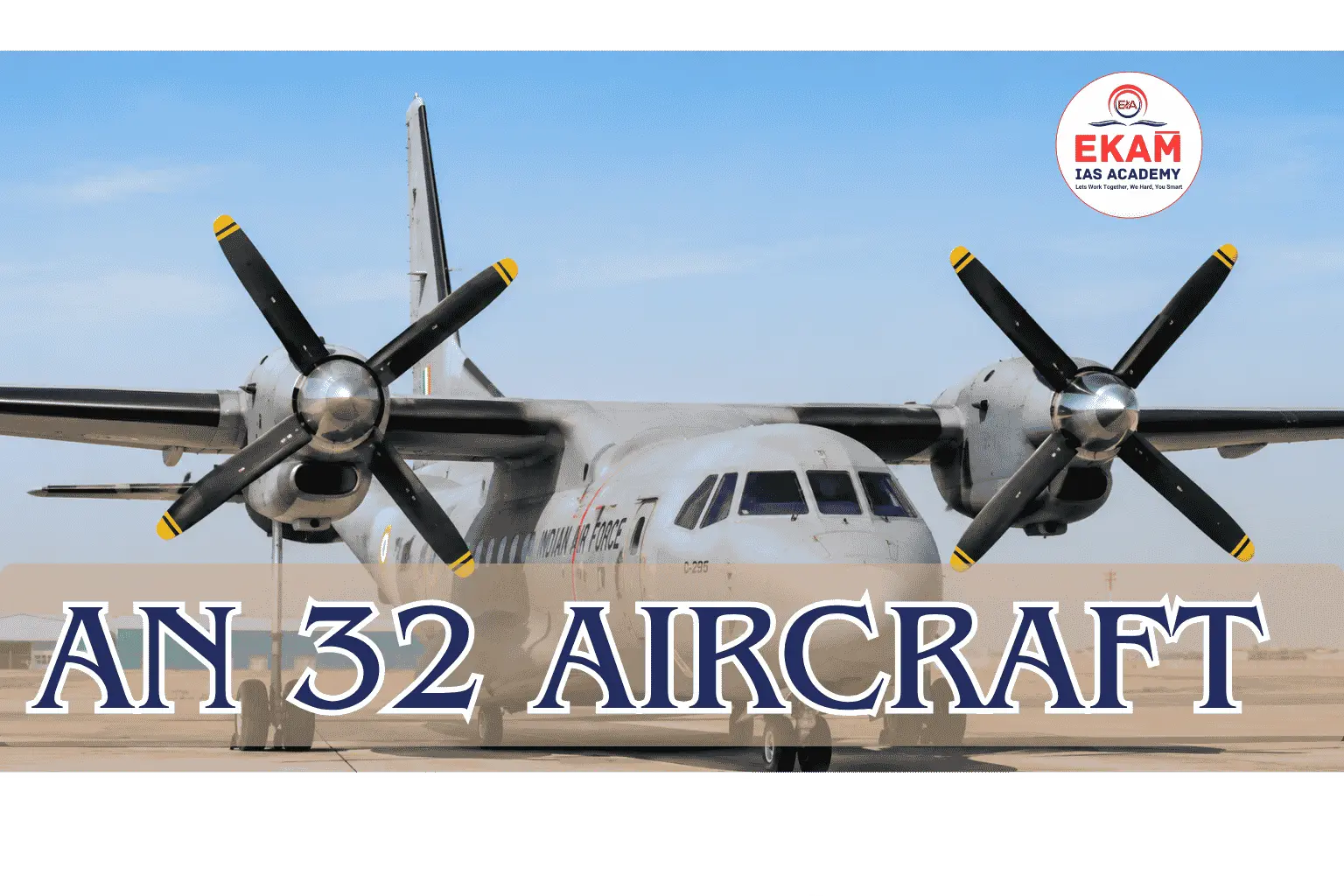
An Indian Air Force AN 32 transport aircraft recently crashed at Jorhat Air Force Station in Assam, leading to the death of five personnel. This incident raises concerns about safety and fleet modernization. This topic is important for aspirants preparing for GS3 Science and Technology and defence logistics-related issues through IAS coaching in Hyderabad.
AN 32 Aircraft
• Origin: Soviet-designed twin-engine turboprop, NATO reporting name Cline.
• Induction: Purchased in 1984 from the USSR; specially customized for Indian operational conditions.
• Fleet Strength: IAF operates approximately 100 aircraft, forming the backbone of medium-lift transport capability.
• Operational Environment: Designed to operate from high-altitude airfields (up to 4,500 m) and hot tropical climates.
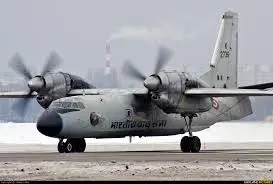
Features
• Engines: Two single-shaft turboprop engines.
• Payload Capacity: Can carry 7.5 tons of cargo, 50 passengers, or 42 paratroopers.
• Performance: Maximum speed of 530 km/h, range of 2,500 km, service ceiling 9,500 m.
• Versatility: Operates on rough airfields and dirt runways; extensively used for supply drops in remote regions.
• Additional Roles: Limited bombing capability and paratrooping operations.
Significance for India
• Strategic Utility: Vital for logistics in border areas like Ladakh and Northeast India.
• Disaster Relief: Extensively used in humanitarian missions and supply drops.
• Modernization Needs: Many aircraft are over 30 years old, requiring upgrades in avionics and safety systems.
• Comparative Example: India has inducted modern transport aircraft like the C-130J Super Hercules, but AN 32 remains crucial for rugged terrains.
Way Forward
• Accelerate fleet modernization with advanced transport aircraft.
• Strengthen maintenance and safety protocols for aging AN 32s.
• Enhance indigenous transport aircraft development under the Make in India initiative.
• Improve pilot training and accident investigation mechanisms.
Conclusion
The AN 32 remains a lifeline for India’s remote and high-altitude regions, but recent accidents highlight the urgent need for modernization and safety upgrades in the IAF’s transport fleet.