
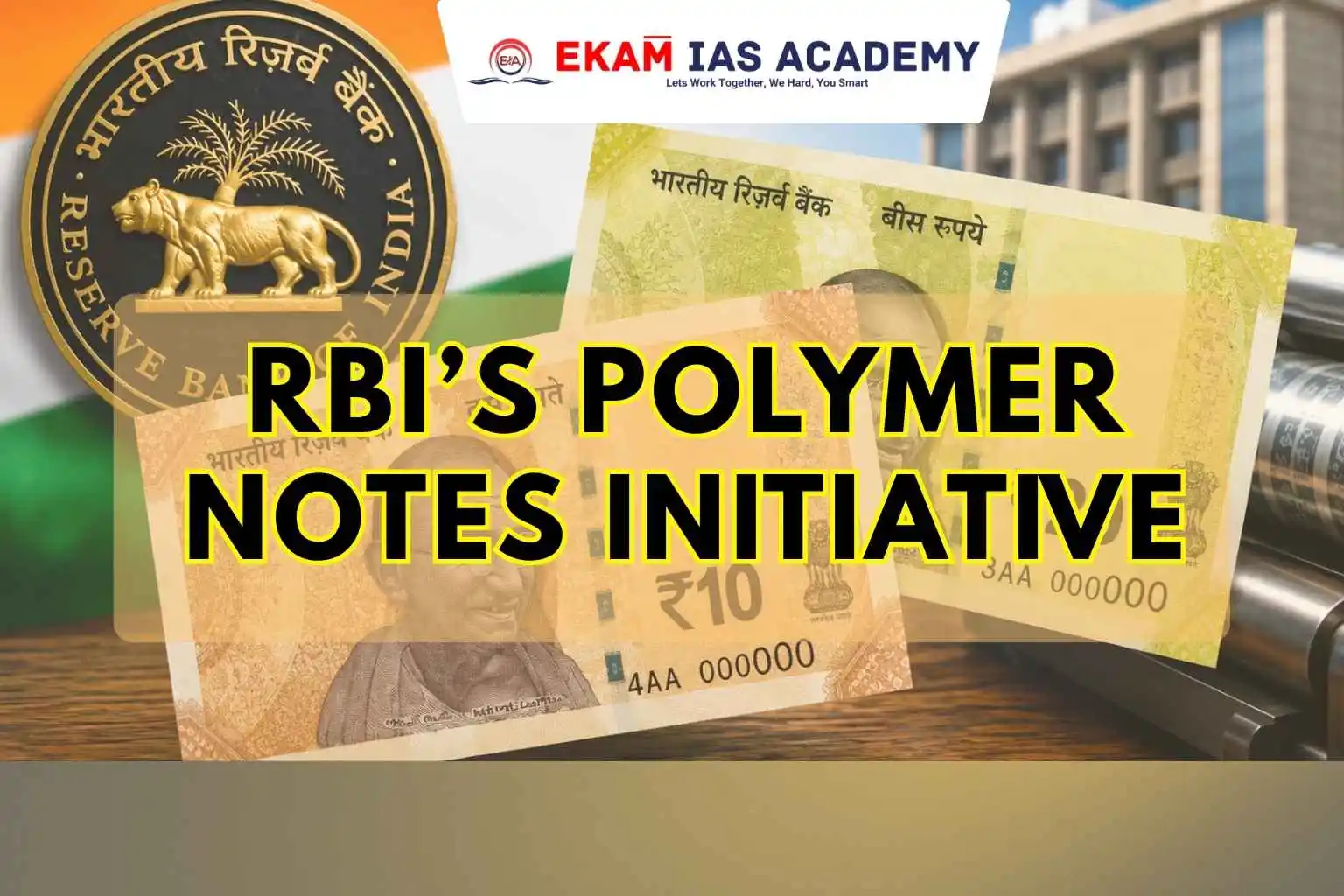
The Reserve Bank of India (RBI) has initiated a trial project to introduce polymer (plastic) currency notes, aiming to reduce long-term printing costs. This topic is important for aspirants preparing for GS3 Economy and financial reforms through ias coaching in Hyderabad.
Background
• High Printing Costs: RBI spent ₹7,965 crore in 2016–17 (demonetisation year). Average annual cost ranged between ₹4,000–6,000 crore in recent years.
• Note Supply: Around 2,500–2,900 crore notes printed annually. Over the last decade, nearly 26,000 crore notes printed at a cost of ₹52,059 crore.
Features of Polymer Notes
• Durability: Last 2–6 times longer than paper notes.
• Cost Efficiency: Reduced replacement frequency lowers overall expenditure.
• Security: Advanced design makes counterfeiting more difficult.
• Sustainability: Less paper usage, aligning with eco-friendly goals.
Global Context
• International Use: Countries like Australia, Canada, UK already use polymer notes.
• Best Practices: These nations report lower costs and improved security features.
Broader Implications
• Financial Efficiency: Helps RBI reduce recurring costs.
• Public Trust: Durable and secure notes strengthen confidence in currency.
• Policy Linkages: Supports RBI’s modernization agenda and financial inclusion.
Conclusion
Polymer notes are a cost-effective, durable, and secure innovation, strengthening India’s currency system for the future.