

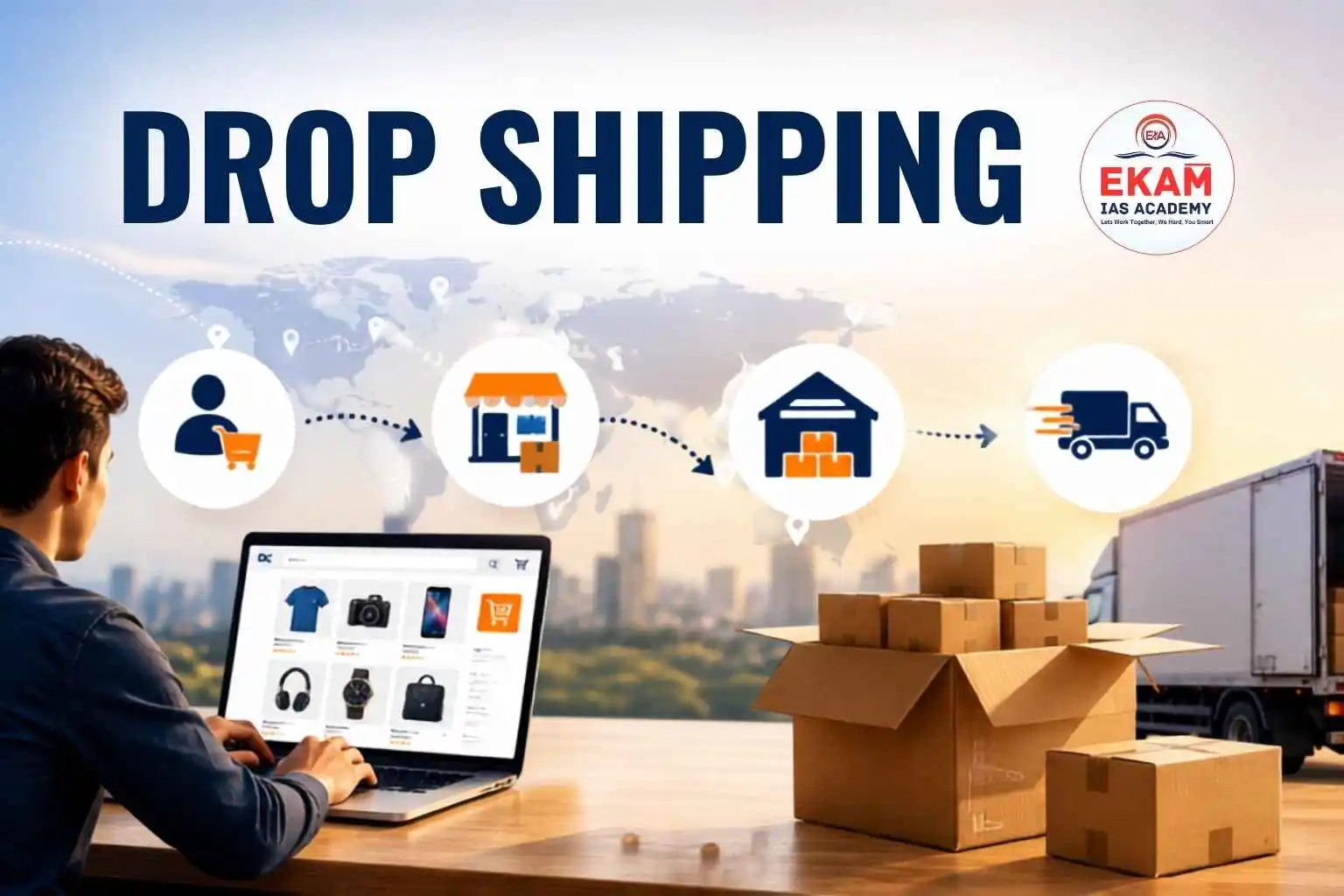
Drop shipping has gained attention as a key factor behind the success of global e-commerce giants like Amazon, and is increasingly adopted by small retailers and entrepreneurs due to low investment requirements. This topic is important for aspirants preparing for GS3 Economy and digital business models-related issues through IAS coaching in Hyderabad.
Understanding Drop Shipping
• Definition: A retail model where sellers accept customer orders without keeping stock, forwarding them to suppliers who ship directly to buyers.
• Role of Dropshipper: Acts as an intermediary between consumers and suppliers, curating products and earning profit margins.
• Advantages: Eliminates warehouse costs, reduces risk of unsold inventory, and requires minimal capital.
• Challenges: Issues include product quality, delivery delays, and lack of direct control over the supply chain.
How It Works
- Seller signs an agreement with a wholesaler or manufacturer.
- Customer places order online and receives confirmation.
- Seller forwards the order to the supplier.
- Supplier ships the product directly to the customer.
- Seller retains the profit margin between the sale price and supplier cost.
Example
• A phone case listed at ₹500 is purchased by a customer.
• Seller orders it from supplier at ₹300.
• Supplier ships directly to the customer.
• Seller earns ₹200 gross profit before marketing and overhead costs.
Broader Picture
• Encourages digital entrepreneurship and supports MSMEs in India.
• Aligns with Digital India and Start Up India initiatives.
• Raises concerns about consumer protection, requiring stronger e-commerce regulations by the Ministry of Consumer Affairs and the Competition Commission of India.
• Global trade platforms, including WTO discussions on e-commerce, highlight drop shipping as part of cross-border retail trends.
Conclusion
Drop shipping represents a low-investment gateway to e-commerce, but its sustainability depends on balancing profit with consumer trust and regulatory oversight.