
India completed its transition to E20 petrol (20% ethanol blend) last year, five years ahead of schedule. In June 2026, Union Petroleum Minister launched E85 fuel in New Delhi, raising fresh concerns among motorists about mileage loss and engine durability. This topic is important for aspirants preparing for GS3 Science & Technology and energy policy issues through hyderabad IAS coaching.
India’s Ethanol Blending Journey
• 2009 National Policy on Biofuels: Target of 20% blending by 2017, delayed due to supply and infrastructure issues.
• Rapid Transition: Ethanol share doubled from E10 to E20 in just three years, instead of the planned eight.
• Nationwide E20 Rollout: Completed in April 2026. Current blending level: 20% ethanol in petrol across India.
• Feedstock Shift: Sugarcane-based ethanol reduced after drought and shortages; grain-based ethanol (rice, maize, broken grains) now contributes ~65% of production.
• Consumer Concerns: Older vehicles certified only for E10 faced adaptation challenges without adequate warnings.
Why Mileage Matters in India
• Fuel Efficiency Obsession: Mileage is central to car buying decisions; advertising campaigns historically highlighted this.
• Economic Reality: Uneven income growth keeps mileage a priority for middle class and rural consumers.
Key Problems with Higher Ethanol Blends
Drop in Fuel Economy
- Ethanol has lower calorific value than petrol.
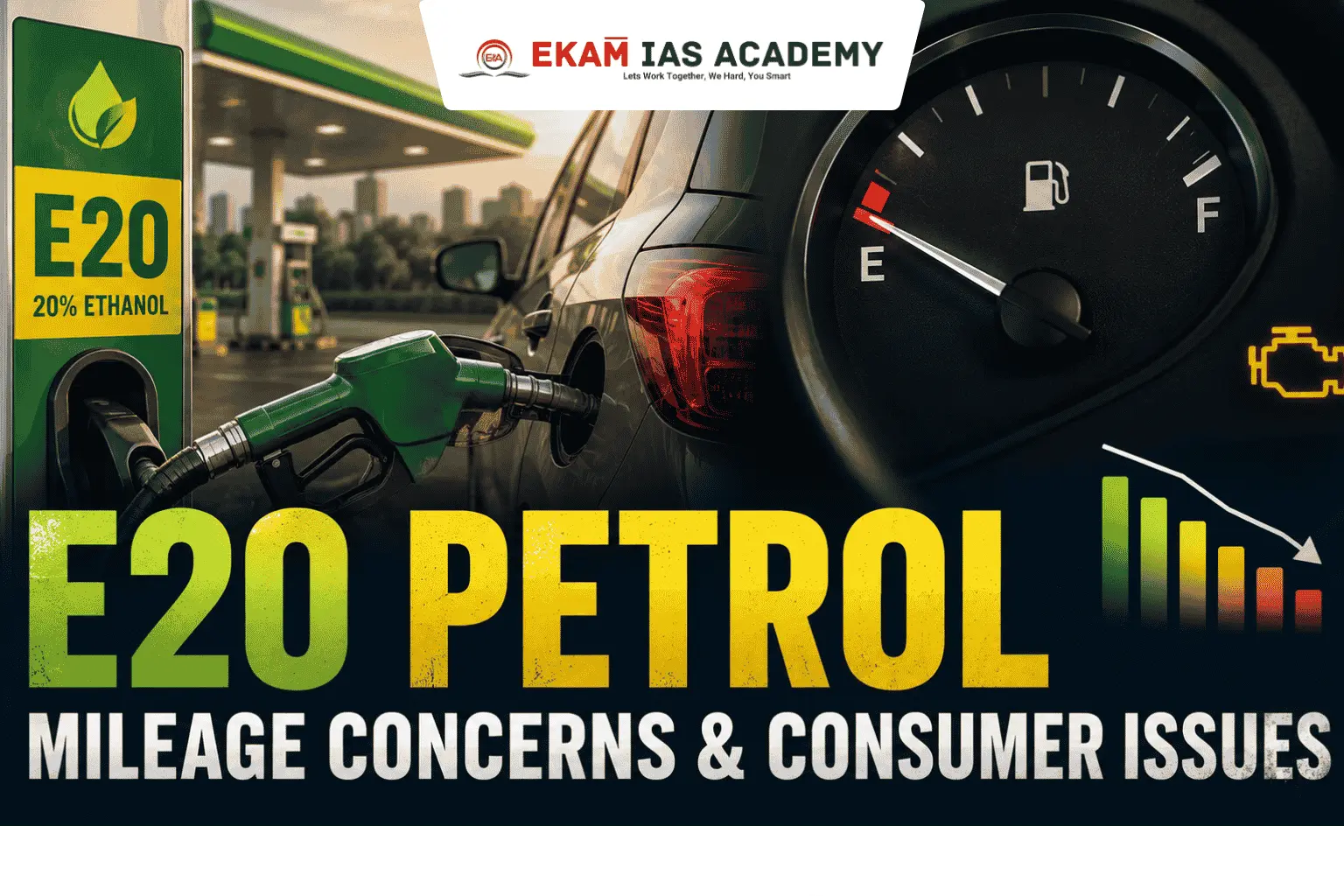
- Causes ~30% mileage reduction in vehicles not designed for higher blends.
- Performance drop intensifies as blending levels rise.
Risk of Vehicle Damage
- Ethanol is hygroscopic → attracts water, leading to corrosion.
- Burns hotter, making cold starts difficult.
No Consumer Choice:
- Unlike Brazil, Indian motorists cannot choose between blends.
- No mandated price discount for higher ethanol fuels.
Chemistry Behind Ethanol Blending
• Ethanol (C2H5OH): Simpler carbon chain, produces less CO₂.
• High Octane Rating (~108 RON): Burns more cleanly and prevents engine knocking.
• Potential: Could allow future engines with higher compression ratios for better mileage, but not yet realised in India.
Road Ahead – E25 & E85
• Government Plans: E25 rollout and promotion of E85 for flex fuel vehicles.
• Economic Challenge: E85 gives >25% mileage loss; price difference (~₹20/litre cheaper) not enough to offset.
• Engineering Needs: Carmakers must recalibrate engines, improve corrosion resistance, and undergo fresh homologation.
Lessons from Brazil
• Ethanol programme began in 1970s; built a strong sugarcane-based ecosystem.
• Consumers can choose between E27–35 blends and E100 pure ethanol.
• Government ensures E100 is 25–35% cheaper, making flex fuel cars popular.
• By late 1980s, 90% of new cars in Brazil could run entirely on ethanol.
Conclusion
India’s ethanol transition highlights the tension between environmental goals and consumer realities. Mileage loss, engine risks, and lack of choice must be addressed to make higher blends truly sustainable.